


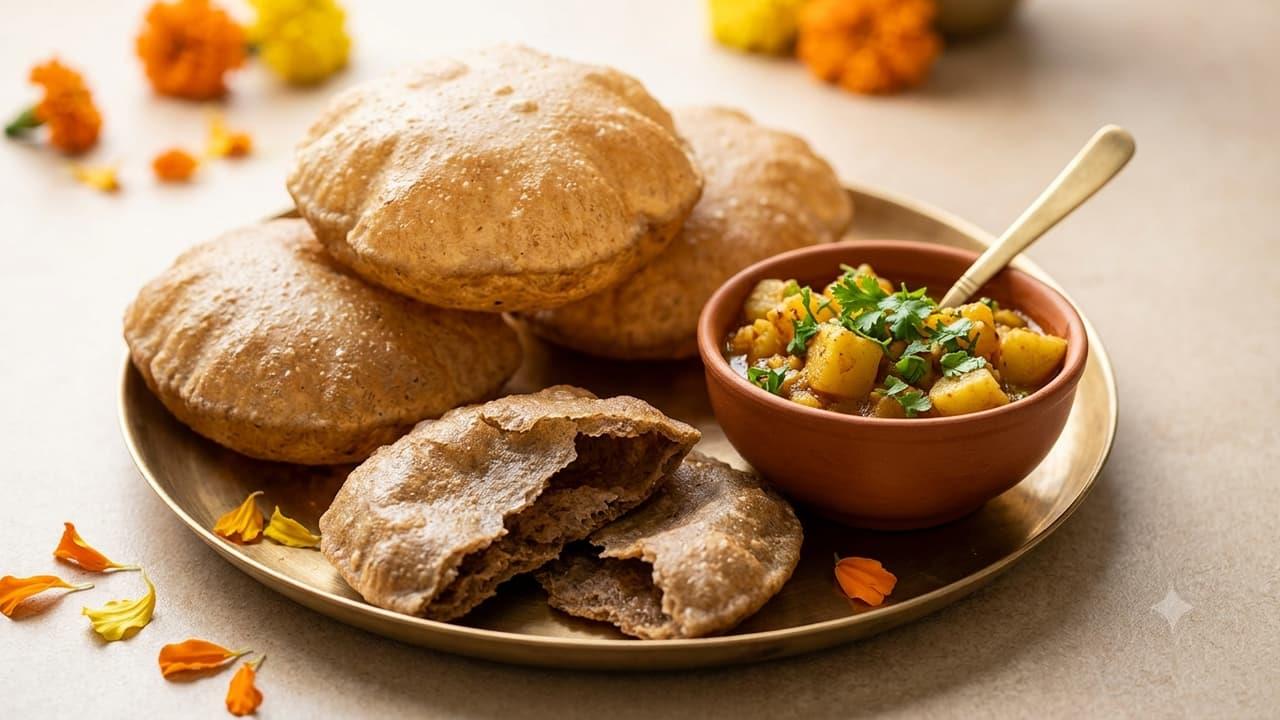
Navratri 2026 Kuttu Ki Puri Recipe: Step-By-Step Guide To Make Soft, Fluffy Vrat Pooris


Kuttu ki puri is a popular gluten-free buckwheat bread enjoyed during Navratri fasting, often paired with vrat wale aloo. By using mashed potatoes for binding and rolling the dough between sheets, you can easily overcome its crumbly texture.
Kuttu ki puri is a popular dish prepared during Navratri fasting in many Indian households. Made with buckwheat flour, these pooris are commonly served with vrat wale aloo, yoghurt or other fasting-friendly accompaniments. However, working with kuttu ka atta can be tricky because it does not contain gluten and the dough can crack or crumble easily.
The good news is that a few simple techniques can help you make soft, evenly cooked and delicious kuttu ki pooris at home. From preparing the dough to frying at the right temperature, here is an easy recipe along with tips to get better results.
Kuttu Ki Puri Recipe: Ingredients You Need
Preparation time: 15 minutes Cooking time: 15–20 minutes Servings: 2–3 people
Ingredients
- 1 cup kuttu ka atta (buckwheat flour) 1 medium boiled potato, mashed Sendha namak, to taste Warm water, as required Ghee or oil, for deep-frying
Note: Ingredients permitted during Navratri fasting vary by household and region. Check your family's vrat rules before using potatoes, salt or cooking fat.
Place the kuttu ka atta in a large mixing bowl. Add the mashed boiled potato and sendha namak, if using. Mix everything thoroughly so the potato is distributed evenly throughout the flour.
Add warm water a little at a time and bring the mixture together into a soft, pliable dough. Avoid pouring in too much water at once, as the dough can become sticky and difficult to handle.
Step 2: Let the dough rest briefly
Allow the dough to rest for around 5–10 minutes. Buckwheat dough behaves differently from regular wheat dough, so avoid kneading it for too long. If it feels too dry and develops cracks, add a little water. If it feels sticky, incorporate a small amount of buckwheat flour.
Divide the dough into small, equal-sized portions. Since kuttu dough can break when rolled conventionally, place each portion between two sheets of baking paper or food-safe plastic and gently flatten it into a small disc.
Make the pooris evenly thick so they cook at the same rate. Handle them carefully while transferring them to the frying pan.
Step 4: Heat the oil or ghee
Heat oil or ghee in a deep pan over medium heat. To check whether it is ready, add a tiny piece of dough. It should rise to the surface and sizzle steadily without turning dark immediately.
If the fat is too cool, the pooris may absorb excess oil. If it is too hot, they can brown quickly before cooking properly inside.
Gently slide one poori into the hot fat. Press it lightly with a slotted spoon as it begins to cook, which can help it puff. Turn it over and fry until cooked and lightly golden on both sides.
Remove the poori and place it on a plate lined with kitchen paper. Repeat with the remaining portions, maintaining a steady frying temperature.
Serve the pooris hot with vrat wale aloo or another accompaniment permitted during your fast.
1. Add mashed potato for better binding
Buckwheat flour lacks gluten, which normally gives wheat dough its elasticity. Mashed boiled potatohelps hold the dough together and makes shaping the pooris easier. Use a potato that is cooked until soft and mash it without leaving large lumps.
2. Add water gradually
Adding too much water can make the dough sticky, while too little can leave it dry and crumbly. Add small amounts of warm water until the dough comes together and can be shaped without excessive cracking.
3. Roll between sheets
Unlike regular wheat dough, kuttu dough can tear or break when rolled directly on a board. Flattening it between two sheets helps you shape the pooris with less sticking and fewer cracks.
4. Maintain the right frying temperature
The frying fat should be hot enough for the poori to rise and begin puffing, but not so hot that it browns instantly. Fry in small batches to help maintain a consistent temperature.
5. Make small, evenly thick pooris
Smaller pooris are easier to handle and transfer without breaking. Keep each one approximately the same thickness to encourage even cooking and a better chance of puffing.
Kuttu ki puri pairs well with vrat wale aloo, a simple potato curry or plain yoghurt if dairy is permitted in your fasting routine. You can also serve it with a lightly seasoned pumpkin preparation or another regional fasting dish.
For a complete meal, add a fruit serving or a suitable fasting-friendly side. Keep the accompaniments aligned with the customs followed in your household.

Legal Disclaimer:
MENAFN provides the
information “as is” without warranty of any kind. We do not accept
any responsibility or liability for the accuracy, content, images,
videos, licenses, completeness, legality, or reliability of the information
contained in this article. If you have any complaints or copyright
issues related to this article, kindly contact the provider above.


Comments
No comment