


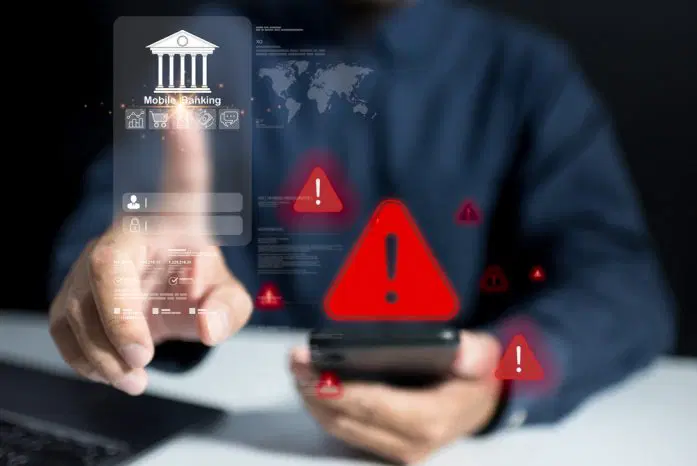
A Scammer Knows Your Name, Bank And Account Balance - Would You Believe The Call?


A scammer who knows your name, your bank and even your account balance can sound terrifyingly legitimate. That information may make a caller seem like an insider, especially when the caller claims to work in the bank's fraud department.
But accurate information does not prove the person on the phone works for your bank. Scammers can obtain or buy personal information, then use it as stage scenery for a much bigger lie. The Federal Trade Commission warned in January 2026 that callers may know details such as a person's full name, address or accounts and still be scammers.
That creates a particularly nasty trap: the caller does not need to convince you with credentials if the information already sounds like proof.
The Balance Is Bait, Not ProofSuppose a caller says,“There's suspicious activity on your checking account ending in 4421. Your current balance is $8,740.”
That number can make the conversation feel completely different. A stranger suddenly appears to know something private. The natural reaction may be,“How could they possibly know that unless they really are from the bank?”
Unfortunately, that conclusion gives the scammer exactly what they want. The caller may have obtained financial information through stolen data, previous fraud, phishing, account compromise or other criminal sources. The FBI has specifically warned about account-takeover schemes in which criminals impersonate financial institutions and use stolen information to gain access to accounts.
The caller also may not know everything. A scammer can have one accurate detail and use it to fish for the rest. A quick confirmation from the victim can fill in missing pieces, turning the conversation into an information-gathering exercise.
The Real Danger Starts After the“Proof”Once the caller establishes credibility, the conversation usually needs a next step. That might involve confirming a username, reading back a verification code, moving money to a supposedly safer account or clicking a link to“secure” the account.
That is where a frightening phone call can become an expensive one. The FTC says scammers impersonating banks may claim that fraud has occurred and offer to protect the victim's money by moving it. The agency warns consumers never to move money to“protect” it and never to share a verification code with an unexpected caller.
Verification codes deserve special attention because they can function like a temporary key. A criminal who already has a password may need that code to complete a login or account recovery. The FTC says anyone asking for a bank verification code over the phone is a scammer.
So the caller knowing the balance is not the finish line. It can be the opening act.
Caller ID Does Not Rescue YouMany people know about spoofed caller ID, yet the feature still exerts enormous psychological power.
A phone displaying the actual bank's name can make a stressful call feel official. The caller may sound polished, know banking terminology and provide a convincing employee name. None of those details independently authenticate the person.
The FTC specifically warns that caller ID can be faked. A scammer can make a call appear to come from a recognizable business or government agency. That creates a useful rule for unexpected financial calls: do not authenticate the caller using information the caller controls.
The caller controls the phone number displayed on the screen. The caller controls the story. The caller can provide a callback number. The caller can even tell you which department supposedly handles the problem. None of those things should determine whether you trust the call.
Hang Up Before You Try To Solve ItThe safest response may feel surprisingly rude: end the call. If the caller claims to represent your bank, note the basic reason for the call, then hang up. Open the bank's official app or use the phone number printed on a statement or the back of the card. Contact the institution yourself and ask whether there actually is a problem.
The FTC recommends exactly this approach. Its January 2026 guidance also warns consumers against finding contact information through unexpected messages or potentially misleading search results.
This method also removes one of the scammer's biggest advantages: momentum. A caller can create urgency, interrupt your thinking and keep feeding you new information. Hanging up breaks that rhythm.
And no legitimate fraud investigation becomes invalid because you refused to remain on a surprise phone call.
Watch For The Money-Movement TrickOne particularly dangerous version of this scam involves a caller telling you to move your own money. The story may sound reasonable. Perhaps the caller says criminals have accessed your account. Maybe the bank needs you to transfer your savings to a“secure” account while the fraud team investigates. The destination account may even have a convincing name.
Do not follow those instructions simply because the caller knows your financial details. The FTC states that someone telling you to move money to protect it is a scammer.
The same caution applies to gift cards, cryptocurrency, wire transfers and other difficult-to-reverse payment methods. The FTC warns that impersonators commonly push consumers toward payment methods that can make recovery difficult.
A real concern about your money should send you to your bank through a channel you initiate, not deeper into a conversation controlled by a stranger.
What If The Caller Already Knows Too Much?Knowing the bank and balance does not automatically mean the bank account itself has been hacked. It does mean the information deserves attention. Check the account independently for unauthorized transactions, unusual transfers or unfamiliar changes. If anything looks wrong, contact the financial institution immediately through an official channel. The FBI recommends monitoring financial accounts for irregularities and contacting the institution promptly if account-takeover fraud occurs.
If you already shared a verification code, password or other sensitive information, tell the bank exactly what happened. Change compromised credentials and follow the institution's instructions for securing the account.
Speed matters after a mistake, but panic does not help. The goal is to replace the scammer's version of events with information obtained directly from the real institution.
Trust The Verification Process, Not The PerformanceA scammer may know your name, bank, account number and balance. The caller may sound professional. The caller ID may look perfect. None of those details answers the one question that matters: Who actually initiated this conversation, and can that identity be independently verified?
That mindset turns a frighteningly convincing call into a much simpler problem. Hang up, contact the bank yourself and keep passwords and verification codes private. The stranger may know plenty about your financial life, but that does not give the stranger authority over it.
Have you ever received a suspicious call that knew surprisingly specific information about you or your finances? What made you realize something was wrong?

Legal Disclaimer:
MENAFN provides the
information “as is” without warranty of any kind. We do not accept
any responsibility or liability for the accuracy, content, images,
videos, licenses, completeness, legality, or reliability of the information
contained in this article. If you have any complaints or copyright
issues related to this article, kindly contact the provider above.


Comments
No comment