


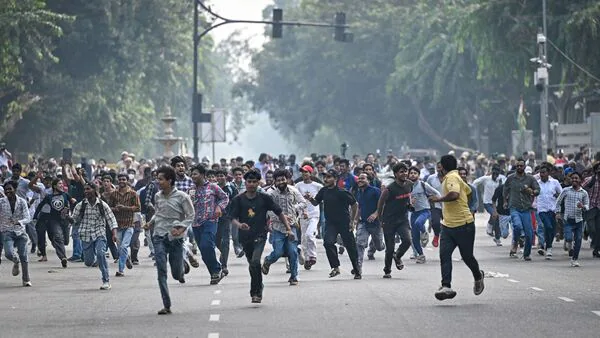
What Is A Preventative Detention? How It Is Different From Arrest? What To Know Amid Police Crackdown In Delhi Protests


Delhi Police detained several opposition leaders, including former chief ministers Arvind Kejriwal, Mamata Banerjee and Pinarayi Vijayan, along with CJP leaders Abhijeet Dipke, Saurav Das and Ashutosh Ranka. Dhruv Rathee and All India Students' Association (AISA) president Neha Bora were also reportedly detained.
Also Read | Delhi CJP Protest LIVE: More than 7,000 protestors detained 7,000+ protestors detainedAccording to the Press Trust of India (PTI), more than 7,000 people, including lawyers and students, had been detained while attempting to reach the protest site. Actor Imran Khan was also detained during a demonstration in Mumbai.
Quick answers to key questions
.5 QUESTIONS1What is preventive detention?⌵Preventive detention is the confinement of someone based on a reasonable apprehension that they may engage in activity threatening public order or security. Under Section 170 of the BNSS, police must have the required legal basis to believe an offence is planned or may happen and that detention is necessary to prevent it.
2How is preventive detention different from an ordinary arrest?⌵Preventive detention is intended to stop an anticipated threat. An ordinary arrest is generally connected to an alleged offence and the legal process that follows.
3Can police detain someone without a warrant under Section 170 of the BNSS?⌵Yes. Police may arrest without a warrant or magistrate's order if they believe a cognisable offence is being planned and it cannot otherwise be prevented. Detention under this power is limited to 24 hours unless further detention is authorised under another applicable law.
4Can police use preventive detention based only on suspicion?⌵No. The article says preventive detention does not give police unrestricted power to detain people merely on suspicion. Whether a detention is lawful depends on the facts and the legal grounds relied upon.
5What safeguards apply to arrest and preventive detention in India?⌵Article 22 of the Constitution of India provides safeguards relating to arrest and detention. The article also notes that the legality of a detention depends on the provision invoked and the circumstances.
The detentions have raised questions about the legal powers of the police during protests, including when they can take someone into custody without a warrant and what safeguards apply.
Criminal lawyer Swagata Biswas of Metropolitan Magistrate Court at Kolkata tells Live Mint,“A warrant is not always required to detain a person.”
An absence of a warrant does not mean that the police can detain anyone without a lawful basis. The legality of an arrest or detention depends on the provision invoked and the circumstances of the case.
Under Section 170 of the Bharatiya Nagarik Suraksha Sanhita (BNSS), 2023, the police can arrest a person without a warrant or an order from a magistrate if they believe a plan to commit a cognisable offence and that the offence cannot otherwise be prevented. The provision also limits detention under this power to 24 hours unless further detention is authorised under another applicable law.
Also Read | SC to hold special Sunday sitting on contempt plea over metro, train shutdowns What is a preventative detention?Preventive detention refers to the confinement of a person based on a reasonable apprehension that they may engage in an activity that threatens public order or security. Under Section 170 of the BNSS, the police must have the legally required basis to believe that an offence is being planned or might happen and that arrest is necessary to prevent it.
How preventative detention is different from arrestHowever, it doesn't give the police an unrestricted power to arrest people merely on suspicion. Whether a particular detention is lawful depends on the facts and the legal grounds relied upon by the authorities.
Preventive detention that allows authorities to hold a person to prevent anticipated threats is not the same as an ordinary arrest. An arrest is generally associated with an alleged offence and the subsequent legal process.
Laws providing for preventive detention include the National Security Act (NSA), 1980; the Conservation of Foreign Exchange and Prevention of Smuggling Activities Act (COFEPOSA), 1974; the Prevention of Black-marketing and Maintenance of Supplies of Essential Commodities Act, 1980; and the Prevention of Illicit Traffic in Narcotic Drugs and Psychotropic Substances Act, 1988.
Article 22 of the Constitution of India provides safeguards relating to arrest and detention.

Legal Disclaimer:
MENAFN provides the
information “as is” without warranty of any kind. We do not accept
any responsibility or liability for the accuracy, content, images,
videos, licenses, completeness, legality, or reliability of the information
contained in this article. If you have any complaints or copyright
issues related to this article, kindly contact the provider above.


Comments
No comment