

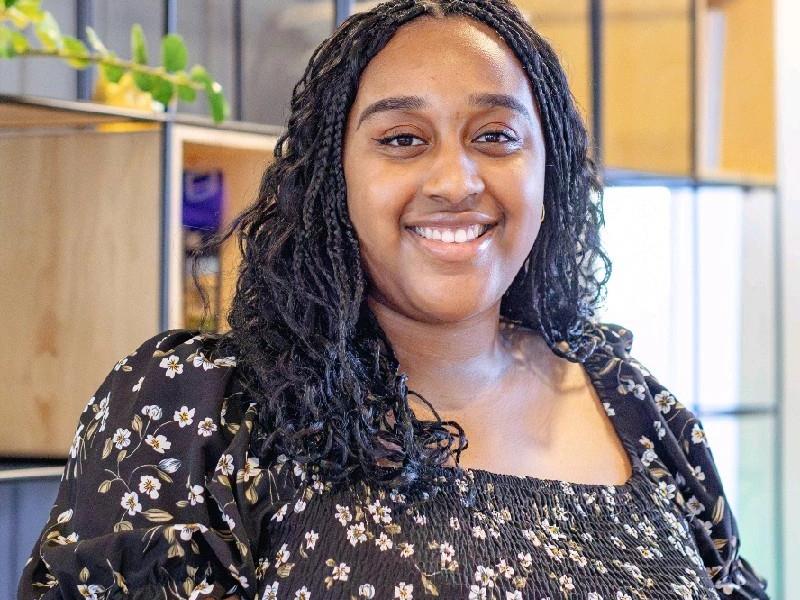
Young Changemakers 2026: Amira Williams In Conversation With Paul Holmes


She is currently an account director at FleishmanHillard London, as well as the chair of the inaugural Alumni Advisory Board of the Taylor Bennett Foundation, a charity dedicated to increasing ethnic representation within the UK's public relations and communications industry and creating Second Perspective, a programme that makes informal career guidance easier to access.
In her previous role at Harvard, after speaking out in the aftermath of George Floyd's urder, Amira was selected to join Taking Action, an advisory group of Black, Asian and ethnic minority employees that helped shape the agency's DE&I strategy and contributing to the submission that secured Blueprint status -created by BME PR Pros-for the agency.
Harvard's former CEO Louie St Claire, now founder and CEO of Delphi, says,“Amira has always effected change in all her roles.” Of efforts to address systemic racism and work towards a more inclusive culture, she says:“It would not have been possible without Amira's honesty and dedication.”
In an interview with PRovoke Media founder and editor Paul Holmes, Amria talks about jher educational background and how she“ ended up going into PR purely because of the Taylor Bennett Foundation,” seeing PR“as an opportunity to kind of combine my creative thinking with my interest in media theory and my strategic thinking, and apply all of that into lots of different types of work.”
She discusses getting into corporate affairs after witnessing the way corporate crises could influence consumers and brand perceptions. It was“really about taking my PR career where brand reputation is going, and where comms needs to be a little bit more at the forefront to help protect reputation.”
As for her work with the Taylor Bennett Foundation, she says“There was a recognized need to better engage our alumni community, the foundation has been going for nearly to 20 years, and there's more than 1400 alumni that have come through various programs. Not everybody works in the industry still, but there are many who do, so there was a desire to better energize and mobilize the alumni community and remind them that the Foundation is still here.”
In terms of the profession's overall progress on inclusion, she says:“I think when I first entered the industry, you were made very aware that it's not a diverse industry, there are not many people from ethnic minority backgrounds, and it makes you a little bit hyper conscious of how am I going to navigate that space?
“When I first started my career, maybe through to like the account manager, senior account manager level, the first four to five years, I would say we've made huge strides. I would say a large part of that is due to George Floyd's murder and the ramifications of that. I think it was a wake-up call for all industries to think about how they are not only protecting but promoting people from ethnic minority backgrounds and creating safer spaces for all.”
The progress from that point has not been linear though.“I think where we are with the DEI conversation in PR, the pendulum has swung a little bit the other way. I do worry there is a backsliding... who gets hired and who sees the opportunities, I feel like it's very much becoming again about who you know, not what you know. Your network has always been important, but I feel like there's an increased, particularly as jobs are quite scarce.
“There's also changes in the language that we're using, and I think there's maybe not a good understanding of what diversity means versus what equity means versus what inclusion means, and I think there's a slight conflation between access and inclusion. It's no longer enough to just have a flurry of ethnic minorities coming into the workplace, you need to retain them, and then it's what becomes what are you doing to actually retain them?”

Legal Disclaimer:
MENAFN provides the
information “as is” without warranty of any kind. We do not accept any
responsibility or liability for the accuracy, content, images, videos,
licenses, completeness, legality, or reliability of the information
contained in this article. If you have any complaints or copyright issues
related to this article, kindly contact the provider above.
Comments
No comment