


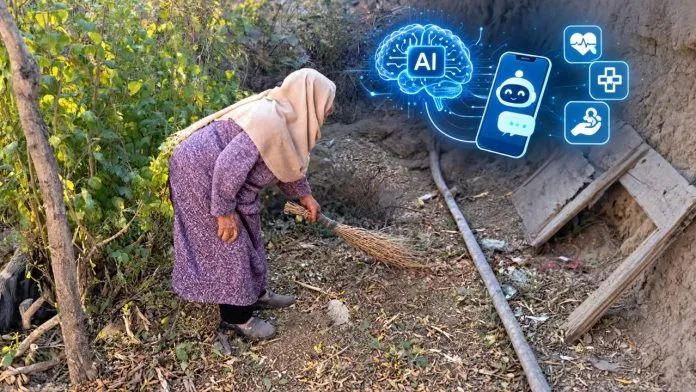
70-Year-Old Mother Turns To AI To Help Care For Her Son


Hanagul, a woman in her late 60s living in Kapisa province, cannot read or write and cannot afford to take her only son, who has diabetes, to a doctor regularly. She recently learned that artificial intelligence (AI) can answer questions and, with help from a relative in Kabul, is using the technology to learn more about her son's health.
Hanagul lives in a village in Hesa Awal Kohistan district of Kapisa. For the elderly mother, caring for her only son is not just a family responsibility but a daily source of worry, compounded by financial hardship and limited access to healthcare. She cannot afford to take him to a doctor every time his condition changes.
Her 28-year-old son has diabetes and suffers from complications associated with the disease. His physical condition prevents him from working, leaving the family facing additional financial difficulties.
Hanagul has no formal literacy and was previously unfamiliar with the internet and newer technologies. Recently, however, a relative in Kabul told her that AI tools can answer questions and provide information on a range of subjects, including health-related issues.
Unable to use the technology herself because she cannot read or write and does not have a smartphone, Hanagul relies on her family for assistance. She calls her relative by telephone, explains her concerns and asks the relative to enter her questions into an AI tool and relay the responses.
“When I see symptoms such as nausea or other problems in my son, I call Kabul and ask my nephew to enter his symptoms into artificial intelligence and get an answer so I can know what to do and help my son get better,” Hanagul said.
Whenever her son's condition causes concern, she wants to know what she can do to care for him better. Her introduction to AI has given her a new way to seek information about his illness, although her financial difficulties and limited access to medical care remain unresolved.
Medical professionals caution that AI-generated responses should not be treated as medical diagnoses or substitutes for consultations with qualified healthcare providers. Diabetes requires ongoing care, regular blood-glucose monitoring and adherence to medical advice. Severe symptoms or sudden changes in a patient's condition require prompt medical attention.
Because of her financial circumstances and lack of resources, Hanagul says she cannot take her son to a doctor regularly. She remains caught between her concerns about his health and the limited options available to obtain treatment.
Her own health is also fragile. Hanagul suffers from bronchitis, which she says tends to worsen each spring and sometimes leaves her needing hospital treatment.
What makes her story notable is not simply her discovery of a new technology, but her effort to find information that might help her care for her son despite the barriers she faces.
Hanagul's nephew, who lives in Kabul, told Khaama Press that he was surprised when she first contacted him to ask for help using an AI application.
“When my aunt first called and asked me to use artificial intelligence to find information, I found it very interesting because she has little familiarity with modern technology,” he said.“There is not even a reliable supply of electricity in the village where they live. I do not know exactly how she learned about this technology, but I suspect she may have heard about it from young people in the village.”
Although Hanagul cannot search the internet or read written responses herself, she has found a way to ask questions and access information through a family member. Her experience also highlights a broader challenge: how to make digital tools useful to people who lack literacy, direct internet access and adequate healthcare services.
For Hanagul in Kapisa, artificial intelligence has opened a new window onto information, accessed through telephone calls to her nephew in Kabul. But information alone cannot replace the medical treatment and continuing care her son needs.

Legal Disclaimer:
MENAFN provides the
information “as is” without warranty of any kind. We do not accept
any responsibility or liability for the accuracy, content, images,
videos, licenses, completeness, legality, or reliability of the information
contained in this article. If you have any complaints or copyright
issues related to this article, kindly contact the provider above.


Comments
No comment