


Africa Digital Assets Pre-Launches Kenya and Namibia Tokens to Democratize Finance, Starting with the Poor


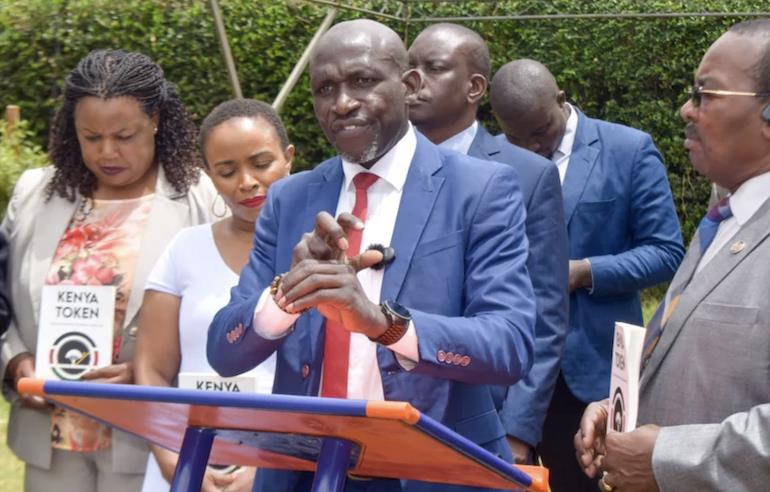
(MENAFN- Publicize) Africa Digital Assets (ADA) today announced the pre-launch of the Kenya Token and the opening of its Africa hub at Mwanzo Gardens in Nairobi. The occasion follows the pre-launch of the Namibia Token in Windhoek, Namibia, on October 5, 2026. Both tokens are designed around a simple yet powerful mission: democratize finance and provide opportunities to those in poverty, offering a faith-aligned alternative in a digital asset market where financial infrastructure has largely been exclusive.
“First and foremost, Africans' wealth should work for Africans, and that includes those most in need,” said Professor Fredrick Onyango Ogola, founder of ADA. “From Nairobi to Windhoek to Cape Town, the question is the same: who owns what our continent produces? Tokenization gives ordinary people a way to answer that for themselves. The moral code of digital assets must be written with the poor in mind.”
Aligning finance with faith
The Kenya and Namibia tokens draw on the Catholic Church’s teaching, which calls for preferential treatment of the poor in any decision or product launch. That principle shaped Africa Digital Asset Summit 2026, held on 29-30 April at the Catholic University of Eastern Africa in Nairobi under the theme of ethical stewardship for the love of the poor. The pre-launch and office opening also followed a series of engagements, including a New York Post Pro Pontifice Dinner attended by His Eminence Cardinal Pietro Parolin, the Vatican Secretary of State, hosted by Crescite Innovation.
ADA positions the tokens as decentralized finance that lets people make decisions about their money from their own phones. Kenyans moved roughly US $321 billion (KSh 41.68 trillion) through M-PESA last year, yet only 84,000 of Safaricom’s roughly 33 million M-PESA users actively traded shares in the app. Kenya Token is designed to close that gap, pegged at one token to US $1.00. Seventy percent of revenue funds buybacks held in a 30-year vault, and 30% is paid to holders as staking rewards. Funds go to real-economy projects, with 5% set aside to build a university to train African blockchain engineers.
The opportunity also extends to Namibia, where the opportunity is clear: keep resource wealth on home soil. Namibia is home to approximately three million people, but its ports and corridors serve six countries and more than 300 million people. It needs fuel storage, roads, energy, water and port expansion, and it has recently discovered oil. For ADA, Namibia is a gateway to expand decentralized, more accessible finance across southern Africa. The Windhoek briefing, led by country ambassador Dr. Ambrosius Hinanentu Iipinge, set out how minerals, renewable energy, and trade infrastructure along the Walvis Bay-Windhoek-Cape Town corridor could be tokenized.
“Namibia can become Southern Africa’s ethical tokenization gateway, creating opportunities for Namibians to participate in, own, and benefit from the wealth generated by their country,” said Professor Ogola.
A call to pause and prioritize literacy
With Kenya’s virtual asset licensing transition closing in November 2026, ADA urges authorities to suspend implementation by about eight months, to August 2027. Professor Ogola notes that the U.S. Congress rejected the Clarity Act earlier this year, and argues Kenya and Namibia lack enough local use cases to guide rules.
“Traffic should come before traffic lights,” said Professor Ogola. “Regulators should first watch and understand how traffic flows. Meanwhile, financial literacy protects people better than regulation alone.”
ADA proposes that regulators, industry, civil society, the Church, and educators work together to move from leaning entirely on regulation toward grounded governance and self-regulation. The Africa Digital Assets Academy supports this with an 11-course program, with the first courses free, on how digital assets work, how to spot fraud, and how to participate safely.
ADA’s work builds on the coalition that gathered at ADAS 2026, held between 29 and 30 April 2026 at the Catholic University of Eastern Africa in Nairobi. The summit attracted attendees from all over the world, with notable guests including representatives of the Office of the President of Kenya, Professor Chacha Nyaigotti-Chacha, former Chair of Kenya’s Commission for University Education, leaders from KPMG, the Virtual Assets Association of Kenya, and faith-based cryptocurrency innovator Eddie Cullen, CEO and Founder of Crescite Innovation.
The Nairobi pre-launch brings together stakeholders from Kenya, Namibia, and the wider African continent, including advisors from the Office of the President, professors from the University of Nairobi, prospective distributors, banking and pension representatives, in addition to investors and leaders from the U.S.
How to sign up
Anyone can sign a non-binding letter of interest (LOI) stating how many tokens they intend to buy at US$1 per token, and will receive a private-sale link. The whitelist is now open. Sales are open to the public between 16 and 25 December 2026.
To register interest, visit
“First and foremost, Africans' wealth should work for Africans, and that includes those most in need,” said Professor Fredrick Onyango Ogola, founder of ADA. “From Nairobi to Windhoek to Cape Town, the question is the same: who owns what our continent produces? Tokenization gives ordinary people a way to answer that for themselves. The moral code of digital assets must be written with the poor in mind.”
Aligning finance with faith
The Kenya and Namibia tokens draw on the Catholic Church’s teaching, which calls for preferential treatment of the poor in any decision or product launch. That principle shaped Africa Digital Asset Summit 2026, held on 29-30 April at the Catholic University of Eastern Africa in Nairobi under the theme of ethical stewardship for the love of the poor. The pre-launch and office opening also followed a series of engagements, including a New York Post Pro Pontifice Dinner attended by His Eminence Cardinal Pietro Parolin, the Vatican Secretary of State, hosted by Crescite Innovation.
ADA positions the tokens as decentralized finance that lets people make decisions about their money from their own phones. Kenyans moved roughly US $321 billion (KSh 41.68 trillion) through M-PESA last year, yet only 84,000 of Safaricom’s roughly 33 million M-PESA users actively traded shares in the app. Kenya Token is designed to close that gap, pegged at one token to US $1.00. Seventy percent of revenue funds buybacks held in a 30-year vault, and 30% is paid to holders as staking rewards. Funds go to real-economy projects, with 5% set aside to build a university to train African blockchain engineers.
The opportunity also extends to Namibia, where the opportunity is clear: keep resource wealth on home soil. Namibia is home to approximately three million people, but its ports and corridors serve six countries and more than 300 million people. It needs fuel storage, roads, energy, water and port expansion, and it has recently discovered oil. For ADA, Namibia is a gateway to expand decentralized, more accessible finance across southern Africa. The Windhoek briefing, led by country ambassador Dr. Ambrosius Hinanentu Iipinge, set out how minerals, renewable energy, and trade infrastructure along the Walvis Bay-Windhoek-Cape Town corridor could be tokenized.
“Namibia can become Southern Africa’s ethical tokenization gateway, creating opportunities for Namibians to participate in, own, and benefit from the wealth generated by their country,” said Professor Ogola.
A call to pause and prioritize literacy
With Kenya’s virtual asset licensing transition closing in November 2026, ADA urges authorities to suspend implementation by about eight months, to August 2027. Professor Ogola notes that the U.S. Congress rejected the Clarity Act earlier this year, and argues Kenya and Namibia lack enough local use cases to guide rules.
“Traffic should come before traffic lights,” said Professor Ogola. “Regulators should first watch and understand how traffic flows. Meanwhile, financial literacy protects people better than regulation alone.”
ADA proposes that regulators, industry, civil society, the Church, and educators work together to move from leaning entirely on regulation toward grounded governance and self-regulation. The Africa Digital Assets Academy supports this with an 11-course program, with the first courses free, on how digital assets work, how to spot fraud, and how to participate safely.
ADA’s work builds on the coalition that gathered at ADAS 2026, held between 29 and 30 April 2026 at the Catholic University of Eastern Africa in Nairobi. The summit attracted attendees from all over the world, with notable guests including representatives of the Office of the President of Kenya, Professor Chacha Nyaigotti-Chacha, former Chair of Kenya’s Commission for University Education, leaders from KPMG, the Virtual Assets Association of Kenya, and faith-based cryptocurrency innovator Eddie Cullen, CEO and Founder of Crescite Innovation.
The Nairobi pre-launch brings together stakeholders from Kenya, Namibia, and the wider African continent, including advisors from the Office of the President, professors from the University of Nairobi, prospective distributors, banking and pension representatives, in addition to investors and leaders from the U.S.
How to sign up
Anyone can sign a non-binding letter of interest (LOI) stating how many tokens they intend to buy at US$1 per token, and will receive a private-sale link. The whitelist is now open. Sales are open to the public between 16 and 25 December 2026.
To register interest, visit

Legal Disclaimer:
MENAFN provides the
information “as is” without warranty of any kind. We do not accept
any responsibility or liability for the accuracy, content, images,
videos, licenses, completeness, legality, or reliability of the information
contained in this article. If you have any complaints or copyright
issues related to this article, kindly contact the provider above.


Comments
No comment