


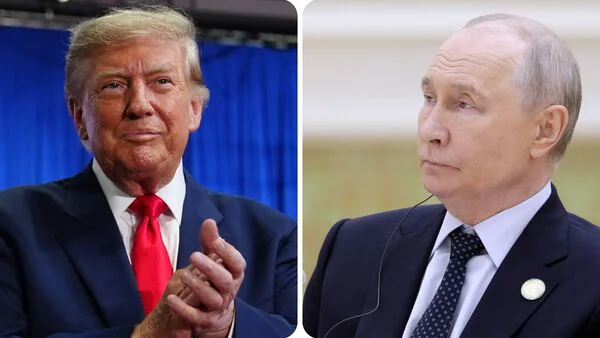
Trump, Putin Diesel Deal: What It Means For US Fuel Prices, Global Markets And The Russia-Ukraine War Explained


US President Donald Trump has announced a deal with Russian President Vladimir Putin to increase diesel supplies to global markets, as soaring fuel prices threaten to become a political liability for Republicans ahead of the November 3 congressional elections.
The agreement comes as the US temporarily lifts sanctions on Russian fuel imports, reversing measures imposed to deprive Moscow of revenue for its war against Ukraine. While the move could provide some relief to a tight diesel market, analysts have questioned whether it will bring sustained price reductions.
Trump said on social media that he had a“highly successful” discussion with Putin, during which Russia agreed to immediately supply more than 300,000 metric tons of diesel to US and global markets, equivalent to about 2.25 million barrels.
He added that Russia would supply another 500,000 tons in November and a further 1 million tons“immediately thereafter”, with additional volumes depending on the condition of Russian diesel refineries damaged by Ukrainian attacks.
The US Treasury Department issued a licence permitting imports of Russian diesel until April 7.
Also Read | 'Paid by enemies': Trump lashes out at protesters amid Texas rally interruptions What does the deal mean for US fuel prices?Diesel prices have become a growing concern for the Trump administration, with the fuel essential for agriculture, home heating and trucking. Prices have risen 70% since the US and Israel launched the war with Iran on February 28, according to the report.
Average US diesel prices reached $6.28 a gallon on Thursday, according to the AAA motorist group, putting pressure on farmers, ranchers and truckers.
Diesel futures fell almost 5% following news of the agreement and were trading at $4.64 a gallon.
However, analysts cautioned against expecting lasting relief. Rory Johnston, an oil market researcher and founder of CommodityContext, called the agreement a“nothing burger”, arguing that Russia typically exports substantially more diesel when its refineries are not under attack.
“It's clearly not a fix, but another stream to aid a very tight diesel market,” said Jim Mitchell, an analyst at consultancy Wood Mackenzie.
Why the deal matters for Russia and UkraineThe agreement could provide Moscow with additional revenue despite US sanctions imposed on Russian oil companies in October 2025 over the war that began in 2022. The additional income could help Putin continue the war against Ukraine.
Ukrainian President Volodymyr Zelenskiy criticised the move as a“weak decision on the part of strong partners”.
“Gifts to Putin will not bring peace or any benefit to the civilized world,” he said on X, warning that Russia would repay the concession with further attacks.
Republican Representative Don Bacon also opposed the decision, arguing that Washington should use sanctions to pressure Moscow rather than ease restrictions.
Also Read | Siberia plague scare: Trump to speak with Putin as Moscow downplays fears Will Russian supplies stabilise global markets?The deal offers an additional source of supply as the wars in Iran and Ukraine intensify global fuel shortages. However, the promised volumes may not be sufficient to offset broader supply disruptions.
Meanwhile, Trump is considering measures to boost domestic production, including using the Cold War-era Defense Production Act to expand refining capacity and bypass regulations restricting energy production.
The twin approach highlights the administration's challenge: easing fuel prices quickly while reducing supply vulnerabilities without undermining its pressure campaign against Russia.

Legal Disclaimer:
MENAFN provides the
information “as is” without warranty of any kind. We do not accept
any responsibility or liability for the accuracy, content, images,
videos, licenses, completeness, legality, or reliability of the information
contained in this article. If you have any complaints or copyright
issues related to this article, kindly contact the provider above.


Comments
No comment