

403
Sorry!!
Error! We're sorry, but the page you were looking for doesn't exist.
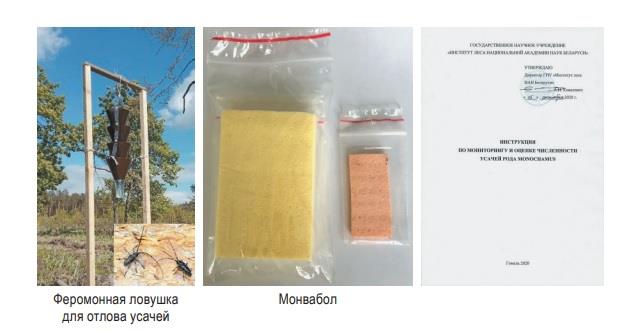
Method For Monitoring The Population Of Monochamus Sawyer Beetles In Coniferous Stands Using The Monvabol Pheromone Preparation.


(MENAFN- RCTT)
The Institute of Forest offers consumers a method (technology) for monitoring populations of "Monochamus" longhorn beetles in coniferous stands using the "Monvabol" pheromone product under a commercial agreement with technical assistance, as well as trapping devices provided under a manufacturing agreement and is lookind for partners to conclude a technical cooperation agreement.
Description
Importance and relevance of monitoring and controlling "Monochamus" longhorn beetles:
1) Ecological threat:
* "Monochamus" beetles are vectors of a dangerous phytopathogen-the pine wood nematode ("Bursaphelenchus xylophilus")-which causes wilting and the death of coniferous trees.
* Their activity causes significant damage to timber, reducing its quality and economic value.
2) Economic losses:
* Mass outbreaks of these beetles can lead to the loss of vast areas of coniferous forest, causing damage to the forestry and timber processing sectors.
* Costs associated with sanitary felling, timber treatment, and forest restoration increase.
3) Impact on biodiversity:
* The destruction of coniferous stands leads to ecosystem degradation, negatively affecting biodiversity and the resilience of forest ecosystems.
4) International significance:
* "Monochamus" beetles and the pine wood nematode are classified as quarantine pests. Their spread poses a threat to forests not only in Belarus but also in other countries.
Relevance of control measures:
1) Preventing spread:
* Effective monitoring enables the timely detection of beetle breeding hotspots and helps prevent their spread.
2) Preserving forest resources:
* Controlling these beetles helps preserve coniferous forests, which are vital economic and ecological resources.
3) Sustainable forestry:
* Pest population control is an integral part of sustainable forest management strategies. 4) International obligations:
* Controlling longhorn beetles helps meet international requirements for forest protection and the prevention of the spread of quarantine pests.
Monitoring and control technologies:
1) Population monitoring:
* Use of pheromone traps to attract and count longhorn beetles.
* Application of Geographic Information Systems (GIS) to map pest infestation hotspots.
* Remote sensing and drones for monitoring forest health.
2) Biological control methods:
* Use of entomophages (natural enemies of longhorn beetles), such as predatory insects and parasitic nematodes.
* Application of entomopathogenic fungi to infect the beetles.
3) Chemical methods:
* Targeted insecticide treatment of breeding hotspots.
* Impregnation of wood with protective compounds.
4) Sanitary measures:
* Sanitary felling and disposal of infested trees.
* Treatment of wood to prevent beetle emergence.
5) Innovative technologies:
* Development of eco-friendly biopesticides for pest control.
* Use of automated systems to analyze monitoring data.
The Institute of Forest, in collaboration with the Belarusian State University and the State Institution for Forest Protection and Monitoring "Bellesozashchita," has developed a method for monitoring populations of "Monochamus" genus longhorn beetles in coniferous stands. This method utilizes the domestic pheromone product "Monvabol" and specialized traps, establishing the procedures for organizing and conducting pheromone-based surveillance of these wood-boring insects.
Field of application (economic sector). This method for monitoring the population of "Monochamus" longhorn beetles in coniferous stands is intended for use within the forest holdings of state forestry institutions under the Ministry of Forestry and by other legal entities engaged in forestry management; it is to be applied as part of measures taken by forest protection services to combat dangerous forest pests, in accordance with the guidelines for monitoring and assessing "Monochamus" beetle populations.
Information on this method is included in the catalog "100 Best Developments by the National Academy of Sciences of Belarus for the National Economy (2022–2023)," pp. 177–179. Advantages and Innovations For the first time in the Republic of Belarus, a domestic pheromone product named "Monvabol"-designed to control populations of "Monochamus" longhorn beetles-and technical specifications (TU BY 100984088.007-2020) for a trap to capture these beetles have been developed and registered. The competitiveness of this development stems from the creation of a domestic pheromone product and monitoring trap for "Monochamus" beetles that are less expensive than their foreign counterparts. Stage of development Already on the market Comments regarding stage of development The method for monitoring the population size of "Monochamus" longhorn beetles is employed by state forestry agencies within an integrated forest protection system; this enables rapid assessment of the forest health situation regarding pest distribution and population levels, as well as the timely implementation of forest protection measures. Funding source State budged
Internal
IPR status Exclusive rights
Secret know-how
Comments regarding IPS status The Forest Institute complited a R&D project "Development of aggregation pheromones, assessment of biological efficacy and registration trials of a pheromone product for "Monochamus" longhorn beetles, and development of a method for monitoring their population levels."
The results were utilized in the development of the technology. Sector group Agrofood
BioChemTech
Environment
Tourism and Cultural Heritage
Client information Type R&D institution Year established 1930 NACE keywords A.02.10 - Silviculture and other forestry activities
A.02.40 - Support services to forestry
M.72.11 - Research and experimental development on biotechnology
M.72.19 - Other research and experimental development on natural sciences and engineering
M.74.90 - Other professional, scientific and technical activities n.e.c.
Turnover (in EUR) 10-20M Already engaged in transnational cooperation Yes Additional comments The Institute of Forest of the National Academy of Sciences of Belarus is the leading and only specialized research institution driving the modern scientific, technical, and innovative development of the country's forestry sector.
The Institute possesses well-equipped facilities and instrumentation, enabling research to be conducted at a high scientific and methodological standard.
The Institute actively collaborates with research institutes and higher education institutions across the CIS and other countries.
Pilot-scale testing and implementation of the Institute's scientific and technical developments are carried out at its three experimental forest bases: Dvinskaya, Zhornovskaya, and Korenevskaya.
Areas of activity:
- research into the genetic, physiological, and biochemical mechanisms underlying forest productivity and resilience;
- refinement of the scientific principles for forest regeneration, sustainable use, and conservation;
- development of technologies for sustainable forest management and utilization;
- development of technologies for forest regeneration based on genetics and selective breeding, as well as for enhancing productivity, ecological resilience, and biodiversity conservation;
- development of methods, tools, and technologies for forest fire prevention and protection against harmful organisms;
- development of methods and technologies for the rehabilitation of anthropogenically disturbed forest lands;
- development of methods and technologies for the conservation and regeneration of non-timber forest products, and the application of biotechnology in industry, agriculture, medicine, and environmental protection.
The Republic's regulatory and technical framework for forestry operations was developed by the Institute or with its participation.
Official website of the Institute of Forest. Languages spoken English
Russian
Information about partnership Type of partnership considered Commercial agreement with technical assistance
Manufacturing agreement
Technical cooperation agreement
Type and role of partner sought Consumers interested in purchasing the method (technology) for monitoring "Monochamus" longhorn beetle populations in coniferous stands using the "Monvabol" pheromone product under a commercial agreement with technical assistance and the associated trapping devices, under a manufacturing agreement.
Partners interested in further developing the method (technology) for monitoring "Monochamus" longhorn beetle populations in coniferous stands using the "Monvabol" pheromone product under a technical cooperation agreement. Type and size of partner sought > 500
251-500
SME 51-250
SME 11-50
SME <= 10
R&D Institution
University
Sole proprietor
1) Ecological threat:
* "Monochamus" beetles are vectors of a dangerous phytopathogen-the pine wood nematode ("Bursaphelenchus xylophilus")-which causes wilting and the death of coniferous trees.
* Their activity causes significant damage to timber, reducing its quality and economic value.
2) Economic losses:
* Mass outbreaks of these beetles can lead to the loss of vast areas of coniferous forest, causing damage to the forestry and timber processing sectors.
* Costs associated with sanitary felling, timber treatment, and forest restoration increase.
3) Impact on biodiversity:
* The destruction of coniferous stands leads to ecosystem degradation, negatively affecting biodiversity and the resilience of forest ecosystems.
4) International significance:
* "Monochamus" beetles and the pine wood nematode are classified as quarantine pests. Their spread poses a threat to forests not only in Belarus but also in other countries.
Relevance of control measures:
1) Preventing spread:
* Effective monitoring enables the timely detection of beetle breeding hotspots and helps prevent their spread.
2) Preserving forest resources:
* Controlling these beetles helps preserve coniferous forests, which are vital economic and ecological resources.
3) Sustainable forestry:
* Pest population control is an integral part of sustainable forest management strategies. 4) International obligations:
* Controlling longhorn beetles helps meet international requirements for forest protection and the prevention of the spread of quarantine pests.
Monitoring and control technologies:
1) Population monitoring:
* Use of pheromone traps to attract and count longhorn beetles.
* Application of Geographic Information Systems (GIS) to map pest infestation hotspots.
* Remote sensing and drones for monitoring forest health.
2) Biological control methods:
* Use of entomophages (natural enemies of longhorn beetles), such as predatory insects and parasitic nematodes.
* Application of entomopathogenic fungi to infect the beetles.
3) Chemical methods:
* Targeted insecticide treatment of breeding hotspots.
* Impregnation of wood with protective compounds.
4) Sanitary measures:
* Sanitary felling and disposal of infested trees.
* Treatment of wood to prevent beetle emergence.
5) Innovative technologies:
* Development of eco-friendly biopesticides for pest control.
* Use of automated systems to analyze monitoring data.
The Institute of Forest, in collaboration with the Belarusian State University and the State Institution for Forest Protection and Monitoring "Bellesozashchita," has developed a method for monitoring populations of "Monochamus" genus longhorn beetles in coniferous stands. This method utilizes the domestic pheromone product "Monvabol" and specialized traps, establishing the procedures for organizing and conducting pheromone-based surveillance of these wood-boring insects.
Field of application (economic sector). This method for monitoring the population of "Monochamus" longhorn beetles in coniferous stands is intended for use within the forest holdings of state forestry institutions under the Ministry of Forestry and by other legal entities engaged in forestry management; it is to be applied as part of measures taken by forest protection services to combat dangerous forest pests, in accordance with the guidelines for monitoring and assessing "Monochamus" beetle populations.
Information on this method is included in the catalog "100 Best Developments by the National Academy of Sciences of Belarus for the National Economy (2022–2023)," pp. 177–179. Advantages and Innovations For the first time in the Republic of Belarus, a domestic pheromone product named "Monvabol"-designed to control populations of "Monochamus" longhorn beetles-and technical specifications (TU BY 100984088.007-2020) for a trap to capture these beetles have been developed and registered. The competitiveness of this development stems from the creation of a domestic pheromone product and monitoring trap for "Monochamus" beetles that are less expensive than their foreign counterparts. Stage of development Already on the market Comments regarding stage of development The method for monitoring the population size of "Monochamus" longhorn beetles is employed by state forestry agencies within an integrated forest protection system; this enables rapid assessment of the forest health situation regarding pest distribution and population levels, as well as the timely implementation of forest protection measures. Funding source State budged
Internal
IPR status Exclusive rights
Secret know-how
Comments regarding IPS status The Forest Institute complited a R&D project "Development of aggregation pheromones, assessment of biological efficacy and registration trials of a pheromone product for "Monochamus" longhorn beetles, and development of a method for monitoring their population levels."
The results were utilized in the development of the technology. Sector group Agrofood
BioChemTech
Environment
Tourism and Cultural Heritage
Client information Type R&D institution Year established 1930 NACE keywords A.02.10 - Silviculture and other forestry activities
A.02.40 - Support services to forestry
M.72.11 - Research and experimental development on biotechnology
M.72.19 - Other research and experimental development on natural sciences and engineering
M.74.90 - Other professional, scientific and technical activities n.e.c.
Turnover (in EUR) 10-20M Already engaged in transnational cooperation Yes Additional comments The Institute of Forest of the National Academy of Sciences of Belarus is the leading and only specialized research institution driving the modern scientific, technical, and innovative development of the country's forestry sector.
The Institute possesses well-equipped facilities and instrumentation, enabling research to be conducted at a high scientific and methodological standard.
The Institute actively collaborates with research institutes and higher education institutions across the CIS and other countries.
Pilot-scale testing and implementation of the Institute's scientific and technical developments are carried out at its three experimental forest bases: Dvinskaya, Zhornovskaya, and Korenevskaya.
Areas of activity:
- research into the genetic, physiological, and biochemical mechanisms underlying forest productivity and resilience;
- refinement of the scientific principles for forest regeneration, sustainable use, and conservation;
- development of technologies for sustainable forest management and utilization;
- development of technologies for forest regeneration based on genetics and selective breeding, as well as for enhancing productivity, ecological resilience, and biodiversity conservation;
- development of methods, tools, and technologies for forest fire prevention and protection against harmful organisms;
- development of methods and technologies for the rehabilitation of anthropogenically disturbed forest lands;
- development of methods and technologies for the conservation and regeneration of non-timber forest products, and the application of biotechnology in industry, agriculture, medicine, and environmental protection.
The Republic's regulatory and technical framework for forestry operations was developed by the Institute or with its participation.
Official website of the Institute of Forest. Languages spoken English
Russian
Information about partnership Type of partnership considered Commercial agreement with technical assistance
Manufacturing agreement
Technical cooperation agreement
Type and role of partner sought Consumers interested in purchasing the method (technology) for monitoring "Monochamus" longhorn beetle populations in coniferous stands using the "Monvabol" pheromone product under a commercial agreement with technical assistance and the associated trapping devices, under a manufacturing agreement.
Partners interested in further developing the method (technology) for monitoring "Monochamus" longhorn beetle populations in coniferous stands using the "Monvabol" pheromone product under a technical cooperation agreement. Type and size of partner sought > 500
251-500
SME 51-250
SME 11-50
SME <= 10
R&D Institution
University
Sole proprietor

Legal Disclaimer:
MENAFN provides the
information “as is” without warranty of any kind. We do not accept any
responsibility or liability for the accuracy, content, images, videos,
licenses, completeness, legality, or reliability of the information
contained in this article. If you have any complaints or copyright issues
related to this article, kindly contact the provider above.
Comments
No comment