

Iraqi Kurds Sees Opportunities And Risks In The Withdrawal Of US Troops


For years, the American troop presence had two effects at once. It provided the region – home to 6.5 million people, mainly ethnically Kurdish – with broader military support and protection against drones and missiles launched by Iran and its allied groups in Iraq. The American presence also helped make the region part of a wider confrontation between the United States, Iran and those same Iranian-allied groups.
The withdrawal, therefore, creates a paradox. Iraqi Kurdistan may become less attractive as a target for militant groups seeking to pressure the United States. Yet the region loses some of the capabilities that helped manage threats that have little to do with the American presence.
The important question, then, for me as a regional expert is not simply whether Iraqi Kurdistan is safer after the U.S. departure, but which disappears faster: the threats that existed as a response to American forces or the protection their presence provided.
Removing a target, not all threatsIraqi Kurdistan, officially called the Kurdistan Region of Iraq, is a semi-autonomous federal region of the country and shares borders with Iran, Turkey and Syria.
After decades of repression under Saddam Hussein, the Kurds were able to maintain self-rule with the support of the U.S. after the 1991 Gulf War. The relationship later grew into a close security partnership, especially in the fight against the Islamic State group.
Yet the Kurds' security position in the country has remained somewhat tenuous. The region's hosting of Iranian Kurdish opposition groups has long drawn the ire of Iran. Iraqi militia groups linked to Iran, moreover, have regularly attacked Kurdish political, security and economic targets as part of Iraq's internal power struggles.
Those tensions increased after the 2017 Kurdistan independence referendum, in which nearly 92.73% of Kurds supported independence after years of unresolved disputes with Baghdad over territory, oil revenues and the budget.
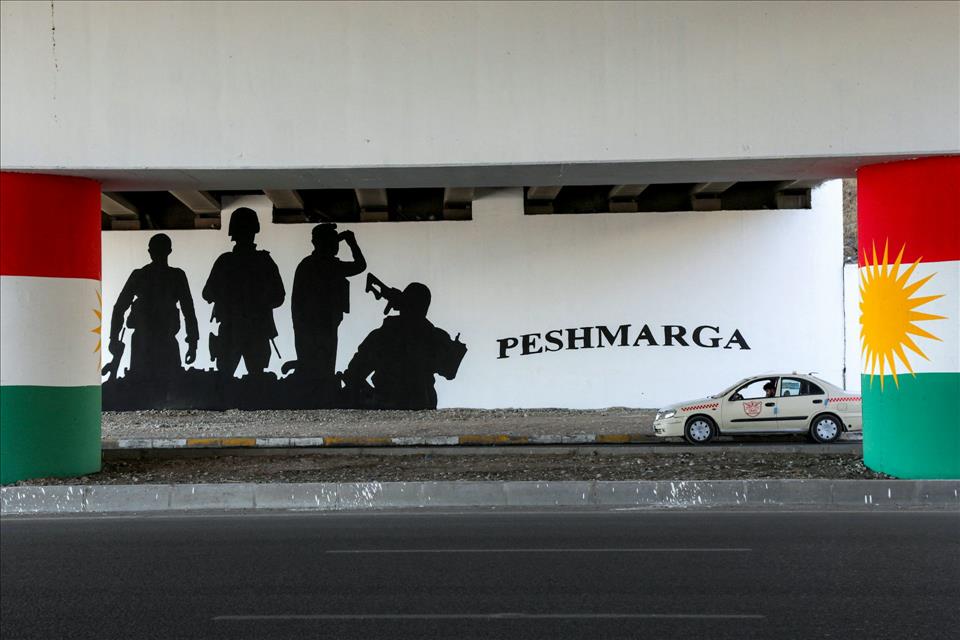
The failed bid for independence led to the loss of disputed territories previously held by the Peshmerga, the Kurdish security forces. This brought Iran-aligned militia groups closer to the Kurdistan region, and some of these areas later became launching points for attacks on Kurdish targets.
Those targets have included various oil fields, refineries, gas facilities and other energy infrastructure. Kurdish officials have in turn criticized the federal government in Baghdad for failing to take effective action.
The U.S. war in Iran has only compounded this civil strife, even though Kurdish authorities have repeatedly said they do not want to become party to that wider regional war. Since the war began on Feb. 28, more than 1,000 drones and missiles have targeted the region, either directly from Iran or its allied militia groups in Iraq.
The withdrawal of U.S. military forces will remove one clear source of exposure for Iraqi Kurds as it relates to that ongoing war. But what remains are the preexisting security and political issues that have long divided Iraq.
A unified Peshmerga – but without air defenseThe timing of the U.S. withdrawal creates another important contrast.
Days before U.S. forces left, the Kurdistan region formally completed the unification of the Peshmerga under one government command structure. Those forces had long been divided between the two main Kurdish parties in Iraq, the KDP and the PUK. Completing this long-standing U.S. demand was a historical milestone for the security of the region and Iraq.
Yet the unification addresses a far different concern than the one the region now faces. The Peshmerga have decades of experience in ground warfare and played an important role in the fight against the Islamic State group. But missile and drone defense require a different set of capabilities that the Kurdistan region lacks on its own.
Echoing a common refrain among fellow Kurdish leaders, Kurdistan Region Prime Minister Masrour Barzani said the next stage of the development of his territory's armed forces should include stronger military capabilities, advanced weapons and air-defense systems.
That makes the problem partly federal. The Ministry of Peshmerga has called the timing of the U.S. withdrawal sensitive, given instability that threatens security in both the region and for the Iraqi central government. It has also stressed that safeguarding Kurdistan's airspace against future aerial threats is ultimately Iraq's responsibility.
But the transition is incomplete. Kurdistan is now more dependent on Baghdad for air defense, while Iraq's national air-defense system is still being built and is not yet fully operational.
Sovereignty does not equal securityIraq marked the end of the U.S.-led coalition mission as sovereignty day. Foreign troops had left, and responsibility for Iraq's security had returned more fully to Iraqi institutions.
But withdrawal changes sovereignty in Iraq from a long-standing political claim into a practical test.
Kurdistan Region President Nechirvan Barzani noted that sovereignty does not mean only the departure of the foreign forces, but also the capability of the state to have authority and agency.
Yet the central government still doesn't have full control over armed groups operating in the country. Baghdad extended its deadline for bringing under government authority the weapons of armed groups outside state control from Sept. 30, 2026, to June 30, 2027, amid resistance from powerful armed groups.
The extension does not prove that Baghdad will fail. But it exposes a gap between formal sovereignty and effective control over armed forces.
For Kurdistan, this turns into a question of whether Baghdad can increase its defense of all Iraqi territory and airspace, including from Iranian drones in the region.
A new phase of US-Kurdish relationshipThe U.S. withdrawal also changes how the U.S.-Kurdish relationship should be judged.
Historically, security support and mutual regional goals have defined the U.S.–Kurdistan region relationship. That included the 1991 no-fly zone during the first Gulf War, American support during the 2003 U.S. invasion of Iraq and the war against the Islamic State group, in which Kurdish groups in Iraq and in Syria were indispensable allies on the ground.
Each phase produced a clear security rationale. With American troops no longer based in Irbil, that rationale has expired. The question is whether the relationship can survive without the military logic that created it.
There is evidence it can.
The U.S. completed a new consulate complex in Irbil in 2025, as a long-term platform for diplomacy, economic ties, education and support for American companies interested in the region.
This diversification matters because a partnership built mainly around military needs becomes vulnerable when U.S. security priorities change. Economic ties, investment and permanent diplomatic institutions create other reasons for the relationship to continue. And the U.S. remains an important economic partner, ranking sixth among countries with the largest number of companies operating in the Kurdistan Region.
This will matter to both sides going forward. For Kurdistan, it would reduce the tendency to read every change in U.S. military posture as a measure of political commitment. For Washington, it would offer a way to maintain influence and partnership without making a permanent troop presence the foundation of the relationship.
The region going forwardThe U.S. withdrawal does not create a simple security vacuum.
It changes who is responsible for managing the threats that remain. What happens next in terms of security will be especially instructive.
If attacks decline after U.S. facilities disappear, the American presence was clearly a primary source of instability and potentially an inhibiting factor on improving security. That would then be a welcome change for Kurdish sovereignty and the goal of Iraqi nation-building.
If, however, things largely continue on as before, then security of the Kurdistan region, and the implications for politics and energy, will continue to be a major source of worry – and confirm the worst fears of many Kurdish leaders concerning the American withdrawal.


Legal Disclaimer:
MENAFN provides the
information “as is” without warranty of any kind. We do not accept any
responsibility or liability for the accuracy, content, images, videos,
licenses, completeness, legality, or reliability of the information
contained in this article. If you have any complaints or copyright issues
related to this article, kindly contact the provider above.
Comments
No comment