

The Shoe That Cost Gold: Aichinagoya's Unexpected Turning Points


The shoe
Toxanbayeva finished in 3hr 22min 20sec, almost four minutes clear of her nearest rival. A subsequent footwear inspection found that her shoe model was not on World Athletics' approved list. Her result was annulled and China's Danzengquzong inherited gold. Kazakhstan's national Olympic committee said it had sent photographs and information about the shoes to World Athletics before the decision was confirmed.
To spectators, the reversal could seem harsh: the race had visibly ended, with one competitor well ahead. But crossing the line does not settle everything. Equipment approval is part of a valid performance, alongside distance, timing and conduct. The episode reminded delegations that their responsibilities extend to details examined away from public view.
The bite
A women's judo quarter-final produced a different kind of intervention. Japan's Rin Maeda told the referee that China's Tang Jing had bitten her arm during their under-70kg contest. Officials reviewed the footage and disqualified Tang for unsportsmanlike behaviour. Japanese coaching staff said bite marks were visible. Maeda went on to win gold.
The lift
For Iraqi fans, the most painful moment came in weightlifting. Ammar celebrated a 219kg snatch world record in the men's +110kg category, but confusion over the lifting order and the time available affected his final clean-and-jerk attempt. According to the Olympic Council of Asia's report and Ammar's own account, he believed Iran's Ali Davoudi was due to lift. Realising late that his turn had come, he rushed to the platform while fastening his belt and failed at 252kg.
Davoudi won with a 466kg total, one kilogramme ahead of Ammar's 465. The International Weightlifting Federation reported that the Iraqi was competing for the first time in 20 months. Twenty-five senior world records were set in weightlifting across the Games, five of them by athletes who did not win overall gold. That is a quirk of the sport: because the final ranking combines two lifts, a lifter can enter the record book and still finish second or third.
Ammar's record stands. But the question of what a clearer final attempt might have brought will follow him.
The streak
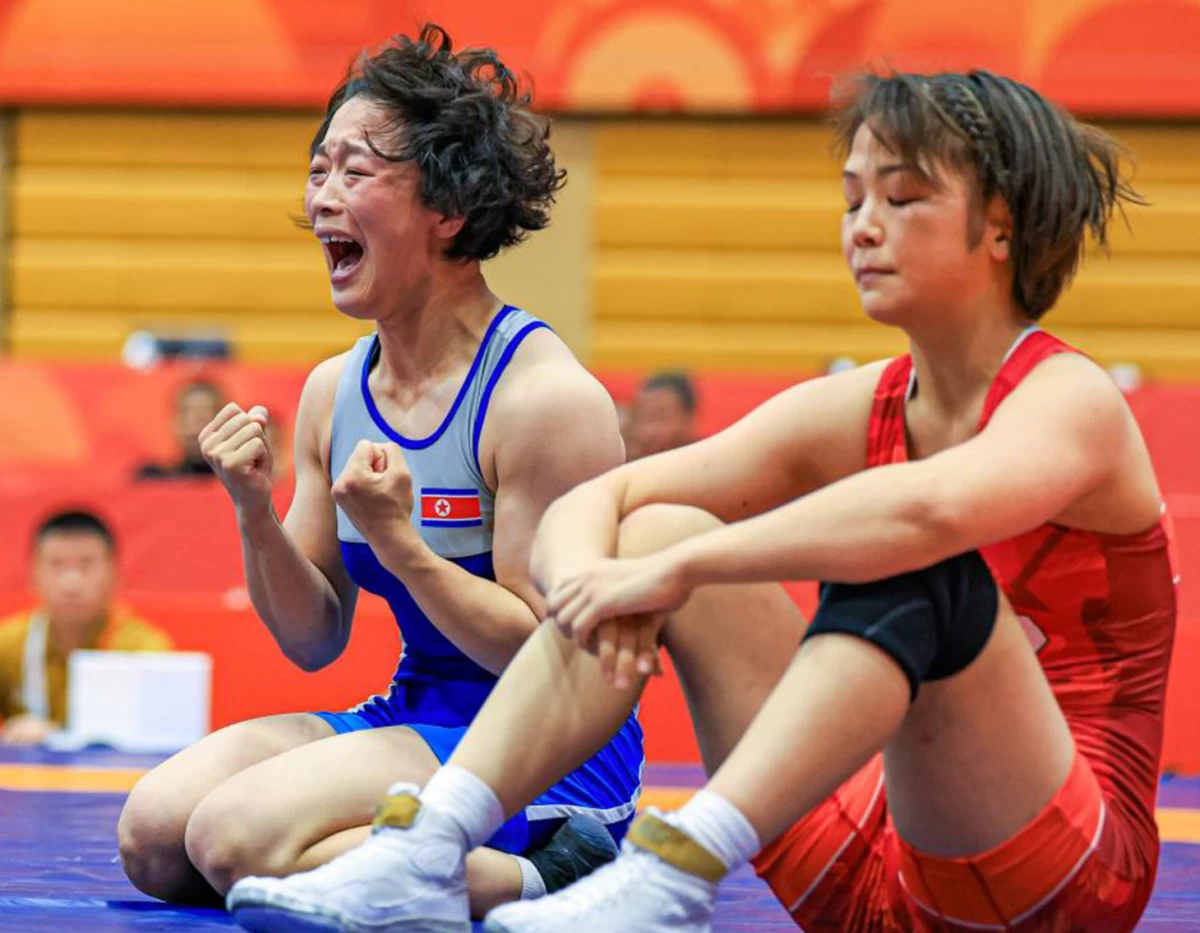
Japanese wrestling fans had grown used to putting off an ending. Olympic champion Akari Fujinami lost to North Korea's Son Il Sam in the women's 57kg semifinals, ending a run of 155 consecutive victories, according to United World Wrestling. She lost by fall after her opponent built a commanding lead. Fujinami had moved up from 53kg, the category in which she won Olympic and world titles, and faced the physical demands of heavier opponents. A few minutes ended a winning run stretching back nine years.
The frame
At the shooting range, one disputed shot carried consequences for a whole team. India's Rahi Sarnobat was awarded no points for a shot in the women's 25-metre pistol after judges ruled that she had hit the target frame. Her appeal failed. The Indian Express reported that the lost score damaged India's team medal chances despite her improved shooting afterwards. The moment was quieter than a wrestling fall or a judo disqualification, but its effect reached beyond one athlete's score.
The traffic
Outside the venues, the women's hockey final between India and China ran into an obstacle absent from tactical plans: traffic. An accident near the Gifu stadium caused congestion and delayed the teams' buses, forcing organisers to postpone the start. A major event depends on the journey between accommodation and competition as much as on the contest itself.
The criticism
Away from officiating and logistics, Indian long-jump silver medalist Ancy Sojan became the subject of debate over her hairstyle and jewellery. She said she chose an appearance that made her comfortable and confident then faced abusive comments on social media. She defended her choices as personal and said the criticism would not discourage her.
Some observers seemed more interested in a medalist's appearance than her performance. An athlete's right to a personal style should not become a public argument at a moment meant to honour sporting effort, and no measuring device can settle that debate.
Different causes, different lessons
These incidents belong to the same Games, but their causes are distinct: equipment compliance, conduct in a contest, timing confusion, a change of weight class, a judging decision and a traffic jam. Calling them all oddities would blur responsibility and flatten experiences ranging from administrative errors to sporting surprises and unacceptable behaviour.
Aichi–Nagoya will be remembered for a winner whose shoes invalidated her result, an Iraqi record-breaker taking silver, and a champion whose streak stopped at 155. Once the question of who won has been answered, such details raise another: How exactly did the contest turn, and what could a single second have changed?

Legal Disclaimer:
MENAFN provides the
information “as is” without warranty of any kind. We do not accept any
responsibility or liability for the accuracy, content, images, videos,
licenses, completeness, legality, or reliability of the information
contained in this article. If you have any complaints or copyright issues
related to this article, kindly contact the provider above.
Comments
No comment