

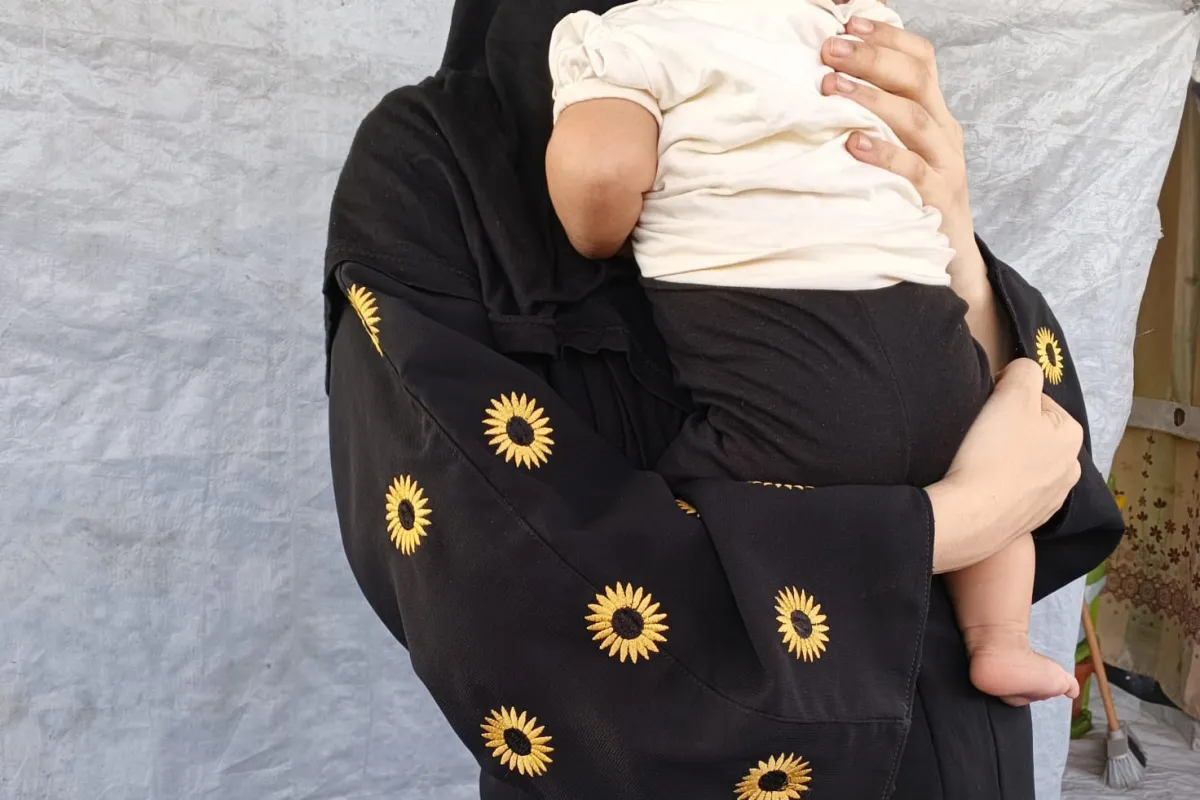
War In Gaza: The Victims That No One Talks About


Annegret Mathari has been reporting on International Geneva for more than two decades. For swissinfo she covers the UN and other Geneva-based international organisations. She writes on international diplomatic negotiations, human rights issues, humanitarian aid, armed conflicts, health and the environment.
-
More from this aut
-
Português
pt
Guerra em Gaza: as vítimas de que ninguém fala
Read more: Guerra em Gaza: as vítimas de que ninguém
العربية
ar
الحرب في غزة: الضحايا الذين لا يتحدث عنهم أحد
Read more: الحرب في غزة: الضحايا الذين لا يتحدث عنهم
中文
zh
加沙战争:那些无人关注的孕产妇
Read more: 加沙战争:那些无人关
In February, Nagham, a 29-year-old living in the Al-Mawasi camp, Khan Younis in southern Gaza Strip was rushed to hospital with bleeding and severe pain. That's when she learnt she was pregnant.
She is now into her eighth month of pregnancy, which she has described overall as extremely“difficult”.
“The living conditions caused physical and emotional exhaustion, especially after the famine; the stress, the heat, the humidity, and the lack of hygiene,” she tells Swissinfo.
Nagham was unable to attend regular check-ups because the nearest hospital was two hours away and the journey cost more than she could afford. It was only this summer that a humanitarian organisation opened a clinic close to the camp where she could receive medical care. Finding essential vitamins and medication was likewise very difficult and costly.
Recently, she suffered from severe infections and needed antibiotics. Soaring temperatures – an average of 33°C in August in Gaza – combined with extreme humidity made breathing and sleeping difficult.
Nearly three years after the Hamas-led attacks on Israel and the start of Israel's military campaign in Gaza, more than 73,000 Palestinians have been reported killed according to OCHA, the United Nations Office for the Coordination of Humanitarian Affairs.
For pregnant and breastfeeding women in Gaza, the war has created particular risks. With much of the healthcare system decimated, access to care remains complicated and expensive. Hygiene conditions are minimal. Women often have no choice but give birth in tents or other makeshift conditions.
According to a study by the London School of Hygiene & Tropical Medicine and Al-Quds University in Gaza City, published by the World Health Organization (WHO) in June 2026, the mortality rate among women who were pregnant on 8 October 2023 was 948 deaths per 100,000 pregnancies. Most died from traumatic injuries.
More More Humanitarian aid After the ceasefire, survival still defines life in GazaThis content was published on Jul 9, 2026 Nine months after the ceasefire in Gaza, peace remains elusive. Food queues, water trucks, and torn tents define everyday life as families struggle to meet basic needs.
Read more: After the ceasefire, survival still defines life in
Legal Disclaimer:
MENAFN provides the
information “as is” without warranty of any kind. We do not accept any
responsibility or liability for the accuracy, content, images, videos,
licenses, completeness, legality, or reliability of the information
contained in this article. If you have any complaints or copyright issues
related to this article, kindly contact the provider above.
Comments
No comment