

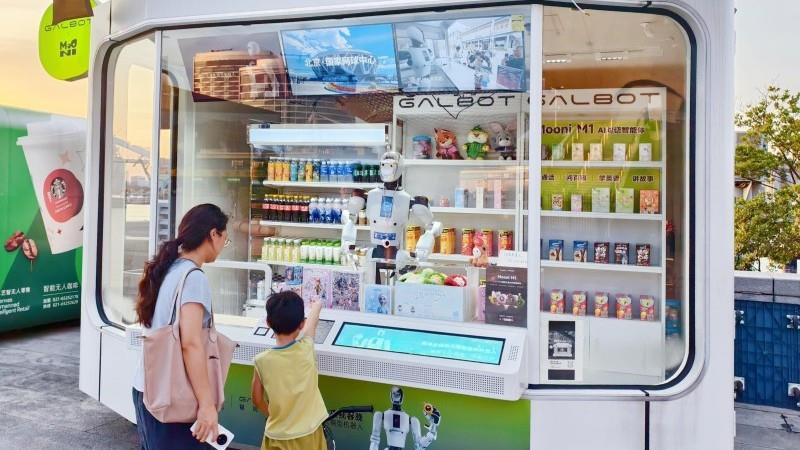
How AI Agents Could Reshape Retail As Stores Move Beyond Sales


Retail is entering a new phase of digital disruption. E-commerce has already transformed where consumers shop; agentic commerce is set to change how they shop. Autonomous artificial intelligence agents can search, compare and purchase products on behalf of consumers, shifting shopping from an active task to an increasingly automated background process.
Agentic commerce goes beyond AI assistants and comparison websitesKey differences between agentic commerce, AI assistants (such as ChatGPT and Gemini) and comparison websites
Source: ING Research"> Most relevant for routine purchases, less so for luxury goods
Agentic commerce is not equally suited to every product category. Its greatest potential lies in repeat and replacement purchases, as well as functional, standardised products. In these categories, AI agents can efficiently compare prices, specifications, and availability, while using consumption patterns to determine the optimal time to buy.
Adoption is likely to be slower for luxury, trend-sensitive and experience-driven products. In these categories, inspiration, emotion, and personal preference remain central to the purchasing decision, making consumers less inclined to relinquish control. AI agents can assist by pre-selecting products that match predefined preferences, but final purchasing decisions are likely to remain firmly in the hands of the consumer.
Consumer electronics and personal care lead the adoption of agentic commerceWithin non-food retail, agentic commerce appears particularly well suited to consumer electronics and personal care. Both sectors are characterised by a high degree of product standardisation and a large share of repeat purchases, making them ideal candidates for AI-driven purchasing.
In consumer electronics, purchasing decisions are often based on objective and easily comparable criteria, including price, technical specifications, and availability. This makes products such as televisions, laptops and other electronic devices well suited to automation, allowing AI agents to manage much of the purchasing journey from product selection to the final transaction.
The potential is equally significant in personal care, where many purchases are routine and repetitive. Products such as diapers, shampoo, and toothpaste can be reordered automatically based on usage patterns and preset preferences. By reducing the effort required to order everyday products, AI agents could further accelerate the shift towards online shopping.
Agentic commerce is best suited to consumer electronics and personal care productsProduct categories most and least suited to agentic commerce
Source: ING Research"> Personal taste limits AI agents' potential in fashion and livingFor now, fashion and home furnishings appear less suited to fully autonomous agentic commerce. Purchasing decisions in these categories are often shaped by inspiration, aesthetics, personal taste, and broader lifestyle considerations, making consumers less willing to hand over control to an AI agent.
While AI can support product discovery and narrow down options based on predefined preferences, the final purchase decision will typically remain with the consumer. In these segments, AI is therefore more likely to serve as a decision-support tool than as a fully autonomous purchasing agent.
Chinese platforms lead adoptionAgentic commerce creates the greatest opportunities for large global marketplaces and technology companies. These players combine vast product assortments with the scale, data and infrastructure needed to deploy AI agents effectively. Their integrated ecosystems, including payment solutions, logistics networks, and data platforms, enable them to integrate AI agents into their business operations faster and more effectively.
Chinese platforms such as Alibaba and JD currently lead the way, with AI agents already deeply integrated into their respective platform networks. These agents can not only provide product recommendations but also complete purchases autonomously. Meanwhile, US technology companies including Amazon, Google, Meta, OpenAI and Anthropic are investing heavily in the development and rollout of AI agents, intensifying the global race for leadership in this emerging market.
European players are structurally lagging behind their American and Chinese competitors. Stricter regulation and less integrated platform networks limit their ability to bundle scale, data and services. While Zalando is among Europe's frontrunners in AI-powered retail, its applications are currently focused on product discovery, comparison, and selection. Fully autonomous purchasing has yet to become a reality.
Technology platforms are becoming the gatekeepers of commerceAI agents are rarely neutral actors. Embedded within commercial ecosystems, they are inherently linked to the interests of platforms, marketplaces and technology companies. Although agentic commerce promises greater convenience and time savings for consumers, it is also likely to strengthen the dominance of large tech firms and marketplaces. These parties are becoming increasingly influential in shaping product choices and controlling consumer access.
Physical stores are not disappearing, but their role is changingHow will the role of the physical store evolve in an AI-driven retail landscape?
Source: ING Research"> Redefining the store in the age of AIAgentic commerce is expected to accelerate the shift of sales to online channels, putting further pressure on the existence of physical stores. The extent of this impact will largely depend on consumers' willingness to delegate purchasing decisions to AI agents.
Physical stores will nevertheless remain relevant for many non-food retailers. Their role is shifting from sales channel to destination for advice, service, inspiration, and support of online sales. Stores that continue to rely mainly on transactional sales risk losing relevance in an increasingly AI-driven retail landscape.
Retailers that successfully integrate their physical and digital channels, define clear roles for their stores, and deploy technology strategically can strengthen their position within the customer journey. In a future shaped by AI-driven commerce, their role will increasingly centre on adding value where automation cannot.

Legal Disclaimer:
MENAFN provides the
information “as is” without warranty of any kind. We do not accept any
responsibility or liability for the accuracy, content, images, videos,
licenses, completeness, legality, or reliability of the information
contained in this article. If you have any complaints or copyright issues
related to this article, kindly contact the provider above.
Comments
No comment