

Ukrainian Medics Learn About The Dutch Model Of Care For Premature Babies


“Previously, parents were welcome, but they were not directly involved in caring for their tiny newborns. We now have a great deal of research showing that involving parents is beneficial for the parents themselves, for the children, and for medical staff,” Ruhe said.
She explained that the family integrated care approach includes, among other things, 24-hour access for parents to the unit, access to essential facilities, participation in medical rounds, and training in how to care for their child.
According to Ruhe, parents are taught practical skills such as feeding a baby with a syringe, changing diapers, practicing Kangaroo Care, and performing other procedures depending on the newborn's condition.
The unit cares for babies born from approximately 24 weeks of gestation. It currently has between 18 and 25 operational beds, out of a designed capacity of 36.
Ruhe also said that during the visit, Ukrainian specialists mainly asked practical questions, particularly about medical equipment and respiratory support for newborns.
According to her, the smallest baby she treated at the unit weighed 410 grams.
“Working with such patients requires significant effort and involves gradually engaging parents in their care,” she said.
The experience-sharing program for Ukrainian medical professionals was organized by the Ukrainian Academy of Pediatric Specialties and the NGO Early Birds.
“We are grateful to the team at Emma Children's Hospital for their openness and for the opportunity to learn about the work of the neonatology department. Here, we saw how the family-integrated care approach is implemented in daily practice: parents are part of the team caring for a premature baby. Particular attention is paid to training healthcare professionals, including communication with families. As a parent-led organization, it is important for us to learn from this experience so that we can help promote the implementation in Ukraine of approaches that support children and their parents,” said Oleksandra Balyasna, co-organizer of the program and head of the Early Birds NGO.
Among the Ukrainian specialists taking part in the visit was pediatrician and anesthesiologist Iryna Kondratova, who previously headed the Kharkiv Regional Perinatal Center. During the intense shelling of Kharkiv in 2022, she and her team remained at the hospital around the clock, caring for women in labor and saving newborns.
“Ukraine needs a comprehensive system of medical and social support for children who are born prematurely, have severe illnesses, or receive incurable diagnoses. The focus of this system should not be only on the child, but on the entire family,” she said.
Read also: Dutch writer: I was trying to show Netherlands what Ukraine is like just as war beganAccording to Kondratova, Ukraine has individual elements of support for such children, but they are not integrated into a single system. This includes support from the moment a child is born, assistance to the family during treatment and preparation for discharge, further outpatient follow-up, assessment of the child's development, and, when necessary, palliative care.
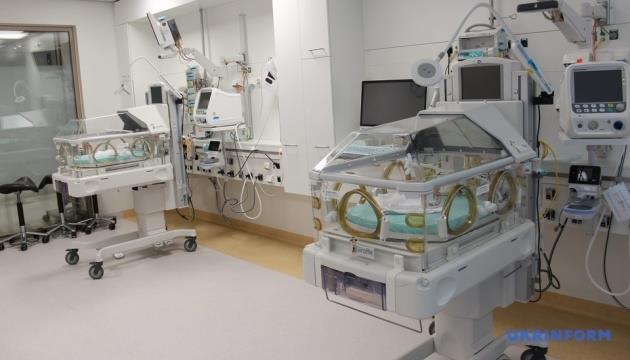
She was particularly impressed by the way the neonatal intensive care unit in Amsterdam is organized. According to her, the focus is not only on the child, who may require mechanical ventilation, continuous monitoring, and a large amount of medical equipment. The mother, father, and other family members can remain close to the child.
“This is not even a hospital room in the way we understand it. It is more like a three-room apartment built around the family. And if there are older children in the family, they can stay here as well,” the doctor said.
She also highlighted how thoroughly the needs of medical equipment are taken into account when the space is designed. In one of the rooms, she counted 22 electrical outlets around the child's bed alone.
“An engineer or a builder simply would not understand all the requirements involved. Doctors and nurses need to be consulted before implementing this philosophy. This is all about the family, dignity, and the best practices in the world, so that the family does not feel abandoned. I find it truly remarkable,” she said.
Kondratova also highlighted the role of nurses in the Dutch healthcare system. According to her, the visit to the neonatal unit and children's hospice made it clear that a significant share of the workload is carried by nursing staff.
As reported by Ukrinform, in December 2025, the renovated Neonatal Intensive Care Unit, along with the hospital's mobile neonatology team, was officially opened at the Okhmatdyt National Specialized Children's Hospital under Ukraine's Ministry of Health.

Legal Disclaimer:
MENAFN provides the
information “as is” without warranty of any kind. We do not accept any
responsibility or liability for the accuracy, content, images, videos,
licenses, completeness, legality, or reliability of the information
contained in this article. If you have any complaints or copyright issues
related to this article, kindly contact the provider above.
Comments
No comment