

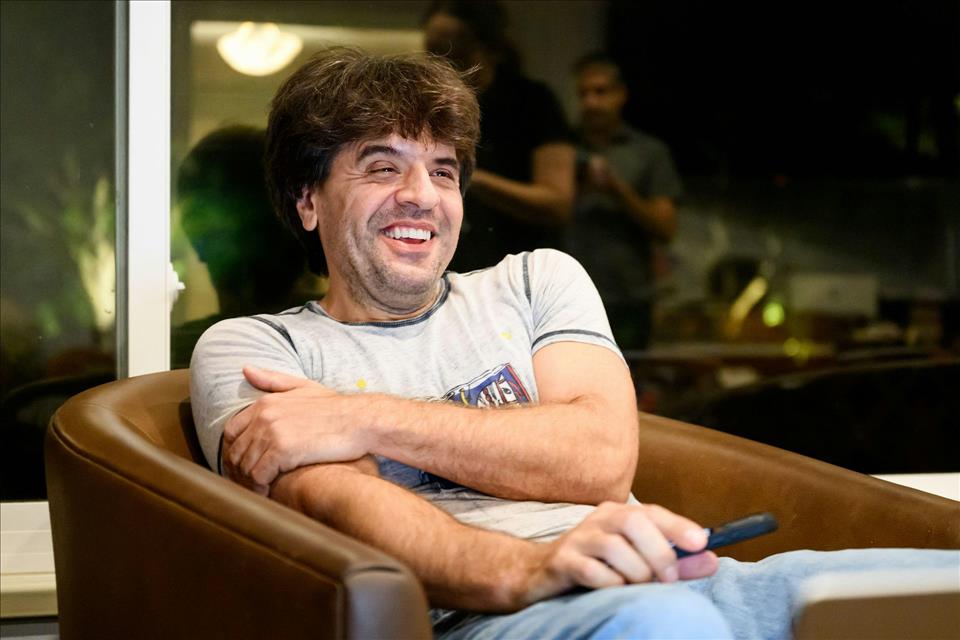
Nobel Laureate Karl Deisseroth On How Light Is Changing What We Know About The Brain


When Karl Deisseroth was studying to be a doctor in the 1990s, he took a rotation working with psychiatric patients. It would start him down a path of discovery about how the brain works that would eventually lead him to become a Nobel laureate.
Deisseroth, today a professor in the schools of medicine and engineering at Stanford University in the US, spoke to The Conversation Weekly podcast about his research, and the experience of being jointly awarded the 2026 Nobel prize for physiology or medicine with two German scientists, Peter Hegemann and Georg Nagel.
Deisseroth's contribution was for pioneering the field of optogenetics, the ability to control nerve cells with light to investigate how their activity shapes our feelings and behaviour. To do this, he used a gene from a single-celled pond algae, discovered by Hegemann and Nagel.
Listen to Deisseroth talk about his research journey, and his hopes for the future of optogenetic research, on The Conversation Weekly podcast.
Disclosure statementKarl Deisseroth has received funding from the NIH and the Howard Hughes Medical Institute. He was the founder of MapLight Therapeutics, a biopharmaceutical company.
CreditsThis episode of The Conversation Weekly was written and produced by Gemma Ware, Grace Jennings-Edquist and Isabella Podwinski. Mixing by Lloyd Barrett and theme music by Neeta Sarl.
Newsclip in this episode from the Nobel Prize.
Listen to The Conversation Weekly via any of the apps listed above, download it directly via our RSS feed or find out how else to listen here. A transcript of this episode is available via the Apple Podcasts or Spotify apps.


Legal Disclaimer:
MENAFN provides the
information “as is” without warranty of any kind. We do not accept any
responsibility or liability for the accuracy, content, images, videos,
licenses, completeness, legality, or reliability of the information
contained in this article. If you have any complaints or copyright issues
related to this article, kindly contact the provider above.
Comments
No comment