

South Korea's Hypersonic Leap Runs Into North Korea's Nuclear Wall


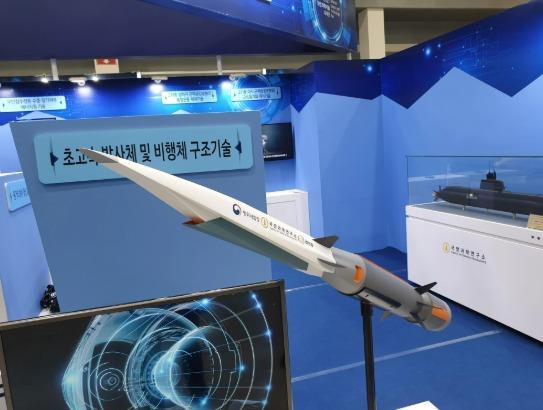
This month, multiple media outlets reported that South Korean President Lee Jae-myung oversaw the country's first test launch of a domestically developed hypersonic glide vehicle, accelerating its drive to field high-speed conventional strike assets that can penetrate regional missile shields.
A booster rocket launched the weapon before it separated at high altitude, then descended and maneuvered both horizontally and vertically at low altitude to strike an offshore test target.
Although the South Korean government did not disclose the exact location, reports indicate the Agency for Defense Development conducted the test from a barge off Taean, approximately 130 kilometers south of Seoul. This trial verified guidance systems and ultra-high-temperature thermal shielding.
The test comes amid rising inter-Korean friction following a September border land mine blast that wounded South Korean soldiers and follows North Korea's test of an intermediate-range hypersonic missile days earlier.
Seeking to counter North Korea's evolving arsenal and reduce reliance on the US after scaled-back joint military drills, Lee urged researchers to swiftly deploy the strategic deterrent while also inspecting the military's bunker-busting Hyunmoo-5 ballistic missile.
Although this hypersonic test sharpens South Korea's prompt conventional counterstrike posture, deploying such assets directly collides with North Korea's hardened missile architecture, pre-delegated nuclear doctrine, and South Korea's capability and hedging limitations.
In an August 2026 Atlantic Council report, Markus Garlauskas and other authors note that non-nuclear hypersonic missiles are a viable counterstrike option to deter and respond to North Korean limited nuclear attacks.
Garlauskas and others recommend assessing posture adjustments that integrate“new US and allied non-nuclear counterstrike options such as hypersonic missiles” alongside South Korea's heavy penetrating ballistic missiles to strike hardened adversary targets.
In a series of Beyond Parallel reports, Joseph Bermudez Jr. and other writers mention that North Korea operates an estimated 15 to 20 undeclared ballistic missile operating bases across tactical, operational and strategic belts.

Legal Disclaimer:
MENAFN provides the
information “as is” without warranty of any kind. We do not accept any
responsibility or liability for the accuracy, content, images, videos,
licenses, completeness, legality, or reliability of the information
contained in this article. If you have any complaints or copyright issues
related to this article, kindly contact the provider above.
Comments
No comment