

Belt And Road Paving Way For China's Military Presence In SE Asia


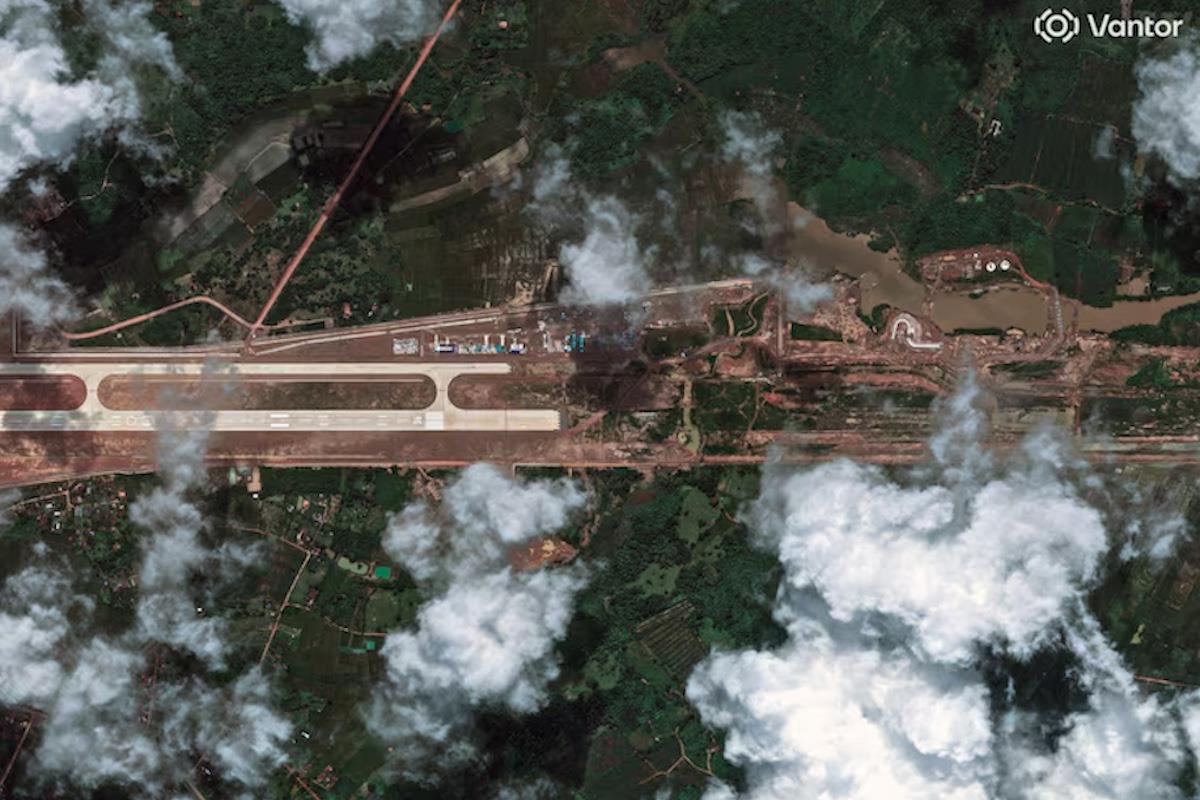
The speed of the buildup and the earthmoving visible around the airstrip in the satellite imagery suggest China may have acquired its first full-fledged military base in Southeast Asia. If so, over a decade of Chinese infrastructure lending likely left Laos too indebted and too dependent to refuse the outpost.
China's Belt and Road Initiative, which Chinese President Xi Jinping unveiled in Kazakhstan in 2013, has certainly not delivered the economic windfall it promised for Laos, not least from a US$6 billion high-speed rail line connecting the two neighbors that has likely done more for Chinese migration into Laos than mutually beneficial two-way trade.
Rather, the train and other Belt and Road projects have given Beijing something else: leverage. Across Southeast Asia, China has turned economic ties into political and now military power, most overtly in Myanmar and Cambodia but now also in Laos, an impoverished neighbor of just eight million people that is firmly in Beijing's economic orbit.
China's Ministry of National Defense said in a September 30 statement that the China-Laos Joint Support and Training Center and a China-Laos Friendship Aviation Academy“officially went into operation on September 29, 2026.”
The Chinese statement said Lao Deputy Prime Minister and Defense Minister Khamlieng Outhakaysone attended the inauguration ceremony, along with a delegation from China's People's Liberation Army.
The Chinese ministry said the two sides would jointly maintain and operate the center, which it described as“aimed at helping Laos strengthen the training of its air force pilots.” The statement asserted it is“not directed against any third party” and“contributes to enhancing practical military cooperation as well as promoting regional peace and stability.”
It's not clear, however, that neighboring Thailand or Vietnam will view the facility the same way. Located about 50 kilometers north of the Lao capital, Ban Keun was an airfield used by the Americans during the Vietnam War era, known as“Lima Site 44.”
Air America, a secretive airline controlled by the US Central Intelligence Agency, used Ban Keun to carry US-backed ethnic minority Hmong fighters from highland areas as well as supplies into remote mountain airstrips, Reuters reported.
Analysts say the new Chinese-funded facility there may not stay modest for long. Alexander Neill, an adjunct fellow at the Pacific Forum in Hawaii, told Reuters the airfield appears engineered to allow a runway extension that“could in future serve larger aircraft, including signals intelligence and electronic-surveillance planes to extend China's reach into Southeast Asia.”

Legal Disclaimer:
MENAFN provides the
information “as is” without warranty of any kind. We do not accept any
responsibility or liability for the accuracy, content, images, videos,
licenses, completeness, legality, or reliability of the information
contained in this article. If you have any complaints or copyright issues
related to this article, kindly contact the provider above.
Comments
No comment