

No Adhan, Two Sermons, Turning Cloak: Special Rain Prayers In UAE Explained


The faithful are urged to join the prayer which will start at 12.15pm in Dubai mosques and 11.38am in Sharjah, almost half an hour before the weekly Jumuah's prayers.
Recommended For YouIf you are one of those who intend to join scores of residents in performing this congretional prayer in Islam, here is everything you need to know about it:
Stay up to date with the latest news. Follow KT on WhatsApp Channels. What is rain prayer?
Known in Arabic as Salaat Al Istisqaa, rain prayers in Islam are a confirmed Sunnah, a term that refers to anything which Prophet Mohammed (PBUH) did himself. The faithful are generally urged to always be guided by the Sunnah and follow the footsteps of the prophet. However, these traditions are not a must.
Rain in Islam represents God's mercy. One verse in the Holy Quran says: "And He is the One who sends down the rain after they have despaired and spreads His mercy. And He is the Protector, the Praiseworthy". Supplicating to God for rain is generally more common in the Arabian Gulf region, given its arid nature and harsh summer conditions.
When can it be performed?Authorities in each country call on citizens to perform these special prayers at a certain time, an act of congretional supplication to God to send his mercy on the land in the form of rain.
Is it obligatory?No, rain prayers are voluntary. It is preferable to join the prayer when authorities set the timing for it to join the community in this collective effort.
How to perform rain prayer?Rain prayers consist of two rak'ahs. A rak'ah is one complete unit of the Islamic prayer and it includes a sequence of movements and recitations.
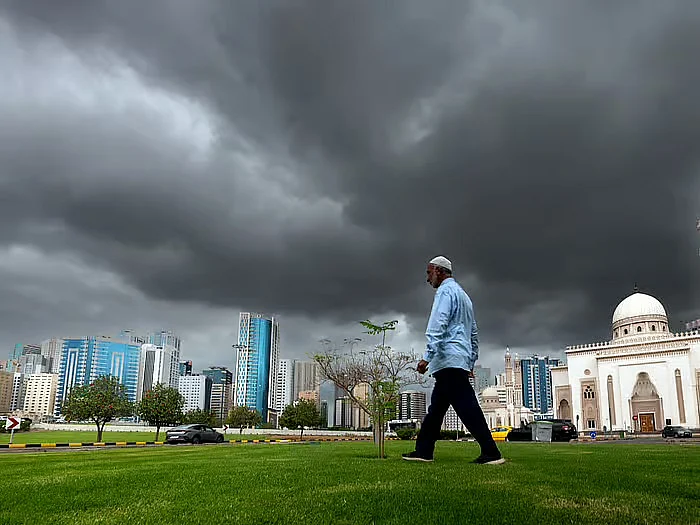
It is recommended for anyone heading out to pray for rain to walk humbly and serenely, showing humility and supplication, hoping for the mercy grace and blessings of God. One hadith says: "The Messenger of Allah went out for Salat Al Istisqa in a humble, unadorned manner, walking calmly and supplicating to Allah".
Those who arrive at the mosque before the rain prayer begins may perform as many voluntary prayers (known in Islam as nawafil) as they wish with the intention of voluntary prayers and they are also permitted to offer voluntary prayers after the rain prayers.
For the rain prayer, there is no adhan (call to prayer) or iqamh (brief adhan). Instead, worshippers gather to perform it at the time designated for it.
It is recommended for the imam to recite aloud during the prayer. In the first rak'ah, he may recite "Surah Al A'la" or a similar chapter. In the second rak'ah, the imam may recite "Surah Al Ghashiyah" or a similar chapter.
After concluding the prayer, the imam turns to the congregation and delivers the first sermon while standing on the ground, without ascending the pulpit, as an act of humility before God.
It is recommended for the imam to begin the sermon with seeking God's forgiveness and to frequently pray for His forgiveness throughout. The imam then sits briefly between the two sermons before standing to deliver the second sermons on the ground as well.
What is the turning cloak tradition?Toward the end of the second sermon, the imam faces the qiblah and turns his cloak inside out, symbolising a hopeful change from hardship to ease. He then raises his hands high, fervently supplicating and asking God to send rain to benefit the people and the land.
ALSO READ- UAE could see above-average rain from October as El Niño strengthens Chasing rain in 50°C UAE summer: Residents drive 150km to find hail, storms Watch: Camels drink from Dubai's 'Fountains of Mercy' amid scorching summer heat

Legal Disclaimer:
MENAFN provides the
information “as is” without warranty of any kind. We do not accept any
responsibility or liability for the accuracy, content, images, videos,
licenses, completeness, legality, or reliability of the information
contained in this article. If you have any complaints or copyright issues
related to this article, kindly contact the provider above.
Comments
No comment