

Jaishankar Highlights PM Modi's Kampala Principles For Africa Ties


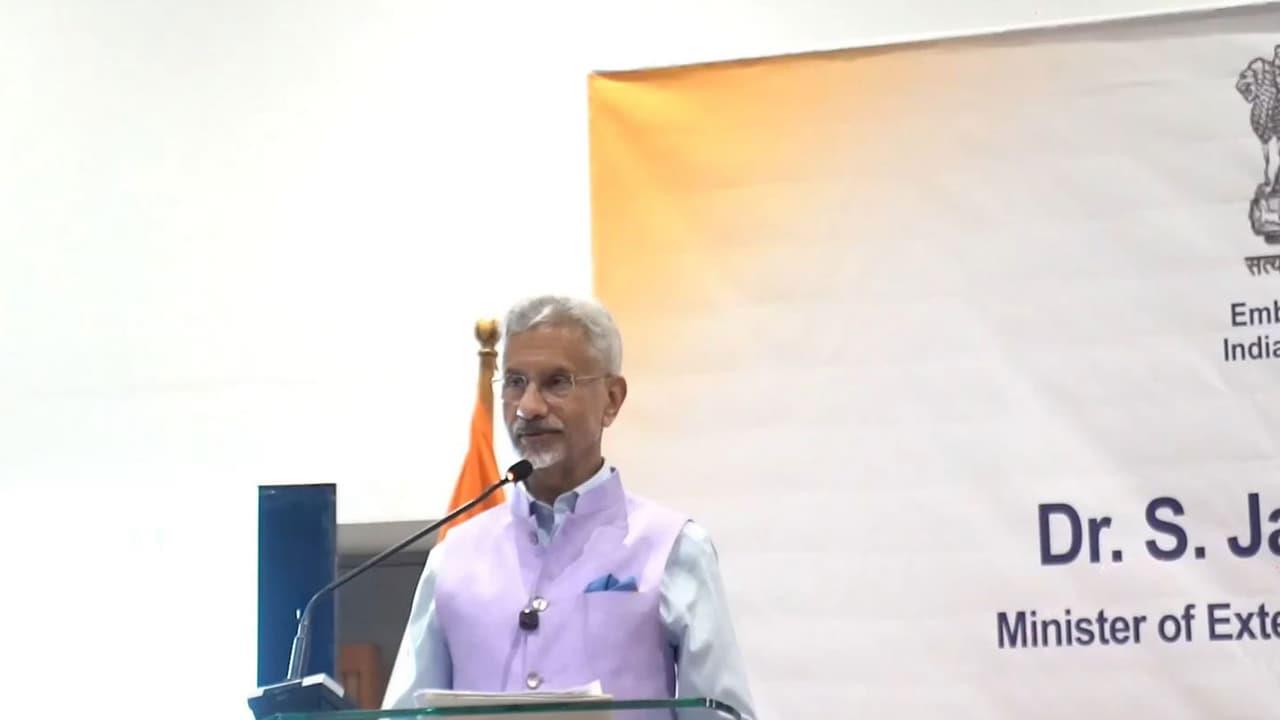
Placing emphasis on the significance of India's developmental engagement across Africa, External Affairs Minister S Jaishankar conveyed that New Delhi's policy trajectory has consistently been directed by the requirements and aspirations of its African partners. Addressing alumni of the Indian Technical and Economic Cooperation (ITEC) programme in Cote d'Ivoire, External Affairs Minister S Jaishankar referenced Prime Minister Narendra Modi's articulation of the Kampala principles eight years ago, noting that they established the foundational framework governing India's partnership with the continent.
“Where Africa is concerned, development partnership has always been central to our engagement, and we have taken a view that what we do in India should respond to the demands and priorities of our African partners. In fact, this was the central message some years ago when Prime Minister Modi, eight years ago, articulated what were called the Kampala principles of our engagement with Africa,” the EAM said.“And in that priority, in that demand, ITEC is very important because it is a vehicle to share our developmental experiences, our security experiences, our governance experiences, best practices, to also discuss technology and expertise together and equally, I must tell this to all of you; to also learn from the incoming people from the partner countries because every institution that you have gone to has also benefited from your presence up there,” he noted.
ITEC: A Premier Platform for Capacity Building
External Affairs Minister S Jaishankar underscored that the current year marks the sixty-second anniversary of the ITEC programme, which commenced operations in 1964 and has since transformed into a premier platform facilitating capacity building and diplomatic engagement with international partners. He highlighted that the scheme presently encompasses over 160 partner nations, extending nearly 10,000 fully funded training opportunities annually across a diverse spectrum of academic and professional fields.
“ITEC today encompasses a very wide range of domains from ICT and digital governance, public administration, banking, finance, agriculture, energy, skill development, but also to defence, to security, to countering terrorism. So, the whole idea really is to develop a comprehensive package so that the entirety of the requirements of our partner countries can be addressed through that programme,” the EAM mentioned.
Enduring Ties with Cote d'Ivoire
Pointing to the enduring and cordial ties binding India and Cote d'Ivoire, External Affairs Minister S Jaishankar observed that capacity building has remained a vital pillar of the bilateral relationship, with approximately 800 ITEC slots utilised by the West African state over the preceding twelve years. He stressed that this figure reflects a substantial commitment towards human resource development and, more crucially, towards cementing long-term bonds between the two nations.
“Today, we are proud to record that I think on the defence side, there are 123 slots which are committed and on the civilian side, 100. I cannot tell you the importance that we attach to these regular exchanges because at the end of the day, assets may be created, people may visit each other, but the human connection, the emotions, the experiences, the memories, the connect which we build through these courses, these are really the capital for a relationship,” EAM stated.
“Cote d'Ivoire itself, for us, we regard it as one of the key partners in West Africa, and we again are very supportive of your continued economic growth, of your governance transformation and of the security and defence goals that you have set for yourself,” he added.
The External Affairs Minister reiterated that India stands as a dependable partner in fulfilling Cote d'Ivoire's developmental objectives, remarking that the capacity-building assistance channelled through ITEC will significantly bolster the African republic's endeavours to foster human capital and acquire essential proficiencies required for a modernising economy and robust public administration.
(Except for the headline, this story has not been edited by Asianetnews Editorial staff and is published from a syndicated feed.)
Legal Disclaimer:
MENAFN provides the
information “as is” without warranty of any kind. We do not accept any
responsibility or liability for the accuracy, content, images, videos,
licenses, completeness, legality, or reliability of the information
contained in this article. If you have any complaints or copyright issues
related to this article, kindly contact the provider above.
Comments
No comment