

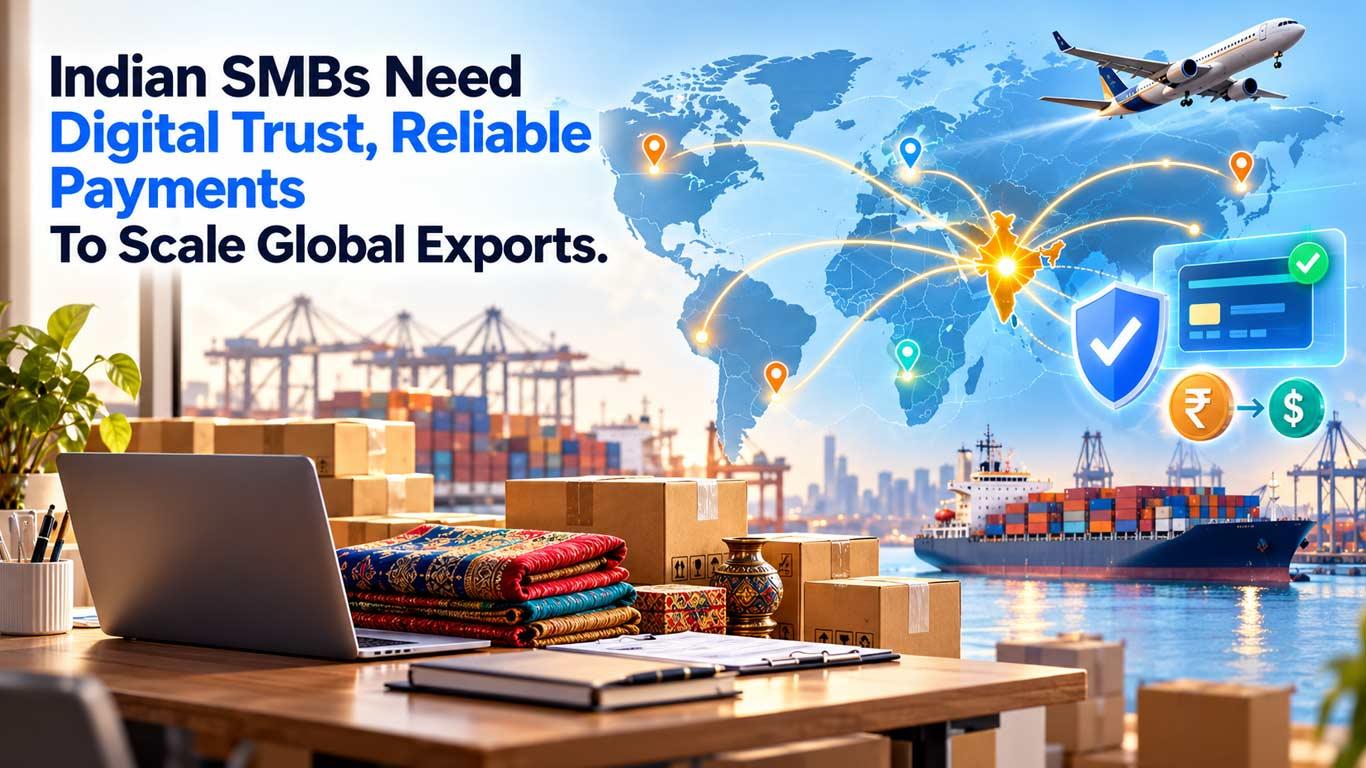
Indian Smbs Need Digital Trust, Reliable Payments To Scale Global Exports


However, finding overseas customers through digital channels does not necessarily translate into sustained international business, with payments, logistics and customs processes continuing to pose challenges for e-commerce exports, according to an EY-ASSOCHAM report.
Nagesh Devata, Senior Vice President and Head of Asia-Pacific, Payoneer, and Gaurav Shisodia, Vice President and Country Manager for India, Payoneer, said Indian SMBs need to focus on building digital trust, ensuring reliable cross-border payments and expanding into overseas markets in a measured manner.
Devata said trust remains a key challenge for businesses entering markets where buyers have no prior relationship with the seller. While cross-border relationships were traditionally built through physical meetings, he said the initial interaction is increasingly taking place digitally.
Shisodia said factors such as a credible website, customer ratings, timely delivery, after-sales service and convenient payment options can influence whether an overseas customer returns, reported Economic Times.
Payment Infrastructure Remains A Challenge
The executives said cross-border payments can create cash-flow risks for smaller businesses. International transactions may pass through multiple correspondent banks, resulting in additional charges and uncertainty over the final amount received and the timing of settlement.
They also noted that payment preferences vary across markets, with buyers using cards, bank transfers and other local payment methods. Limited payment options can therefore affect an SMB's ability to convert and retain overseas customers.
Market-by-Market Expansion
Devata advised SMBs to enter international markets gradually, using one market to understand customer demand, pricing and logistics before expanding further.
Shisodia said trade agreements can provide market access but do not guarantee customers. Businesses still need appropriate marketing, local partners and an understanding of market-specific demand.
The executives also highlighted compliance challenges associated with establishing overseas entities. SMBs expanding abroad need to follow India's foreign exchange regulations and meet the banking and regulatory requirements of the destination market.
According to Devata, businesses that scale internationally tend to adopt a wider range of financial and payment tools, eventually establishing operations in multiple markets.
The discussion highlighted the growing role of digital financial infrastructure in enabling smaller Indian businesses to sell, receive payments and operate across international markets.
(KNN Bureau)

Legal Disclaimer:
MENAFN provides the
information “as is” without warranty of any kind. We do not accept any
responsibility or liability for the accuracy, content, images, videos,
licenses, completeness, legality, or reliability of the information
contained in this article. If you have any complaints or copyright issues
related to this article, kindly contact the provider above.
Comments
No comment