

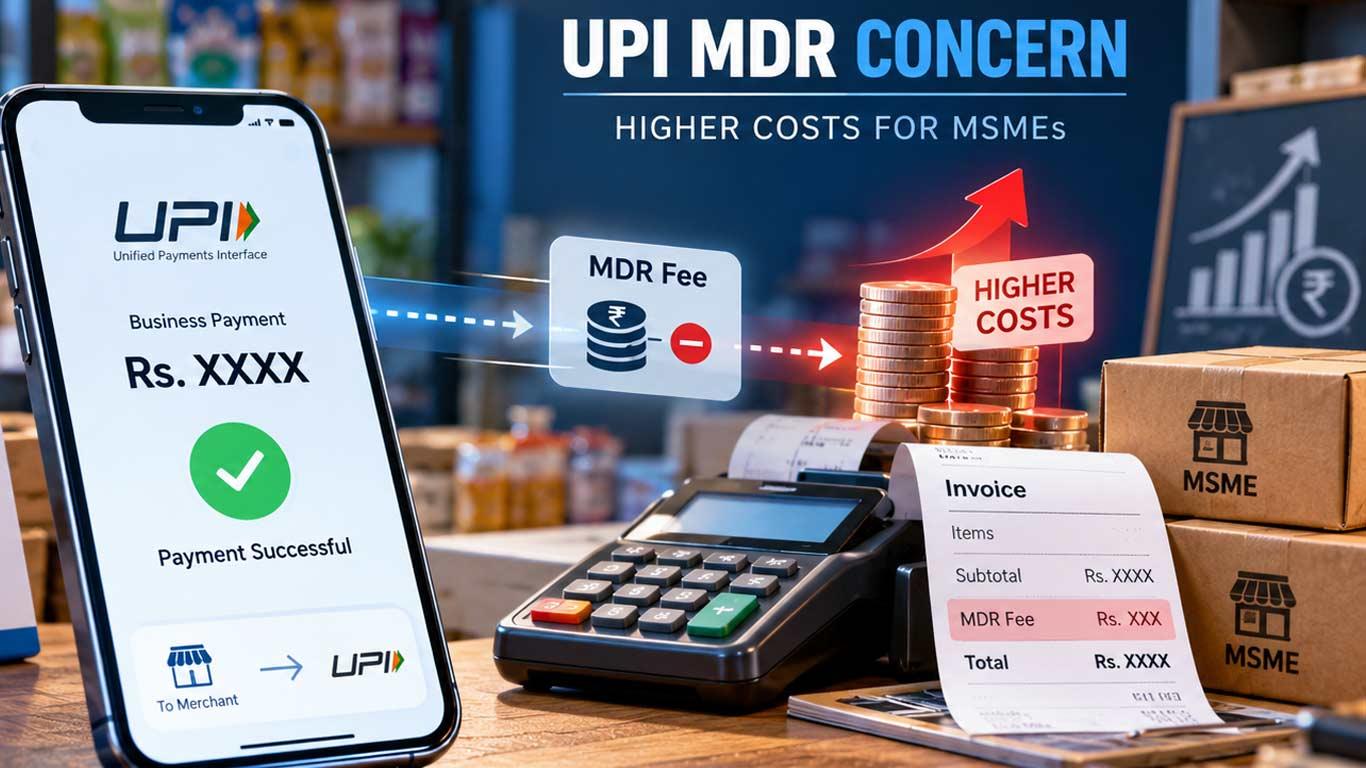
GTRI Urges Govt To Withdraw Proposed UPI MDR, Warns Of Higher Costs For Msmes


Under the proposed changes, specified UPI transactions above Rs 2,000 would attract a Merchant Discount Rate (MDR) to support the operation, security and expansion of the digital payments system.
GTRI said UPI should remain free for merchants and consumers and recommended an independent audit to determine the system's actual operating costs. It suggested that banks, NPCI, payment apps and the government share these costs through a transparent funding mechanism.
MSMEs, Consumers May Face Higher Costs
According to GTRI, charging MDR could put pressure on small-business margins and lead merchants to pass higher payment costs on to consumers through product prices.
The report said exempting transactions below Rs 2,000 may not fully shield consumers, as merchants could spread payment-related costs across their overall pricing. It also warned that MDR could accumulate across supply chains as businesses pass on additional transaction costs.
GTRI noted that GST on MDR could add to the burden for unregistered businesses and composition taxpayers that are unable to claim input tax credit.
The report also raised concerns over the proposed Rs 1 lakh monthly UPI receipt threshold for merchant classification. It said turnover should not be equated with profitability, particularly for small vendors operating on thin margins.
Banks, Payment Apps Could Share Costs
GTRI argued that banks and payment apps benefit from wider UPI adoption. Banks save on cash-handling and physical banking infrastructure, while payment apps gain customers and opportunities to offer financial services.
The report suggested that these beneficiaries, along with the government and NPCI, should contribute to UPI's operating costs instead of placing the burden primarily on merchants.
GTRI also said reducing UPI's price advantage could make card payments more competitive and potentially benefit international card networks.
Impact On Demand And Exports
The report warned that higher transaction-related costs could reduce business earnings and household purchasing power. It said weaker margins could affect inventory purchases, investment and employment, while higher input costs could also affect exporters.
GTRI recommended retaining free UPI payments and establishing a transparent, independently audited funding model for the system.
(KNN Bureau)

Legal Disclaimer:
MENAFN provides the
information “as is” without warranty of any kind. We do not accept any
responsibility or liability for the accuracy, content, images, videos,
licenses, completeness, legality, or reliability of the information
contained in this article. If you have any complaints or copyright issues
related to this article, kindly contact the provider above.
Comments
No comment