

Nose Damaged At 17,000 Feet: Indigo Flight's Mid-Air Scare Ends With Safe Lucknow Landing


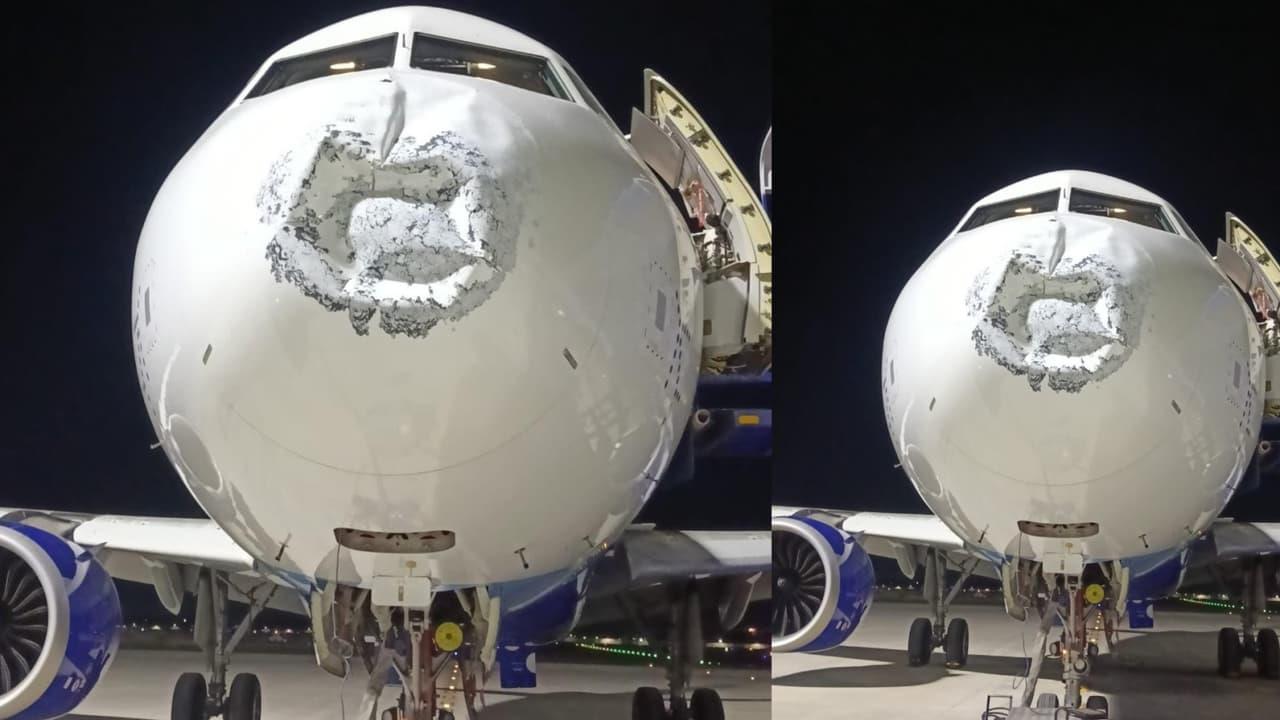
An IndiGo flight from Patna to Lucknow was found to have damage to the front of its fuselage. The damage was likely caused by an object, such as hailstones, ice chunks, or a lightning strike in the air at about 17,000 feet. As of now, there is no clear reason given for the loss.
After the accident, around 4:05 p.m., IndiGo flight 6E925 arrived at Lucknow airport with 104 passengers and six crew members on board. Everyone on board was said to be safe. The plane has been stopped so that a full technical check can be done.
A spokesperson for the airport said that there was no need for an emergency landing and that the plane had landed normally at Lucknow airport.
Based on early information, the chance that the plane may have come into contact with lightning while flying through bad weather is being looked into.
Airport officials said that the damage was seen by the team in charge of the airport after the plane had landed. After that, the IndiGo team was told, and the plane was marked as "Aircraft on Ground" (AOG), which means it couldn't be used until it passed technical checks.
After the examination and investigation are finished, more information regarding the degree and source of the damage is anticipated.
The aircraft's nose, or front part, has a dent. The aircraft was supposed to depart from Lucknow and travel to Ahmedabad. Passengers were informed of the flight cancellation by the airline and given the choice to either rebook on a different flight or get a complete refund.
According to preliminary reports, the pilot reported to Air Traffic Control (ATC) that an issue happened during descent at a height of about 17,000 feet. Additionally, reports state that there was a significant shock to the aircraft. Although several crew members speculated about a potential lightning strike, some experts think this is extremely unlikely. An expert claims that aircraft exteriors are especially made to survive lightning: in the event of a lightning strike, the electrical current safely travels along the fuselage's outside skin and discharges into the air through the wings or tail rather than entering the aircraft.
When the aircraft landed, an investigation found that the nose cone had been damaged.
An explanation was given by aviation specialists that thunderstorm clouds had the potential to conceal huge hail or ice fragments. When struck at high speeds, they can easily cause damage to the radome, also known as the nose cone. Another possibility is that the damage was caused by a bird making contact with the object. Lightning was possibly a possible cause of the incident. It has been decided to keep the official report of the pilot confidential so that it may be reviewed by the DGCA.

Legal Disclaimer:
MENAFN provides the
information “as is” without warranty of any kind. We do not accept any
responsibility or liability for the accuracy, content, images, videos,
licenses, completeness, legality, or reliability of the information
contained in this article. If you have any complaints or copyright issues
related to this article, kindly contact the provider above.
Comments
No comment