

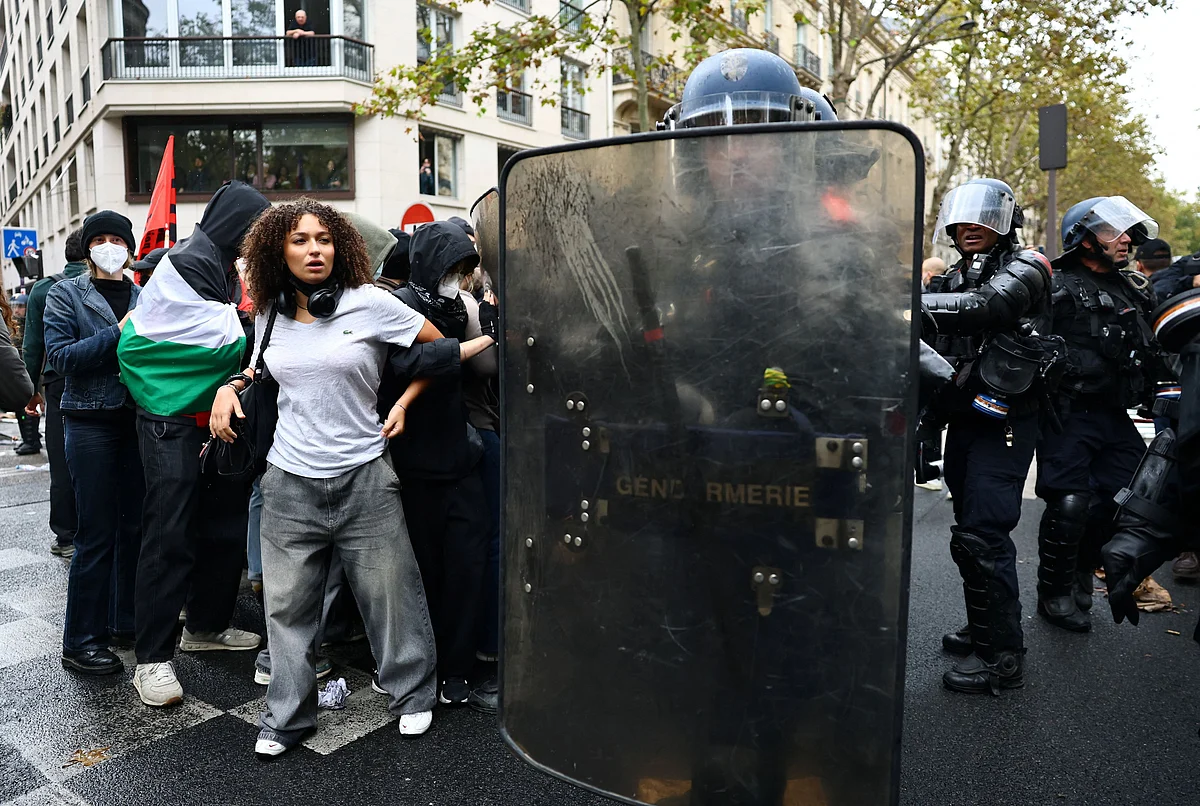
France School Protests Triggered By Teacher Shortages, School Conditions, Police Clashes


The demonstrations began in September over conditions inside French high schools, but clashes between protesters and police have increasingly dominated attention.
Recommended For YouOn Monday, a 15-year-old student lost his hand and part of his lower arm during a confrontation with police outside a high school in Lens, northern France.
Stay up to date with the latest news. Follow KT on WhatsApp Channels.
Two days later, Interior Minister Laurent Nuñez temporarily suspended the use of EF-SON stun grenades during the high-school protests while authorities investigate the incident.
Why are French students protesting, how did the movement spread so quickly and why has the police response become part of the controversy?
What triggered the protests?The movement grew from frustration over conditions in French high schools. Students have complained about teacher shortages, absent teachers not being replaced, overcrowded classrooms, ageing school buildings and long, complicated timetables.
The movement began in the Paris suburbs in September before spreading across the country. Some students have also raised concerns about Parcoursup, France's university admissions platform, and the pressure surrounding their academic future.
Unlike some previous French student movements, the protests were not triggered by one new government reform. Instead, they reflect several long-running complaints about everyday school life.
How big have the protests become?By October 7, the movement had grown far beyond individual school blockades. More than 266,000 people joined demonstrations across France on Tuesday, according to figures from the Interior Ministry, including around 56,000 in Paris.
Teachers, trade unions and other supporters joined high-school students in the nationwide demonstrations. Hundreds of schools have been affected by closures, blockades or disruptions since the movement began.
Students have boycotted classes and blocked entrances to schools, while demonstrations have taken place in Paris, Lille, Toulouse and other cities.
How did the protests turn violent?While many of the demonstrations have been peaceful, some school blockades have descended into confrontations. Objects have been thrown at police, rubbish bins and other objects have been set on fire and some schools have been vandalised.
Police have responded with tear gas and other riot-control weapons. More than 6,500 people have been arrested since the movement began, according to figures reported after Tuesday's demonstrations, with many of those detained being minors.
The government has argued that some of the original student protests have been overtaken by wider urban violence. Student groups and rights organisations, however, say the underlying concerns about education should not be overshadowed by violent incidents.
What happened to the 15-year-old student in Lens?One of the most serious incidents occurred outside the Auguste-Béhal high school in Lens on October 5. A 15-year-old student lost his hand and part of his lower arm during clashes between protesters and riot police.
Local newspaper La Voix du Nord reported that the teenager was injured after picking up a police grenade that then exploded.
Local authorities said between 200 and 250 protesters were involved in the confrontation and that objects had been thrown at police. An investigation was opened into the circumstances of the injury. The incident quickly became a focus of the wider debate over the methods being used to control demonstrations involving teenagers.
Why did France suspend stun grenades?On October 7, Interior Minister Laurent Nuñez announced the temporary suspension of the EF-SON stun grenade in the context of the high-school protests. The weapon, introduced in 2025, is designed to produce a powerful sound and stun people during public-order operations.
The decision came as authorities investigated the Lens incident. Police tactics have increasingly come under scrutiny during the demonstrations, with rights groups accusing officers of using excessive force against minors.
Other teenagers have also suffered serious injuries during police interventions, while France's police oversight body has opened several investigations into incidents connected to the protests.
Authorities have defended the need to restore order when demonstrations become violent, while promising investigations where police conduct is questioned.
What is the government doing about students' complaints?Education Minister Édouard Geffray has met students and acknowledged concerns about conditions in schools. The government has said it will create a platform allowing students to express their concerns and develop action plans for schools facing particular difficulties.
Officials have also promised measures addressing staffing and school conditions. But the movement presents a difficult challenge because there is no single reform that can simply be withdrawn to end the protests.
Students are raising several issues at once, from teacher shortages and overcrowding to school infrastructure and concerns about their future. That makes the protests different from movements built around opposition to one specific law or policy.
What happens next?The government now faces pressure on two fronts. It must respond to students demanding better conditions in schools while also dealing with violence surrounding some demonstrations.
At the same time, serious injuries involving teenagers have intensified scrutiny of how police manage protests involving minors. The suspension of the EF-SON grenade shows that the debate is no longer only about what is happening inside French classrooms. It is also about what is happening outside school gates, and how France balances maintaining public order with protecting young people exercising their right to protest.
ALSO READ- France suspends stun grenade use at student protests ahead of PM speech Nearly 500 arrested in French school protests as Macron summons ministers Look: New clashes erupt as protests disrupt over 560 French schools

Legal Disclaimer:
MENAFN provides the
information “as is” without warranty of any kind. We do not accept any
responsibility or liability for the accuracy, content, images, videos,
licenses, completeness, legality, or reliability of the information
contained in this article. If you have any complaints or copyright issues
related to this article, kindly contact the provider above.
Comments
No comment