

403
Sorry!!
Error! We're sorry, but the page you were looking for doesn't exist.
Neptune P2P Group Urges GCC Businesses To Review Contingency Plans Amid Ongoing Regional Uncertainty


(MENAFN- Mid-East Info) Drawing on its experience supporting organisations through recent disruption, the firm recommends using the current period to review and test plans, clarify responsibilities and assess resource needs
Borderless Finance. AI-Native.
Your digital companion for smarter everyday choices. Built for how you live, earn, and grow. Move money at your pace with AI-powered finance, all in one tap.
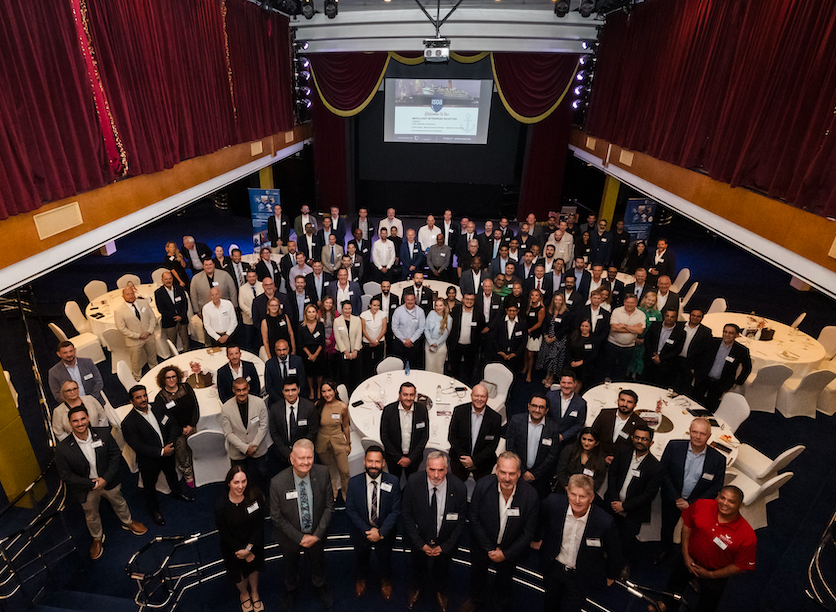
Join the waiting list. Earn DUBAI, UAE, 5th October 2026: Neptune P2P Group, an international security risk management and maritime security firm, has urged GCC businesses to review and test their contingency plans as they continue to navigate uncertainty across the region. Drawing on its experience supporting organisations through recent disruption, the firm says that early planning can help businesses preserve options for transport and support, and manage costs if circumstances change. Carl Sykes, CEO of Neptune P2P Group, presented the findings and recommendations at The International Stability Operations Association (ISOA) Middle East Networking Reception aboard the QE2 in Dubai on 1 October 2026. They draw on the firm's recent work helping around 2,000 employees relocate by sea, land and air charter across the GCC and the Levant, with contingency plans remaining active to support around 20,000 more alongside continuing advisory work with senior executives. Doug Brooks, Founder and President Emeritus of ISOA, said“As ISOA marks its 25th year, companies working in the world's most challenging environments have learned that stability depends as much on logistics, planning and coordination as on security. That lesson now applies far beyond conflict zones. Businesses operating in this region are recognising that preparing for disruption is a strategic decision for leadership, not a technical task to be handed off once a crisis begins.” Carl Sykes, CEO of Neptune P2P Group, said,“Adapting to the new normal means running the business as close to normal as practical, with clear triggers to respond as conditions change and clear communication so that staff understand what has been decided, why it has been decided and how it will be implemented. Businesses that prepare early, when there is time to secure resources and agree decisions calmly, will be far better placed than those that wait for any future disruption to force their hand.” Preparing for the months ahead Ongoing uncertainty makes this a useful time for businesses to review and rehearse their contingency plans. Organisations can agree clear triggers for action, confirm responsibilities and resource requirements, and consider how decisions will affect people, operations and supply chains. Plans should be revisited as conditions evolve, including as physical and cyber risks change. Early planning can preserve options and help manage costs When recent disruptions began, companies with similar risk thresholds sought the same resources at the same time, often after spending 48 hours developing a response plan. Planning was also frequently fragmented, with security considered separately from other departments and some contingency plans still shaped by COVID rather than by the possibility of regional conflict. The findings point towards the need for consequence-focused planning across the whole business, with triggers, responsibilities and resource requirements agreed before disruption forces organisations to compete for the same support. Security is no longer a nice to have Security has often been treated as a discretionary cost that can slow day-to-day commercial activity, but recent months have shown that effective planning protects both employees and shareholder value. Boards that clearly understand the risks they own are better placed to meet their legal and moral duty of care when sending employees abroad. Companies frequently sought external support not because they lacked health, safety, security and environment (HSSE) expertise, but because internal teams lacked the capacity and bandwidth to manage additional demands alongside their existing responsibilities. Aligning stakeholders and choosing the right language Competing priorities between business continuity and staff welfare can complicate decisions, particularly when overseas head offices view regional risk very differently from local partners and funders focused on business as usual. Agreeing risk thresholds and responsibilities in advance helps reconcile those interests when action becomes necessary. Language also shapes how decisions are received, as terms such as“evacuation” and“hostile reconnaissance” can unsettle stakeholders, whereas“short-notice relocation” and“situational awareness” convey the same intent in a calmer and more constructive way. Moving from crisis management to incident management The recommendations call for organisations to move beyond crisis mode as soon as it is safe to do so, with a parallel team focused on adapting the business while immediate issues are managed. Shifting from crisis management meetings to incident management meetings allows companies to maintain operations while responding dynamically to developments that may affect them. Regular, structured updates to staff and stakeholders after each meeting help build confidence in leadership decisions and counter the rumours and misinformation circulating on social media. About Neptune P2P Group Neptune P2P Group is an international security risk management and maritime security market leader that has been successfully supporting clients' operations since 2009. Owned and operated by former British Special Military Unit officers and operators, they have extensive experience in maritime security, security risk management consulting, security intelligence reporting, travel risk management, close and executive protection, and training and capacity building. Their clients are at the forefront of their stakeholder-centric business approach. They continuously support clients with best-in-class security personnel, consultants, and analysts, aided by their 24/7/365 General Security Operations Center (GSOC) and real-time security intelligence. Their depth and breadth of knowledge comes from a leadership team who have extensive professional on-ground and offshore experience of mitigating risk in complex high-threat environments worldwide.
Legal Disclaimer:
MENAFN provides the
information “as is” without warranty of any kind. We do not accept any
responsibility or liability for the accuracy, content, images, videos,
licenses, completeness, legality, or reliability of the information
contained in this article. If you have any complaints or copyright issues
related to this article, kindly contact the provider above.
Comments
No comment