

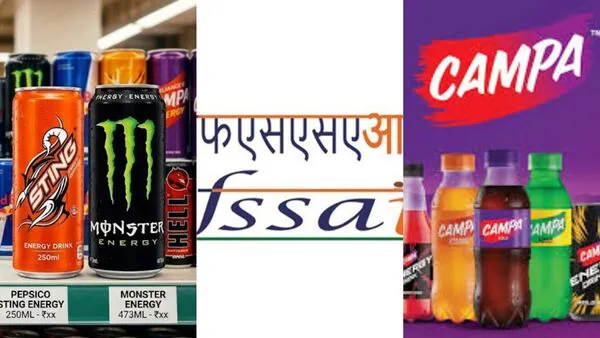
What Happens To 'Energy Drinks' After Campa, Pepsico Get Interim Court Relief Against FSSAI Label Ban? Explained


With PepsiCo, Reliance's Campa and Monster now receiving interim relief, questions remain about what happens to products already in stores, as well as stocks that were withdrawn or seized following FSSAI's direction. Can they continue to be sold or automatically return to shelves?
Also Read | Reliance sues FSSAI for preventing it from marketing Campa-brand products What did the Delhi High Court say?On Tuesday, Reliance Consumer Products moved the Delhi High Court, seeking relief from the FSSAI order prohibiting the company from marketing products under its Campa brand as“energy drinks”. The court questioned the food safety regulator over its directive and asked why the company had not been issued a notice before the order was passed. Further, the court told FSSAI that it was“never too late” to correct its mistake.
The court clarified that the temporary relief applies only to products already manufactured and does not permit the companies to produce new batches carrying the“energy drink” label. The stay will continue until the next hearing on 5 November.
What did the companies say?According to its petition, Reliance argued that state authorities had seized Campa stock and directed e-commerce platforms to delist the products. Both Reliance and PepsiCo informed the court that they would suffer huge losses due to FSSAI's order.
Also Read | FSSAI orders Pepsi, Red Bull, Monster to drop 'energy drink' labelReliance Consumer Products told the Delhi High Court that its existing stock included 168 million cans and 120 million plastic bottles marked as“energy drink”. The company also had packaging carrying the same description ready for a further 400 million cans and 360 million bottles.
PepsiCo said that 492 million bottles and 26 million cans bearing the disputed label were in circulation as of 31 July.
What happens to the existing stock?In the present case, the Delhi High Court has allowed the companies to sell their existing stock carrying the disputed label. However, they cannot manufacture new batches bearing the description while the interim arrangement remains in force.
Ashwin Bhadri, founder and CEO of Equinox Labs, explains that food packaging is planned months in advance, and by the time a dispute reaches the courts, products may already be sitting in warehouses, with distributors or on retail shelves. Businesses must then determine whether the stock should be held, recalled, reworked, relabelled or allowed to remain in circulation, with substantial costs potentially passing through the supply chain.
FSSAI order: What we knowThe dispute between the beverage brands and the food safety regulator stemmed from a 30 June order in which FSSAI directed companies selling high-caffeine beverages to stop using“energy drinks” and related terms. Further, it gave the companies three months to revise their product labels and packaging accordingly.
The disagreement centres on whether drinks containing high levels of caffeine may be promoted and labelled as“energy drinks”. While the regulator has moved to limit the use of the term, manufacturers contend that altering their established labels could result in substantial financial losses.

Legal Disclaimer:
MENAFN provides the
information “as is” without warranty of any kind. We do not accept any
responsibility or liability for the accuracy, content, images, videos,
licenses, completeness, legality, or reliability of the information
contained in this article. If you have any complaints or copyright issues
related to this article, kindly contact the provider above.
Comments
No comment