

October 7, 3 Years On: Can Gaza Ceasefire Pave The Way For Lasting Middle East Peace?


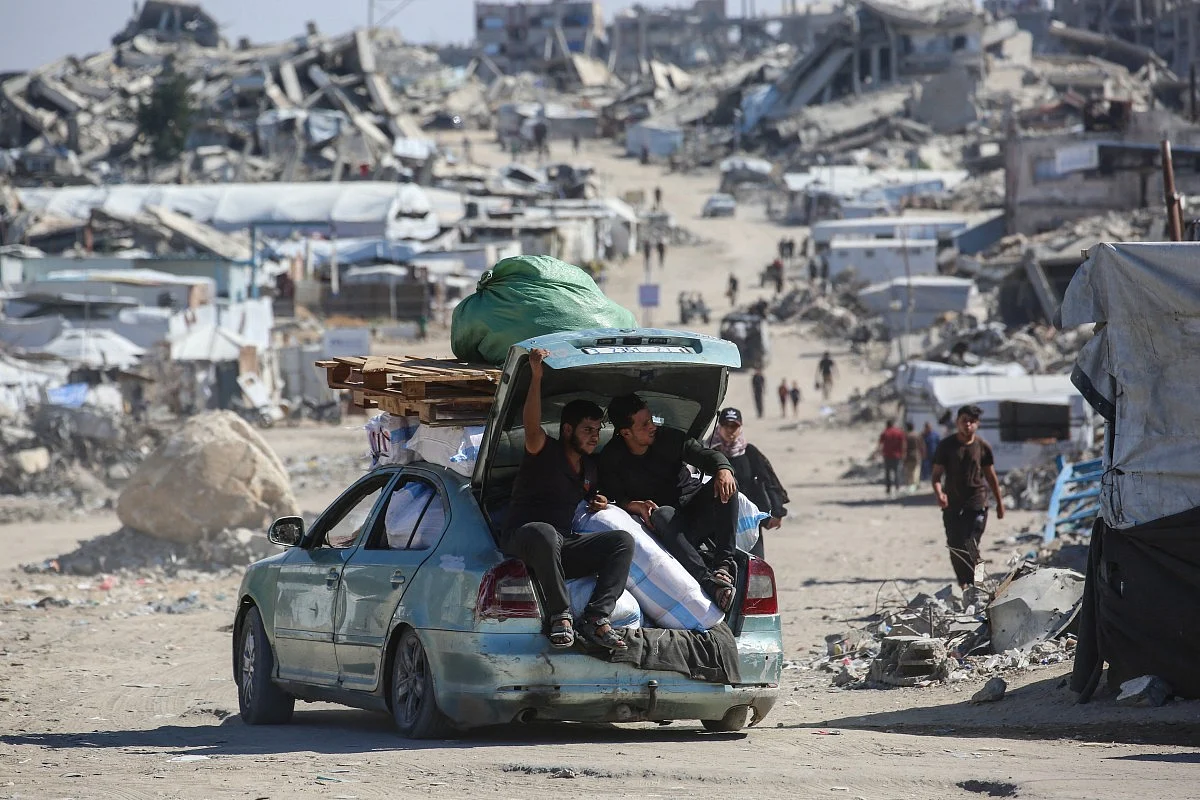
Israel responded with a military campaign that has killed tens of thousands of Palestinians, displaced most of the territory's population and left widespread destruction.
Recommended For YouThree years later, large-scale hostilities in Gaza have stopped under a ceasefire that took effect on October 10, 2025. All remaining Israeli hostages and their remains have since been returned, according to UN.
Stay up to date with the latest news. Follow KT on WhatsApp Channels.
But the violence has not completely stopped. Israeli strikes and military operations have continued, Palestinian casualties are still being reported and major political questions over Gaza's future remain unresolved.
The conflict also transformed the wider region, with fighting and tensions involving Lebanon, Iran and Yemen at different points over the past three years.
Today, the question is no longer only how the conflict began, but whether the region can prevent another cycle of violence.
Has the Gaza ceasefire brought peace?Not yet. The October 2025 ceasefire brought an end to large-scale fighting and enabled the return of the remaining hostages, making it one of the most significant steps towards de-escalation since the war began.
But a ceasefire is not the same as peace. The UN said in its September 2026 report that Israeli airstrikes, shelling, drone attacks and ground operations have continued in Gaza, while Hamas and other armed groups have not disarmed.
Around two-thirds of Gaza also remains inaccessible or under severe access restrictions, according to the report.
Nearly a year after the ceasefire was announced, Palestinian casualties are also continuing.
According to figures from Gaza's Ministry of Health cited by the UN, 1,431 Palestinians had been reported killed between the ceasefire announcement and September 30, 2026.
This leaves the ceasefire in a difficult position: it has prevented a return to the scale of fighting seen during the war, but it has not ended violence.
What has changed across the region?The consequences of the war did not remain within Gaza. Over the past three years, the Middle East has experienced periods of direct confrontation and heightened tensions involving Israel, Lebanon, Iran and Yemen.
That has made preventing escalation on one front increasingly connected to stability on others.
In June, UN Secretary-General António Guterres called on parties to fully respect ceasefires in Gaza, Lebanon and Iran and warned against actions that could undermine diplomatic efforts.
He said there was no military solution to the region's conflicts and called for dialogue and negotiations instead. The danger is that an incident on one front can quickly increase tensions elsewhere.
In July, amid renewed confrontations in the Gulf, the UN warned that a return to full-scale hostilities would have serious consequences not only for people in the region, but also for international security and the global economy.
Why does Gaza remain central to regional stability?Even with large-scale fighting reduced, conditions inside Gaza remain severe. The UN says widespread destruction, continued strikes, restrictions on essential supplies and funding shortages are preventing recovery from moving at the scale required.
In late September, 94 per cent of Gaza's population was assessed as being in urgent need of shelter and basic household assistance, while 65 per cent of households were living in tents or makeshift shelters.
Thousands of damaged buildings also remain dangerous. More than 4,000 unsafe buildings require full or partial demolition, according to preliminary estimates cited by the UN, while more than 2,300 of them remain inhabited by nearly 44,000 people.
Without reconstruction and improved living conditions, humanitarian agencies warn that the effects of the war will continue long after major fighting has stopped.
The UN has also stressed that recovery cannot be separated from politics. Its September report said sustainable stability requires progress in Gaza alongside strengthening Palestinian institutions and establishing a credible political path towards resolving the Israeli-Palestinian conflict.
What could trigger another escalation?The ceasefires across the region remain fragile. Continued strikes in Gaza, unresolved questions over security and governance, tensions involving armed groups and disputes over the implementation of ceasefire agreements all create risks.
The situation in the West Bank adds another source of pressure. The UN has reported high levels of settler violence, displacement and settlement expansion, warning in September that these developments were damaging prospects for peace.
Tensions elsewhere can also quickly affect the wider region. That is why the UN has repeatedly urged parties to avoid retaliatory actions, respect existing ceasefires and use diplomatic channels before incidents develop into broader confrontations.
What is needed to prevent another cycle of violence?The first challenge is keeping existing ceasefires in place. That means preventing attacks and retaliatory actions from gradually weakening agreements until large-scale fighting returns.
The second is protecting civilians and improving humanitarian access. Despite the Gaza ceasefire, the UN says humanitarian access remains restricted and essential medical, shelter and infrastructure needs remain severe.
Reconstruction is another major challenge. Homes, hospitals, roads, water systems and other infrastructure will require years of rebuilding. Without visible improvements in daily life, the humanitarian crisis risks becoming a long-term source of instability.
But de-escalation also requires diplomacy beyond Gaza. The UN has called for ceasefires in Gaza, Lebanon and Iran to be respected and for regional disputes to be addressed through negotiations rather than military action.
Finally, there is the unresolved Israeli-Palestinian conflict itself. A ceasefire can stop or reduce fighting, but without a political process addressing the underlying conflict, the risk of renewed violence remains.
Three years after October 7, the region is no longer where it was in the weeks and months that followed the attack. Large-scale fighting in Gaza has stopped, hostages have returned and diplomatic efforts have produced periods of de-escalation. Civilians continue to die, Gaza remains devastated and tensions across the region remain fragile.
The challenge now is turning ceasefires into something more permanent. After three years of conflict, preventing the next escalation may depend not only on stopping violence when it begins, but on addressing the conditions that allow it to return.
ALSO READ- UN chief calls for Gaza ceasefire ahead of October 7 anniversary Child marriage in Gaza rises 123% as war pushes families into desperate choices Manila marks Palestinian Heritage Day with art exhibit, protest on October 7

Legal Disclaimer:
MENAFN provides the
information “as is” without warranty of any kind. We do not accept any
responsibility or liability for the accuracy, content, images, videos,
licenses, completeness, legality, or reliability of the information
contained in this article. If you have any complaints or copyright issues
related to this article, kindly contact the provider above.
Comments
No comment