

Cabinet Approves Investment Incentives For Vehicle Assembly, Manufacturing Projects


- National export strategy targets 5% annual growth, $7.9b in manufacturing exports by 2029 endorsed
- Foreign worker regularisation deadline extended to December 1
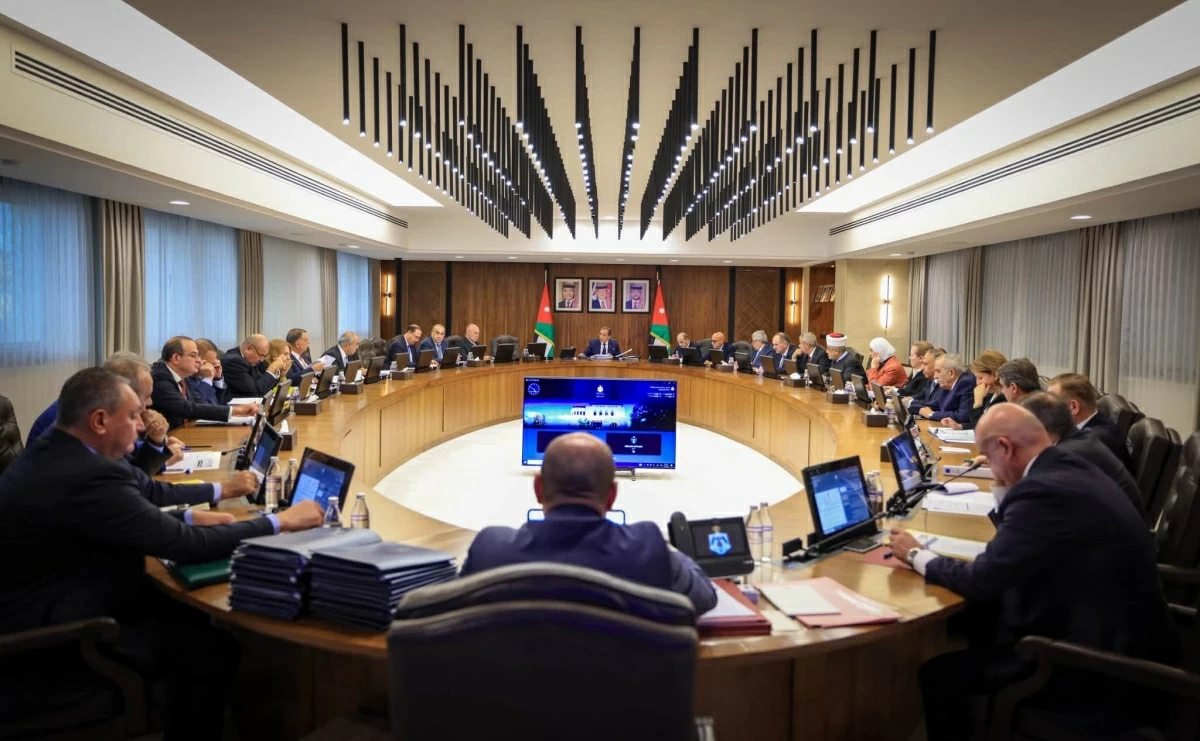
AMMAN - The Cabinet, chaired by Prime Minister Jafar Hassan on Tuesday, approved incentives and exemptions to attract vehicle manufacturing and assembly projects to the Zarqa Development Zone, with benefits linked to investment size, local manufacturing and jobs for Jordanians.
Completely knocked-down (CKD) projects must invest at least $50 million and employ at least 50 Jordanians, while semi-knocked-down (SKD) projects must invest at least $20 million and meet the same employment requirement, according to a Prime Ministry statement.
CKD projects will receive a 70 per cent electricity subsidy for five years, a 60 per cent reduction in land prices, a 75 per cent subsidy on container handling at Aqaba Port, a 75 per cent reduction in investor-funded infrastructure costs and a 75 per cent exemption from land registration fees and property sale tax, the statement said.
They will also receive a 100 per cent reduction in the special tax on Jordanian-origin hybrid, electric and petrol vehicles for 10 years, zero income tax on exports for five years and zero income tax for 10 years, subject to conditions. Full assembly projects must establish or attract at least three supporting industrial activities.
SKD projects will receive a 50 per cent electricity subsidy for three years, a 40 per cent reduction in land prices, a 50 per cent subsidy on container handling at Aqaba Port, a 40 per cent reduction in investor-funded infrastructure costs and a 50 per cent reduction in the special vehicle tax for 10 years.
They will also receive a 50 per cent exemption from land registration fees and property sale tax and zero income tax on exports for three years, the statement said.
Employment incentives include wage support of up to 100 per cent of the minimum wage for CKD projects in the first year and 50 per cent for the remainder of the five-year support period.
SKD projects may receive 50 per cent of the minimum wage for three years. The government may also cover social security contributions or part of workers' transport costs for three years.
Jordanian-origin vehicles will receive preference in government tenders. Investors must begin establishing, registering and licensing projects within one year of signing an MoU with the Ministry of Investment, the ministry said.
The package is additional to existing development-zone incentives, including zero sales tax on eligible purchases and imports, customs exemptions and income tax rates of 5 per cent for industrial activities and 10 per cent for other activities.
The Cabinet also approved the government's participation in the Combined-Cycle Power Plant project, known as the Seventh Independent Power Generation Project.
The Social Security Investment Fund will hold a 20 per cent stake and the government, through Samra Electric Power Generation Company, 29 per cent, giving the government a total 49 per cent stake.
Samra Company will finance its $61 million contribution from annual internal resources.
The decision comes as the government expands participation in major investment projects, including the $2.5 billion Aqaba-Shidiya-Ma'an railway project, whose foundation stone was laid on Monday under a 50-50 Jordanian-Emirati partnership.
The Cabinet also approved the National Export Strategy 2026-2029, targeting annual export growth of 5 per cent through product and market diversification, more exporting companies and stronger competitiveness.
The strategy builds on national exports of around JD9.6 billion in 2025 and aims to raise manufacturing exports from JD4.7 billion to JD7.9 billion by 2029.
Priority sectors include garments, chemicals, pharmaceuticals, cosmetics, fertilisers, engineering and food products, as well as IT, consultancy and creative industries, the statement read.
The strategy also supports SMEs in accessing foreign markets and promotes trade agreements, digital tools, e-commerce and artificial intelligence. Sector-specific action plans will cover 2026-2029, with an interim review in 2027 and an impact assessment in 2029.
The Cabinet also extended a decision issued on June 8 to legalise the status of foreign workers in all economic sectors, including domestic workers, until December 1, 2026.
Workers who entered the Kingdom for employment and previously held work permits are covered. Those who entered for other purposes may obtain a one-year work permit upon application, subject to paying the full permit fee and JD500 for previous periods.
The Cabinet also allocated funds to begin tendering infrastructure works for the Agricultural Industries Development Zone in Ghor Al Mazra'a and Al Haditha in the Southern Jordan Valley, Karak Governorate, to enable existing factories to begin operations before year-end and support food processing and local employment.
The Cabinet also approved the 2026 Regulation on Licensing the Practice of the Teaching Profession, introducing an official licence issued by the Ministry of Education.
Teachers currently working in public and private institutions will be deemed licensed, while the regulation will apply to newly appointed teachers from the 2027-2028 academic year. It sets unified criteria for granting and renewing licences and introduces teaching practice tests to enhance teachers' competencies and education quality, the statement said.
The regulation also establishes a specialised committee to grant licences and approve standards for monitoring education quality and professional development.

Legal Disclaimer:
MENAFN provides the
information “as is” without warranty of any kind. We do not accept any
responsibility or liability for the accuracy, content, images, videos,
licenses, completeness, legality, or reliability of the information
contained in this article. If you have any complaints or copyright issues
related to this article, kindly contact the provider above.
Comments
No comment