

Industrial Weakness Increases The Risk Of Stagnation In France


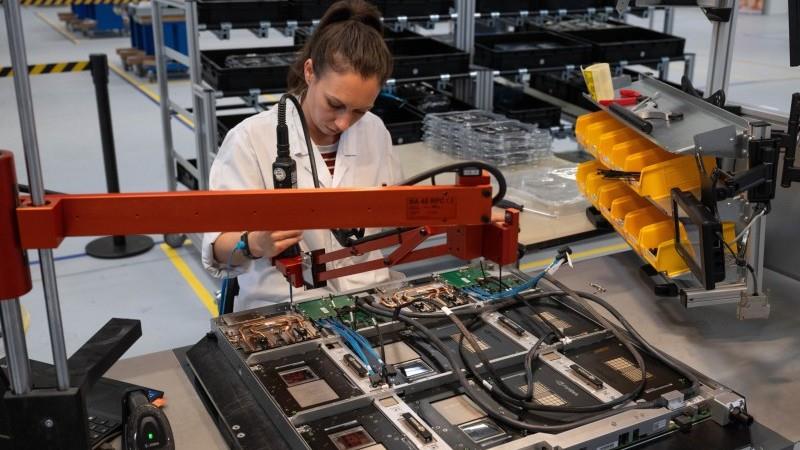
After falling by 0.8% in July, manufacturing output rose by 0.3% in August. The rebound mainly came from the manufacture of“other industrial products”, which increased by 1.2%, and electrical, electronic and computer equipment, where output rose by 0.9%. However, the composition of the data remains fragile. Transport equipment production fell by 2.2%, with a 3.4% decline in the automotive sector, while food-processing industries contracted by 1.2%. This therefore looks more like a catch-up in a few sectors than the beginning of a broad-based industrial recovery.
The underlying trend remains clearly negative. Over the past three months, manufacturing output fell by 1.9% compared with the previous three months and by 1.2% compared with the same period in 2025. More broadly, total industrial production declined by a further 0.3% in August, after falling by 0.6% in July. The result is all the more disappointing as the consensus had expected an increase of 0.2%.
Data consistent with an economy at a standstillThese figures do not make us more optimistic about the French economy. They confirm that industry, which has so far held up better than several components of domestic demand, lacks sufficient momentum to become a genuine engine of growth. Order books remain weak, inventories are high and August's rebound is too concentrated to suggest a lasting improvement.
At the same time, household consumption of goods fell by 0.5% in August, while September surveys point to a further deterioration in both business and consumer confidence. After GDP contracted by 0.2% in the first quarter and recorded zero growth in the second, the accumulation of these signals reinforces the risk of renewed stagnation in the third quarter.
The weak carry-over from the summer, combined with the deterioration in financial conditions, also makes a rebound in the fourth quarter increasingly unlikely.
The interest rate shock is also jeopardising the expected recovery in 2027The sharp deterioration in France's financial conditions represents another major drag on the French economy over the coming months. According to the government, interest costs are expected to increase by €12bn to reach €91bn in 2027. But this estimate may be exceeded, as the yield on France's 10-year OAT is now trading well above the 4.3% assumed by the government in its projections.
The impact will not be limited to public finances. Persistently higher interest rates will weigh on both household housing investment and corporate productive investment. They are also likely to continue undermining confidence and reinforcing wait-and-see behaviour. Against this backdrop, the government's forecast of 1% growth in 2027 looks highly optimistic, as it relies on a recovery in consumption and investment that the tightening of financial conditions makes increasingly unlikely. We believe that the government's forecast significantly underestimates the extent of the slowdown in domestic demand.
This weaker growth directly undermines the budget equation. The government is proposing €43bn in additional measures to bring the deficit down to 5% of GDP in 2027, rather than the 6.5% it would reach without adjustment. But the bill remains far from being adopted, while tensions in secondary schools and the threat of nationwide mobilisation are further complicating the political acceptance of the required effort. Debates in the plenary session will not begin until 13 October.
Our base case remains that a budget will eventually be adopted, probably after significant amendments and through the use of Article 49.3. But the concessions required are likely to reduce its ambition. More importantly, even if adopted in its current form, the budget is unlikely to bring the deficit down to 5%: weaker-than-expected growth will weigh on revenues, while interest costs are likely to exceed current estimates. The budget currently being proposed should therefore merely limit a further sharp deterioration in public finances rather than achieve the stated target.
Moreover, uncertainty will not disappear once the budget has been adopted. It is likely to persist until the presidential election, and probably until the legislative elections, pending greater clarity on the next government's five-year budget strategy. Today's presentation of Marine Le Pen's plan may provide some additional information. The frontrunner in the polls is promising €125bn in savings over five years but has so far not explained where they would come from. However, the presentation is unlikely to provide enough detail to clarify the trajectory of France's public finances.
Against this backdrop, we expect French growth to remain weak and below that of the eurozone. We forecast growth of just 0.3% in 2026, followed by 0.6% in 2027, with a significant risk of stagnation in both the third and fourth quarters of this year.

Legal Disclaimer:
MENAFN provides the
information “as is” without warranty of any kind. We do not accept any
responsibility or liability for the accuracy, content, images, videos,
licenses, completeness, legality, or reliability of the information
contained in this article. If you have any complaints or copyright issues
related to this article, kindly contact the provider above.
Comments
No comment