

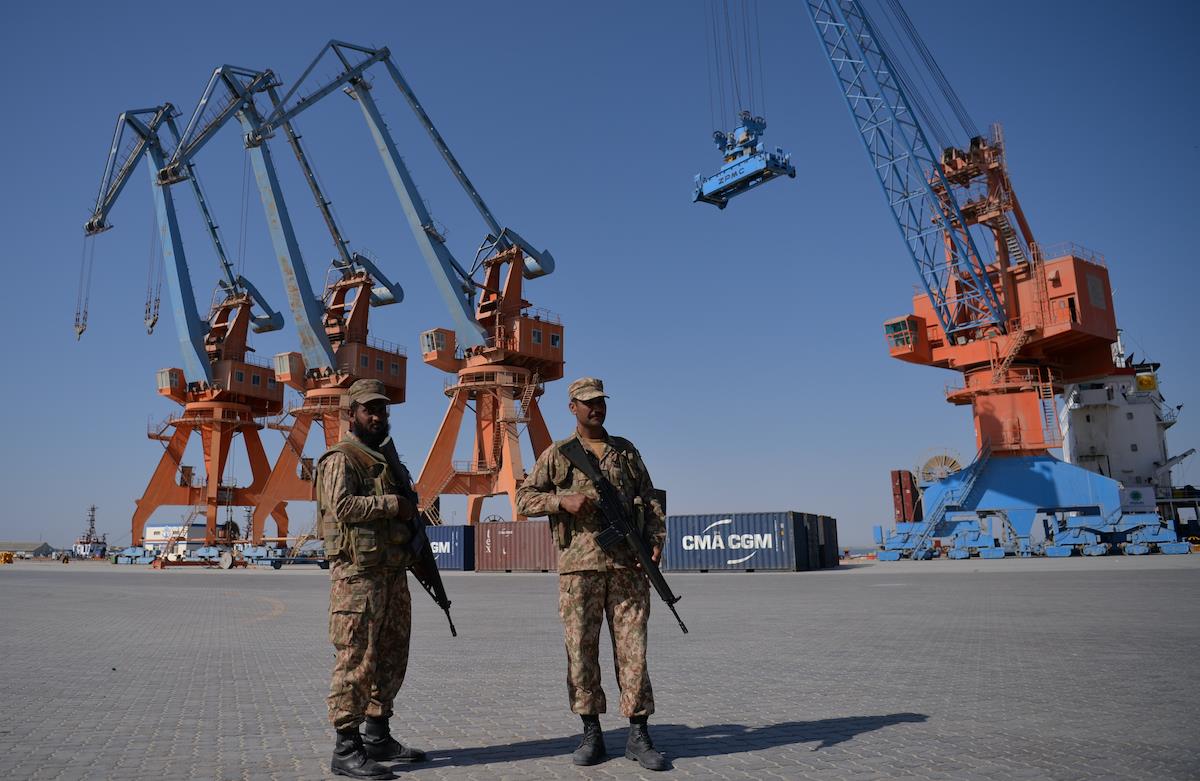
CPEC 2.0 Will Be Won Or Lost On Keeping China's Investors Safe


Big infrastructure projects can be guarded behind fixed perimeters. Industrial zones, mines, private businesses and scattered commercial activity cannot.
If CPEC 2.0 is to draw Chinese companies and investors beyond the major state-backed projects, security will have to become broader, more reliant on intelligence and more tightly woven into local governance.
Having worked on CPEC coordination in government, I see this as one of the second phase's central tests. Pakistan has already committed considerable resources to protecting Chinese personnel and projects. The military, police and specialized units have set up dedicated security arrangements, and movement protocols govern travel in sensitive areas.
Yet repeated attacks show that physical protection alone cannot eliminate the threat.
In March 2024, a suicide attack near Besham, in Khyber Pakhtunkhwa, killed five Chinese nationals working on the Dasu hydropower project, along with their Pakistani driver. That October, two Chinese nationals died in an attack near Karachi airport. Earlier attacks had targeted Chinese interests in Balochistan, Karachi and elsewhere.
The attacks took place in different settings and cannot all be pinned on one group or one motive. That diversity is what makes the problem so hard.
Different threats, different geographyBalochistan is perhaps the hardest case. The province is central to CPEC for its port at Gwadar, its mineral wealth and its location.
It is also home to a long-running separatist insurgency. The Baloch Liberation Army and other militant groups have attacked security forces, infrastructure and Chinese interests.
For these groups, attacking Chinese nationals is more than a tactic. China is tied to the most visible projects and investments, making its citizens and interests symbolic targets.
Security policy must therefore distinguish between guarding a particular road, port or project and addressing the political and economic conditions in which militants find recruits and support.

Legal Disclaimer:
MENAFN provides the
information “as is” without warranty of any kind. We do not accept any
responsibility or liability for the accuracy, content, images, videos,
licenses, completeness, legality, or reliability of the information
contained in this article. If you have any complaints or copyright issues
related to this article, kindly contact the provider above.
Comments
No comment