

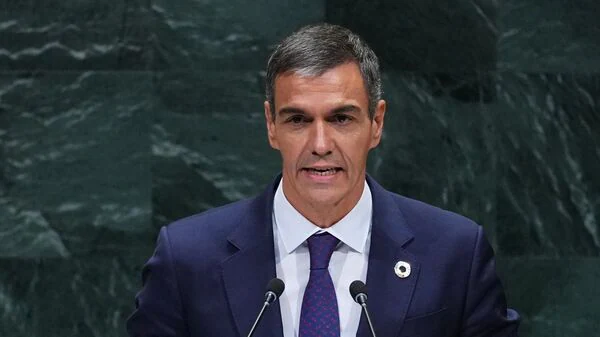
Spain PM Pedro Sánchez Calls Snap Election For November 29 After Housing Setback: What's At Stake


The snap election is a high-stakes gamble for Sánchez, whose Socialist Party has reportedly trailed in most opinion polls.
A defeat could end one of Europe's few remaining left-leaning national governments as far-right parties continue to make gains across the continent.
However, Sánchez has repeatedly defied predictions of his political demise and shown an ability to navigate Spain's fragmented political landscape.
“We need to renew people's support,” Sánchez said in a televised address, according to Reuters.
He urged voters to back a larger progressive majority that would allow his government to overcome“vested interests”, deliver new social reforms and continue its programme of change.
Sánchez also acknowledged that his government had made mistakes and fallen short on some campaign promises, according to the report.
“I also know that part of that social majority is dissatisfied today,” he said, while vowing to keep Spain“a bastion of openness, social justice and environmental responsibility”.
Housing crisis adds to pressureThe election announcement came less than 72 hours after Sánchez's government failed to secure parliamentary backing for two housing-related royal decree laws aimed at easing pressure from Spain's housing crisis, according to CNN.
Housing affordability has become a major source of public anger. Despite strong economic growth since the pandemic, Spaniards continue to face rising living costs, stagnant wages and a shortage of affordable homes, particularly in popular tourist destinations.
Public frustration has also intensified after the September eviction of an 87-year-old disabled woman who had lived in her home for 70 years. Protests and calls for a general strike have followed, as per CNN.
Immigration becomes another flashpointImmigration is also emerging as a key political issue ahead of the election.
According to CNBC, Sánchez's government is still facing the fallout from the arrival of tens of thousands of migrants in the North African enclave of Ceuta in July.
Also Read | Morocco Blames Ceuta Chaos on Misinformation, Human TraffickingThe issue has given Spain's right- and far-right opposition another line of attack against the government, adding to the political pressure on Sánchez.
Why Sánchez called an early electionSánchez has served as prime minister since June 2018 and currently leads a minority left-wing coalition formed in November 2023.
Without a stable parliamentary majority, his government has struggled to secure support for major legislation and reforms, as per Reuters.
The latest defeat over housing measures has once again highlighted the challenges of governing with a fragmented parliament.
The early election gives Sánchez a chance to seek a stronger mandate from voters, but it also carries the risk of ending his time in office.
With opinion polls generally placing the Socialists behind their rivals, the November 29 vote will test whether Sánchez can once again overcome the odds and retain power.
Also Read | Spain has a simple explanation for why migrants flooded across borderSánchez has also been one of the more vocal European critics of US President Donald Trump.
The Spanish prime minister has criticised aspects of the Trump administration's foreign policy, including its approach to the Middle East.

Legal Disclaimer:
MENAFN provides the
information “as is” without warranty of any kind. We do not accept any
responsibility or liability for the accuracy, content, images, videos,
licenses, completeness, legality, or reliability of the information
contained in this article. If you have any complaints or copyright issues
related to this article, kindly contact the provider above.
Comments
No comment