

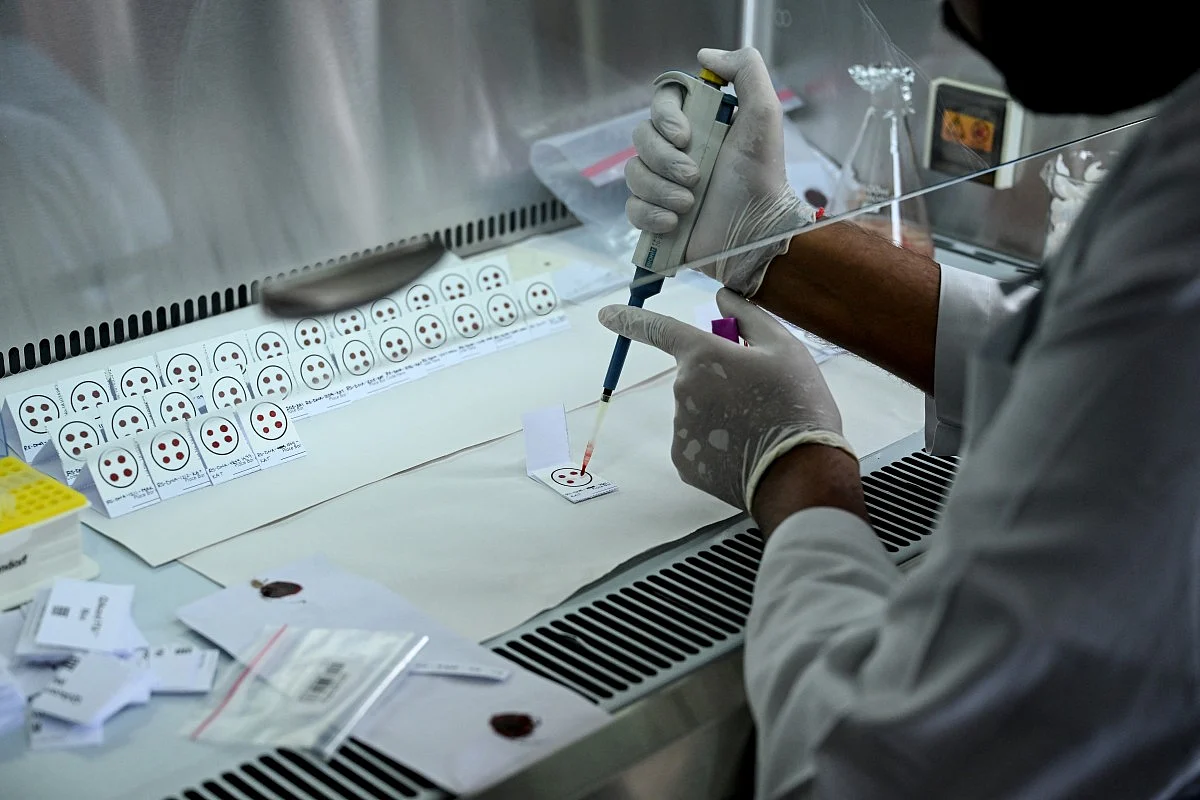
DNA Is No Fortune Teller: Why UAE Is Looking Beyond Genomes To Predict Diseases


That gap is becoming one of the central problems in modern genomics. The UAE has spent years building large genetic datasets, including the Emirati Genome Programme and a reference genome developed from 50,000 samples. Now, the next phase is increasingly about connecting DNA with the other information that shapes health: how genes behave inside particular cells, a person's clinical history, environment and lifestyle.
Recommended For YouIn April, Abu Dhabi opened a biobank designed to link biological samples with genomic, lifestyle and clinical information. Earlier this month, Mohamed bin Zayed University of Artificial Intelligence launched a long-term“deep phenotyping” study examining genetic, biological and lifestyle factors behind health and disease in the UAE population.
Stay up to date with the latest news. Follow KT on WhatsApp Channels.
For Yulia Medvedeva, Assistant Professor of Computational Biology at MBZUAI, who chaired the Global Genomics Summit at the university, the broader picture matters because simply reading somebody's DNA is only the beginning. Her work focuses on single-cell and multi-omics approaches to understand gene regulation, ancestry and diseases including type-2 diabetes.
Reading the genome
A genome is essentially a person's complete set of DNA instructions. Sequencing technology has made reading those instructions vastly cheaper and faster over the past decade, creating datasets at a scale that would once have been impractical.
Medvedeva said that change has coincided with new laboratory techniques and much greater computing power, allowing scientists to examine several layers of biology at once rather than treating the genome as the entire answer.
“The amount of data now is finally kind of suitable to be used in the field,” she said.“That's a totally different era.”
Researchers can now examine genomic data alongside transcriptomics, which looks at how genes are being expressed, and increasingly study individual cells rather than averaging signals across an entire tissue.
For Medvedeva, that is important because genetics alone does not fully explain what happens inside the body.
“Understanding doesn't always come from genetics,” she said. The challenge, she explained, is to combine different forms of data to understand how genetic differences eventually affect gene expression, biological pathways and disease risk.
Single-cell genomics is one part of that shift. Instead of looking at a tissue and receiving an average signal across millions of cells, scientists can examine cells individually and identify which ones are behaving differently.
Two people may therefore carry similar genetic variants but differ in which genes are active, how their cells respond to the environment or which biological pathway begins to malfunction.
And despite the extraordinary amount of biological data now available, Medvedeva cautions against assuming that prediction has caught up with collection.
“I think that's a good time, actually, to explore and start doing various models for biology,” she said.“Overall, companies say that our prediction is really good. Overall it's good. But if you talk about some specific predictions, then you're not that good yet.”
The field, she said, is benefiting from more diverse data, larger datasets and mathematical approaches capable of processing information that researchers could previously struggle to use. But it remains an early stage of turning that capability into reliable predictions for individual patients.
Whose DNA taught the model?
There is another problem particularly relevant to the UAE: much of the genetic evidence used to build disease-risk tools has historically come from populations of European ancestry. That matters because a model developed primarily using one population does not necessarily perform equally well when applied somewhere else.
Polygenic risk scores, for example, combine the effects of many genetic variants to estimate someone's inherited susceptibility to conditions such as heart disease, diabetes or some cancers. Research has repeatedly found that the performance of such scores can fall when applied to ancestry groups poorly represented in the original datasets.
Medvedeva pointed to the same problem during the interview, discussing attempts to apply genetic screening approaches developed in European populations elsewhere and the difficulties researchers can encounter when the underlying populations differ. She also stressed that the problem is not simply finding statistical associations between a genetic variant and a disease, but understanding the biological mechanism connecting the two.
That gives the UAE's genomic programmes a practical purpose beyond simply building a large database. The Emirati Reference Genome used 50,000 samples and identified more than 5.2 million previously undocumented genetic variants. The wider Emirati Genome Programme aims to collect one million samples nationwide.
The point isnt that Emirati biology operates according to different rules. It is that medical prediction becomes more reliable when the population receiving it is adequately represented in the evidence used to build it.
Can AI make sense of all this?
AI is entering the field at exactly the moment genomic data is becoming too large and complicated for traditional analysis alone. Google DeepMind's AlphaGenome, for example, can analyse DNA sequences up to one million letters long and predict thousands of possible effects on gene regulation. Its AlphaGenome Atlas extends that work across billions of possible single-letter changes in human DNA.
That is a major computational step. It does not mean AI can take somebody's genome and reliably predict their medical future. Medvedeva said AI has already changed genomics, but argued that the most important advance may be bringing people from different disciplines together around the right biological questions.
“I would say that AI has already changed the field,” she said.“But I think the same thing has happened finally with people from AI programmes, and not AI programmes, finally realising what are their questions to ask, what are their problems to solve. And this is actually the important part.”
At MBZUAI, she said, bringing researchers with different backgrounds together can help formulate those questions, develop possible solutions and then test and validate the models being built. Data remains one of the largest constraints. Genomic and biological datasets can be sparse, noisy and collected differently across populations and environments.
“We still don't really have enough data to make the most use of everything that we can do with such data,” Medvedeva said.
Some genomic medicine is already reaching patients in Abu Dhabi. A newborn screening programme uses whole-genome sequencing to test for more than 815 treatable childhood genetic conditions, while national programmes are also developing around cancer, pharmacogenomics, rare diseases and premarital screening.
But those applications also show why genetics needs context. A clearly disease-causing mutation can sometimes lead directly to testing or treatment. Predicting a complex condition such as type-2 diabetes is different because genetics interacts with age, environment, behaviour and many other biological factors.
That is also why Medvedeva is cautious about the way genetic information is communicated to patients. A predisposition to disease, she stressed, should not be understood as certainty that the disease will develop.
Rather than creating fear, genetic risk could tell somebody that they should be screened more regularly or pay greater attention to particular aspects of their health. Patients also need to understand what the information means, what its limitations are and what decisions they can reasonably make from it.
The promise of genomics is therefore becoming less about telling people what their DNA says will happen, and more about giving doctors and patients better information about what might happen, early enough to do something about it.
ALSO READ- UAE doctors warn of risks of marrying relatives in Gulf, call for genome literacy Digital records in UAE healthcare help doctors avoid unnecessary medical tests What health doubts can you ask AI; when to visit a doctor? UAE medics explain

Legal Disclaimer:
MENAFN provides the
information “as is” without warranty of any kind. We do not accept any
responsibility or liability for the accuracy, content, images, videos,
licenses, completeness, legality, or reliability of the information
contained in this article. If you have any complaints or copyright issues
related to this article, kindly contact the provider above.
Comments
No comment