

Want Your Child To Be A Top Athlete? Arjuna Awardee Hina Sidhu Shares 6 Sports They Must Try Before Specialising


Sidhu challenged the rush to specialise young athletes with a direct appeal on social media -“Parents! Hear up! Want your child to be the next top athlete of India? Then you definitely need to watch this!”
The champion shooter outlined why committing to a single sporting discipline too early can be a developmental trap and advocated building a robust“movement vocabulary” rather than narrowing focus to just one game.
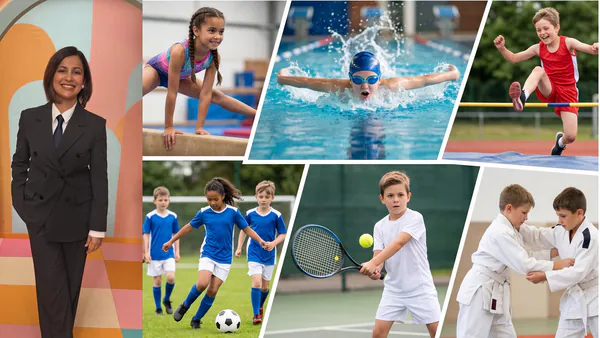
Before committing to a specific athletic path, she recommended that children experience a mix of six foundational sports designed to build a complete and resilient physical baseline:
Also Read | Asian Games 2026: 5 Indian athletes who won medals after switching sports 1. Gymnastics: Masterclass in body controlLong before a child picks a sport to specialise in, it is important to understand how their own body moves through space. Sidhu highlighted that gymnastics is necessary“for mobility, body control, and improving proprioception (the awareness of body position)”.
It teaches the absolute fundamentals of movement that translate into every other physical activity.
2. Swimming: Ultimate life skillSwimming is the only sport on this list that doubles as a critical survival skill. Beyond water safety and building confidence, swimming develops cardiovascular endurance, breath control, and bilateral coordination, Sidhu said.
She said it teaches children how to move confidently in a completely different medium.
Also Read | The homemaker who started swimming at 38 and became a Ironman at 49 3. Athletics (Track and Field): Human basicsEvery complex sport is ultimately a combination of basic human movements.
Sidhu noted that athletics strips sports down to their absolute core: running, jumping, and throwing. Mastering these raw biomechanical foundations creates a physiological baseline that will enhance a child's performance in any future sport they choose to pursue.
“These movement foundations are the basis of every other sport,” she said.
4. Team Ball Sports: Spatial awareness and strategyWhether it is football, basketball, or hockey, team sports involving a ball introduce complex, dynamic environments.
Sidhu said team ball sports teach children how to read open space, communicate effectively under pressure, pass, and react instantly to both teammates and opponents-all while moving and strategising simultaneously.
“This will teach them how to read space, communicate, pass, react to teammates and opponents, all while moving and strategising,” she said.
5. Racket Sports: Tracking and timingTennis, badminton, and squash are exceptional for fine-tuning the nervous system.
Sidhu said racket sports force children to develop acute hand-eye coordination, precise timing, and visual tracking. Learning to anticipate the trajectory of a fast-moving object wires the brain for rapid reaction times.
Also Read | Your child wants a career reset? How to back the move without derailing finances 6. Contact Sports: Resilience and leverageWhile some parents may hesitate at the idea of contact sports, Sidhu specifically recommended disciplines like judo and wrestling-noting that they will not make a child aggressive.
Instead, these sports, she said, teach leverage, physical control, and spatial boundaries. Most importantly, they teach children how to fall safely, absorb impact, and push themselves back up.
The strongest athletes aren't those who can do only one thing; they are the ones with the most versatile physical foundations.
“The goal is to give them a broad movement vocabulary, including water, speed, gravity, a ball, a team, and an opponent,” Sidhu concluded.

Legal Disclaimer:
MENAFN provides the
information “as is” without warranty of any kind. We do not accept any
responsibility or liability for the accuracy, content, images, videos,
licenses, completeness, legality, or reliability of the information
contained in this article. If you have any complaints or copyright issues
related to this article, kindly contact the provider above.
Comments
No comment