

Why Maldives Has Entered The Chagos Islands Dispute And Challenged Longstanding Claims To Sovereignty


The Chagos Islands dispute, long centered on competing claims by the United Kingdom and Mauritius, has entered a new phase after the Maldives formally asserted that it holds the strongest claim to the archipelago.
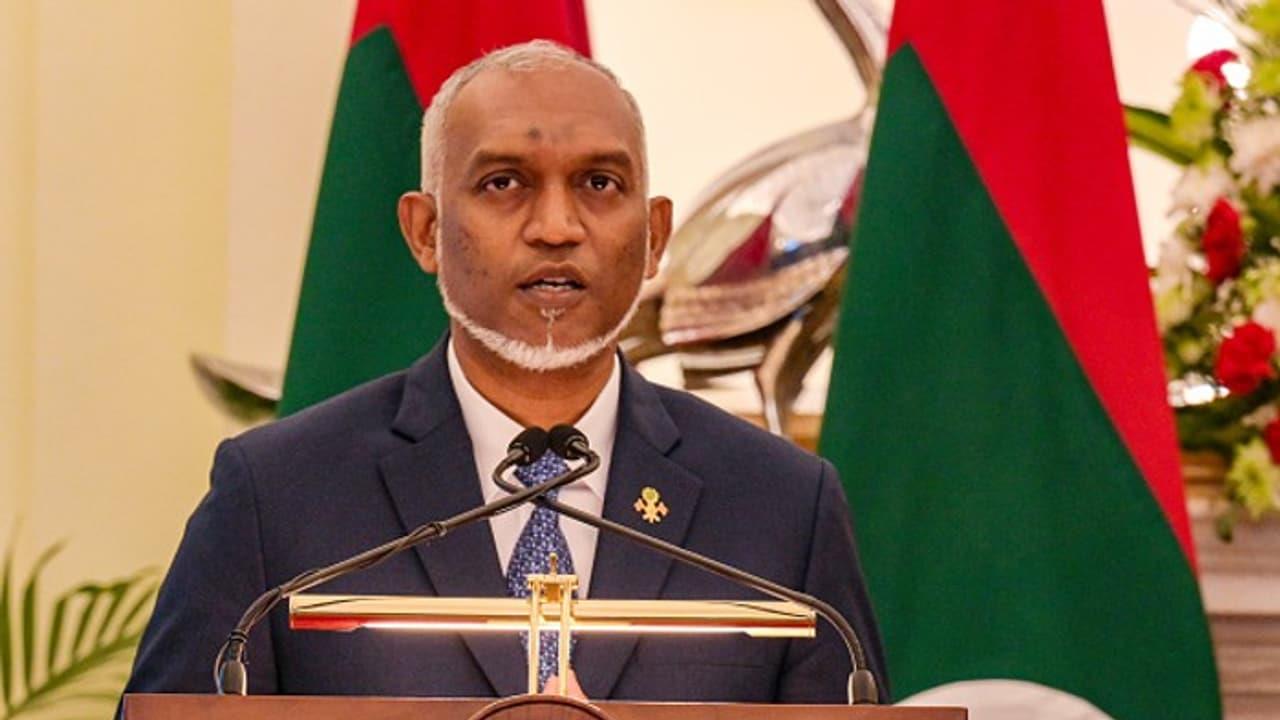
Under President Mohamed Muizzu, the Maldives has become the first government in the country's history to officially claim sovereignty over Chagos, placing itself alongside the two longstanding claimants and adding a fresh layer to one of the Indian Ocean's most sensitive territorial issues.
The position represents a significant shift from previous Maldivian governments, which generally focused on maritime boundary concerns rather than ownership of the islands themselves.
The Chagos archipelago occupies a strategically important location in the central Indian Ocean and includes Diego Garcia, home to a major joint British-American military facility.
For decades, sovereignty disputes were primarily confined to the United Kingdom and Mauritius. Britain administered Chagos as part of colonial Mauritius before separating the islands in 1965 and creating the British Indian Ocean Territory. Mauritius has consistently maintained that the separation violated decolonization principles and that sovereignty should belong to Port Louis.
International legal developments have increasingly favored Mauritius. In recent years, both the International Court of Justice and the United Nations General Assembly supported the view that Mauritius' decolonization process was incomplete and that British administration should end.
Subsequent negotiations between Britain and Mauritius produced an agreement recognizing Mauritian sovereignty while allowing continued operation of the military base on Diego Garcia through a long-term arrangement.
It is against this backdrop that the Maldives has advanced its own case.
What Is The Basis Of The Maldives' Claim?
The Maldivian government argues that historical evidence supports its position regarding Chagos.
Officials have pointed to a sixteenth-century document linked to Sultan Hassan IX that allegedly referred to islands identified in the Maldives as Foalhavahi, which the government associates with Chagos.
The administration has also cited traditional accounts, references to old gravestones said to contain Dhivehi script and the geographic proximity between the Maldives and the archipelago.
However, the claim differs from previous Maldivian foreign policy positions.
For more than six decades after independence, successive governments did not formally seek Chagos sovereignty. Instead, Malé's primary concern involved maritime boundaries and fishing rights, particularly where exclusive economic zones overlapped.
The current policy therefore represents a substantial departure from earlier diplomatic approaches.
Government leaders have stated that they oppose any transfer of sovereignty involving Chagos until the Maldivian position is fully considered.
President Muizzu has raised the matter directly with British officials and has sought discussions regarding the issue through diplomatic channels.
How Did The Issue Become A Political Debate?
The roots of the current policy can be traced to domestic political developments in the Maldives.
Debate intensified ahead of the 2023 presidential election after it became public that then-President Ibrahim Mohamed Solih had recognized Mauritian sovereignty over Chagos in correspondence with Mauritian authorities.
That decision generated criticism from political opponents, who argued it weakened Maldivian interests during broader maritime boundary discussions.
The issue became intertwined with election politics and wider debates over national sovereignty.
Opposition figures claimed previous governments had failed to adequately defend Maldivian territorial interests, while supporters of a stronger position on Chagos argued the issue required renewed attention.
Following his election victory, Muizzu adopted that position as official government policy.
His administration withdrew support for the earlier recognition of Mauritius' claim, created a dedicated office to oversee territorial issues and announced plans to present evidence supporting the Maldives' position in relevant international forums.
Where Does The Dispute Stand Now?
Despite the policy shift, the Maldives has yet to secure meaningful international backing for its sovereignty claim.
Britain continues to view Chagos primarily as an issue involving the United Kingdom and Mauritius. Mauritius, meanwhile, remains committed to its own claim and has not accepted the Maldivian position.
Diplomatic relations between Mauritius and the Maldives have also been affected by the dispute.
For now, the immediate impact appears greater in domestic politics than in international diplomacy. The issue aligns with President Muizzu's broader narrative of defending national sovereignty and challenging decisions made by previous administrations.
However, the wider legal and diplomatic framework surrounding Chagos remains largely unchanged.
While the Maldives has successfully inserted itself into the conversation, international recognition continues to focus primarily on the longstanding dispute between Britain and Mauritius.

Legal Disclaimer:
MENAFN provides the
information “as is” without warranty of any kind. We do not accept any
responsibility or liability for the accuracy, content, images, videos,
licenses, completeness, legality, or reliability of the information
contained in this article. If you have any complaints or copyright issues
related to this article, kindly contact the provider above.
Comments
No comment