

US Blast Simulation Targets China's Alleged Secret Nuke Testing


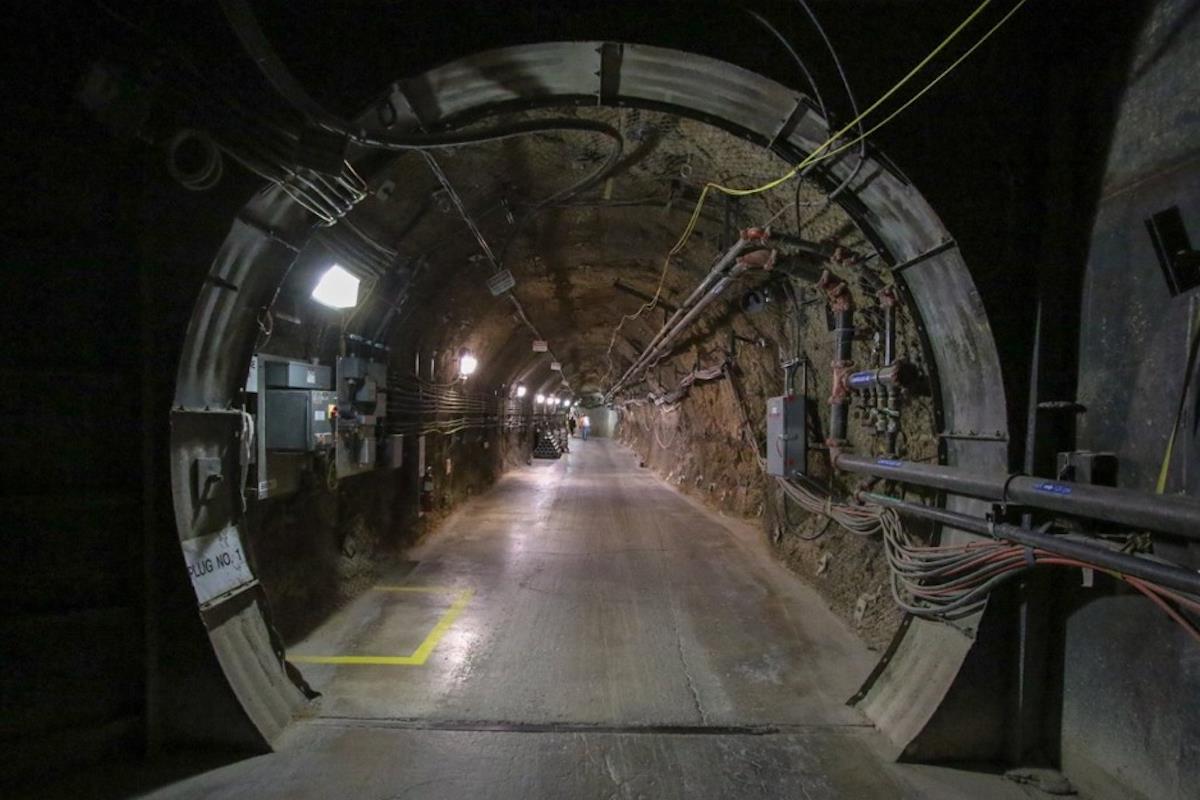
Last month, the US Department of Energy (DOE) reported that the National Nuclear Security Administration (NNSA) conducted an underground, non-nuclear explosion experiment at the Nevada National Security Site to improve US capabilities to detect low-yield and concealed foreign nuclear tests.
Carried out in the site's P Tunnel within Area 12, the test utilized chemical high explosives alongside radiotracers to replicate the physics of clandestine detonations without nuclear material.
Scientists deployed an array of instrumentation - including seismometers, accelerometers, electromagnetic detectors, infrasound devices, meteorological monitors, and radiotracer samplers - to capture comprehensive signature data.
Officials stated the primary objective is to validate physics-based models and refine detection algorithms targeting“decoupled” nuclear explosions, in which a device is detonated inside an underground cavity to muffle its seismic shockwaves and mimic a far smaller blast.
The administration framed the initiative as a countermeasure against evasive foreign testing techniques, citing findings that China utilized decoupling during a June 2020 event at its Lop Nur test grounds.
By gathering empirical multi-physics data, this non-nuclear experiment addresses critical capability gaps in low-yield test detection. A March 2024 US Congressional Justification Report explicitly notes that the DOE is developing new methods to discriminate between evasively conducted underground explosions and natural earthquakes - capabilities NNSA administrator Brandon Williams has championed as essential to maintaining unmatched technical verification over muffled foreign nuclear weapons development.
The institutional push highlights an implicit shortfall in the US's ability to definitively verify foreign micro-yield testing through standoff observation alone. While the Comprehensive Nuclear-Test-Ban Treaty Organization's (CTBTO) International Monitoring System reliably flags uncontained blasts exceeding 500 tons of TNT equivalent, its global network struggles to resolve sub-kiloton decoupled explosions.

Legal Disclaimer:
MENAFN provides the
information “as is” without warranty of any kind. We do not accept any
responsibility or liability for the accuracy, content, images, videos,
licenses, completeness, legality, or reliability of the information
contained in this article. If you have any complaints or copyright issues
related to this article, kindly contact the provider above.
Comments
No comment