


US Bans Chinese Data Center Gear As Beijing Grounds Its AI Talent


A string of moves announced or uncovered this week shows that both sides are now guarding their models, hardware and engineers more tightly than ever. The rivalry has spread from chips to the data center equipment and the people behind the technology.
OpenAI said Wednesday that it had disrupted a coordinated campaign of adversarial distillation, the unauthorized use of one model's outputs to train another. It attributed a core cluster of the activity to individuals associated with Moonshot AI, the Beijing-based developer of the Kimi K3 chatbot, and said it had shut down related activity across more than 15,000 users by July 28.
Amid the intensifying AI race, Chinese authorities have started requiring the spouses and children of top AI talent to obtain official approval before traveling abroad, even for short trips, Bloomberg reported on Tuesday, citing people familiar with the matter. The move comes as new exit and entry rules, effective September 15, allow authorities to stop anyone deemed a threat to national technological security from leaving the country.
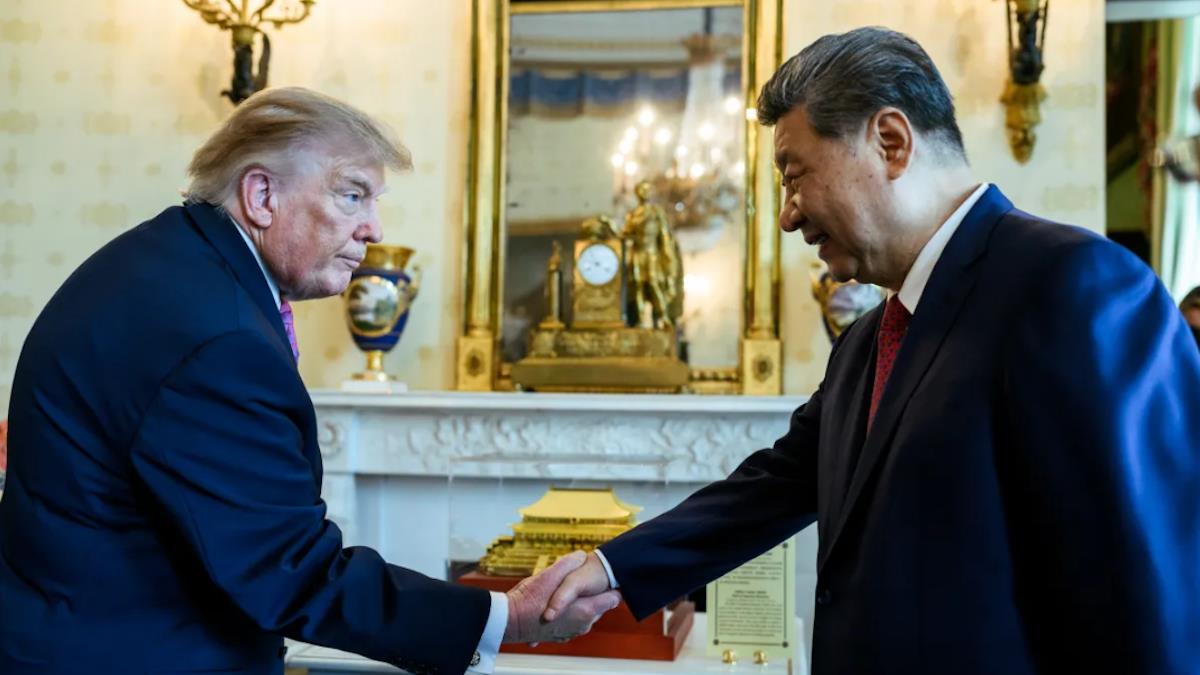
These moves have intensified despite a three-day summit between US President Donald Trump and Chinese President Xi Jinping in Washington last week. The two sides agreed to set up a communication channel for AI-related incidents and to hold a bilateral AI dialogue, with senior officials set to gather in Shenzhen in November during the Asia-Pacific Economic Cooperation (APEC) summit.
On August 26, Trump signed an executive order banning foreign-made transformers, high-voltage circuit breakers and other grid equipment linked to China and 23 other countries. The order took effect immediately, but no purchase is barred until the Department of Energy identifies risky equipment and publishes implementing rules, due by December 24.
Earlier this year, some global equipment suppliers prepared to run their data center supply chains regionally.
Legrand, a French electrical and digital building infrastructure group, bought Kratos Industries, a Colorado-based switchgear maker for data centers, in February to serve the US market. In April, it acquired TES Group, a Northern Ireland-based power distribution specialist serving Europe, and Keydak, a Guangzhou-based rack maker serving the Chinese market. Data centers accounted for 26% of Legrand's revenue at the end of 2025.

Legal Disclaimer:
MENAFN provides the
information “as is” without warranty of any kind. We do not accept
any responsibility or liability for the accuracy, content, images,
videos, licenses, completeness, legality, or reliability of the information
contained in this article. If you have any complaints or copyright
issues related to this article, kindly contact the provider above.


Comments
No comment