


Pentagon To Not Invite Key Allies To NATO Meeting Next Month - Politico


According to six diplomats familiar with the plans, the meeting in Poland, led by Elbridge Colby, head of the Pentagon's policy office, is effectively a working group focused on NATO's future.
At the same time, many countries that were not invited, including the United Kingdom, France and the Baltic states, spend substantial amounts on defense and play important roles in the Alliance. Their diplomats have therefore questioned the reasons for their exclusion.
"We're doing everything that is being asked of us. We're trying to understand what the criteria is and what the purpose of these meetings are. Not much has been passed on to us yet," a representative of one of the uninvited allied countries said.
The White House did not respond to a request for comment, while the Pentagon declined to comment.
Colby, who launched the initiative, held the first meeting in this format in June in Bergen, Norway, inviting six allies - Norway, Sweden, Finland, Poland, Germany and the Netherlands. The format was dubbed the "Bergen Group."
A diplomat from one of the invited countries said the group was not intended to divide the Alliance. According to the diplomat, participants plan to develop proposals that will subsequently be submitted for consideration by all NATO countries.
Read also: NATO sees no immediate threat from Russia amid hybrid attacksAt the same time, the diplomat acknowledged that some allies are unhappy about not being invited, particularly given that many of them have met or exceeded the defense-spending targets set by the Trump administration.
According to another source familiar with the plans, the United States may next invite Denmark to the format following an agreement between Washington and Copenhagen to expand the U.S. military presence in Greenland.
"NATO allies that are rapidly meeting their Hague spending commitments, have the scale to contribute, and are ready to get down to practical business," Colby wrote on social media after the meeting.
The head of the Pentagon's policy office has long advocated for negotiations in a narrower format among NATO countries. In previous years, he focused, among other things, on strengthening Germany's role in deterring Russia and deploying U.S. forces to counter China's growing influence.
At the same time, even invited allies have questioned the principles by which Colby and other Pentagon officials select participants. In particular, they have pointed to the absence of the United Kingdom from the list of invitees despite its significant defense capabilities.
"If they try splitting NATO into the good ones and the bad ones, it is dangerous for the U.S. But for Europe, this is existential," one of the six diplomats said.
President Donald Trump and his closest allies have regularly criticized NATO since Trump returned to power, including over some Alliance members' refusal to support the war against Iran and some countries' failure to meet the requirement to spend 5% of GDP on defense.
Defense Secretary Pete Hegseth has supported this position. He called for "exemplary allies" to be rewarded and warned that countries that do not support U.S. interests would face consequences.
As Ukrinform reported, the White House developed a system for dividing NATO member states into "good and bad" allies, as the administration of U.S. President Donald Trump seeks ways to influence partners that have refused to support Washington in its confrontation with Iran.
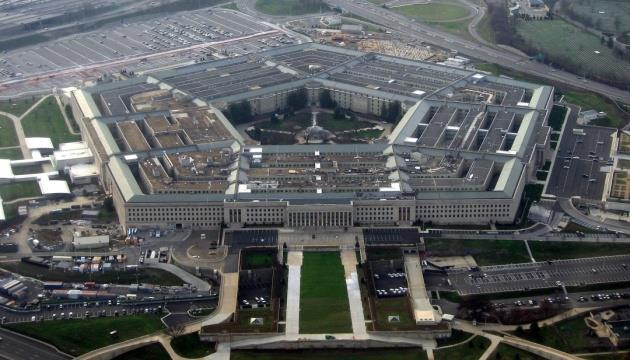
Photo: Wikipedia

Legal Disclaimer:
MENAFN provides the
information “as is” without warranty of any kind. We do not accept
any responsibility or liability for the accuracy, content, images,
videos, licenses, completeness, legality, or reliability of the information
contained in this article. If you have any complaints or copyright
issues related to this article, kindly contact the provider above.


Comments
No comment