

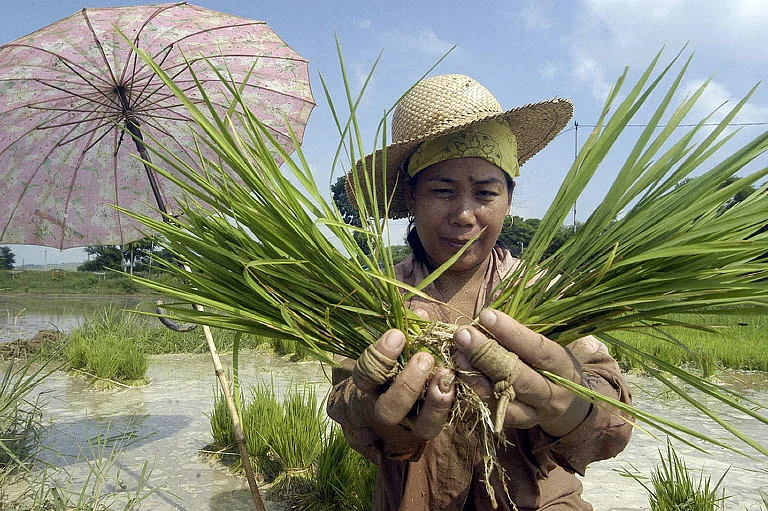
Philippines Prepares For 'Worst Case Scenario' As El Niño Threatens Country's Rice Supply


Department of Agriculture (DA) secretary Francisco Tiu Laurel Jr has directed his agency to continuously update its El Niño response plans as fresher weather, crop, water, and market data come in, seeking to minimize the drought's impact on food security, supply, and prices.
Recommended For You“The lessons we learned from the powerful El Niño episode that ended in mid-2024 should help us respond better to the climate challenge we now face,” Tiu Laurel said.
Stay up to date with the latest news. Follow KT on WhatsApp Channels.
Tiu Laurel recalled that global rice prices surged in 2024 due to the weather phenomenon. The Food and Agriculture Organization of the United Nations said the All Rice Price Index rose 21 per cent in 2023, largely because of concerns over El Niño's impact on production.
The situation led India to impose restrictions on the export of non-basmati white rice to the Philippines in July 2023. The move demonstrated that such unexpected decisions by a major exporter can tighten global supplies and reverberate through import-dependent markets such as the Philippines, the DA said.
Previously the world's biggest rice exporter, the Philippines is now the biggest rice importer, importing 3.37 million metric tons (MT) of rice in 2025. Reliance on imported rice is projected to increase to as much as 5.6 MT by the end of the year, however.
“A fresh drought could therefore squeeze domestic supply just as global markets remain vulnerable to weather and trade disruptions,” Tiu Laurel warned.
He added that the government is preparing for the worst-case scenario, noting that the National Food Authority is expanding its storage capacity-including newly rented warehouses-to boost buffer rice stocks.
Government spokesperson Claire Castro, meanwhile, said agencies have started implementing measures to prevent water shortages, protect agriculture, and mitigate the effects of prolonged dry conditions.
Castro said the National Irrigation Administration (NIA) has drawn up a mitigation action plan focused on sustaining water supply to farmlands as the country braces for worsening drought conditions.
The government has ordered the NIA to start identifying potential groundwater sources that can support solar-powered pump irrigation systems, using groundwater maps from the Philippine Department of Environment and Natural Resources' Mines and Geosciences Bureau, Castro reported.
The Philippine Atmospheric, Geophysical and Astronomical Services Administration (PAGASA) warned that the ongoing El Niño is expected to intensify into a“very strong” event between September and December 2026 and persist through the first half of 2027.
PAGASA has also warned that El Niño generally increases the likelihood of below-normal rainfall, raising the risk of dry spells and drought, with possible impacts on water resources, agriculture, energy, and public health.

Legal Disclaimer:
MENAFN provides the
information “as is” without warranty of any kind. We do not accept any
responsibility or liability for the accuracy, content, images, videos,
licenses, completeness, legality, or reliability of the information
contained in this article. If you have any complaints or copyright issues
related to this article, kindly contact the provider above.
Comments
No comment