

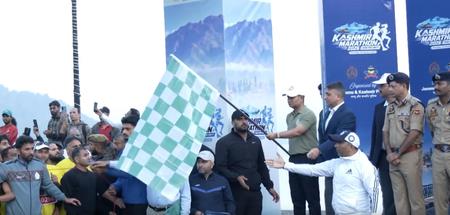
'Run For Unity' Marathon Flagged Off In Srinagar, ADGP Stresses Youth Engagement, Anti-Drug Campaign


Speaking to reporters on the sidelines of the marathon, the ADGP said sports and other constructive activities play a crucial role in channelising the energy of young people in a positive direction.
“It is very important because today's youth are the future of society. Sporting activities help build discipline and bring people together,” he said, expressing satisfaction over the enthusiastic response to the event.
"Participation in the event has exceeded expectations, with runners from outside Jammu and Kashmir also taking part,” he said.
He congratulated all the participants and said the sportsman spirit displayed during the marathon was encouraging, with people from different sections participating in the event.
“The biggest thing is the sportsman spirit. You can see that people from all walks of life are participating. This is a good thing,” he said.
The ADGP said the Jammu and Kashmir Police would organise more activities in the coming days, including a cycle race.“Very soon, there will be a cycle race here. The most anticipated event is Jashn-e-Dal. There is a water sports event on the Dal Lake. It will be held within a few days,” he said.
On the issue of substance abuse, Nitish Kumar said,“Drugs and alcohol are the main sources of addiction in our society.” He said the Jammu and Kashmir Police had demonstrated how children and youth could overcome drug abuse, adding that the Nasha Mukt Abhiyan was a result of the efforts against the menace.
Drug abuse among youth in Jammu and Kashmir has escalated into a severe public health and societal emergency, with roughly 8 to 10 per cent of the region's population affected by substance use.
Estimates indicate there are between 10 to 13.5 lakh (1 million to 1.35 million) active drug users in Jammu and Kashmir, including tens of thousands of adolescents and children under 17.
The region has witnessed an alarming transition from traditional cannabis and medicinal opioids to intravenous heroin, which now accounts for roughly 95 per cent of cases seen at major health facilities like the Institute of Mental Health and Neurosciences (IMHANS) in Srinagar.
Addicts reportedly spend between Rs 88,000 and Rs 90,000 per month to procure heroin, plunging families into severe debt. Health complications are also soaring, including high rates of Hepatitis C among intravenous users.

Legal Disclaimer:
MENAFN provides the
information “as is” without warranty of any kind. We do not accept any
responsibility or liability for the accuracy, content, images, videos,
licenses, completeness, legality, or reliability of the information
contained in this article. If you have any complaints or copyright issues
related to this article, kindly contact the provider above.
Comments
No comment