

Made In Russia Returns To Wetex 2026: Ecopak Brings A New Organic Solution For Urban Greening


Published: Wed 30 Sept 2026, 9:00 AM
- Partner Content
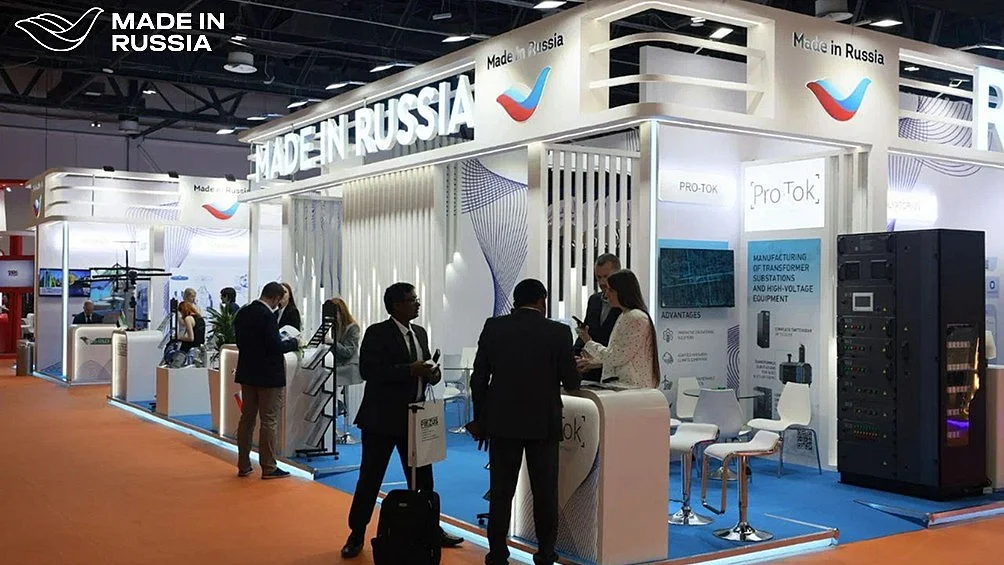
Dubai will once again host one of the world's biggest exhibitions dedicated to energy, water and the environment. Wetex 2026 takes place from October 20 to 22 at the Dubai World Trade Centre, and the Made in Russia national brand pavilion will be there again, this time with more than 20 Russian companies. Most of these companies' products carry official Made in Russia certification, a mark that tells buyers in the UAE and across the Middle East that the product behind it has passed a real quality check.
Made in Russia is a national programme that helps Russian manufacturers step onto foreign markets. Companies that join the programme go through an evaluation of their production, quality control and environmental standards. Once it is passed, products receive the Made in Russia certificate. For many small and medium-sized Russian exporters, this certificate is the first serious step toward international trade, because it gives foreign partners a reason to trust a company they have never worked with before.
Wetex has become one of the main stages for this programme in the Gulf region. Last year, at Wetex 2025, the Made in Russia pavilion brought together 30 companies working in clean energy, water treatment, waste recycling and sustainable agriculture. The exposition was organised in four areas: energy, water treatment, waste management and recycling, agriculture and infrastructure. Organisers of Made in Russia describe Wetex as a place where Russian companies do not just show products, they build long-term partnerships.
This year, the pavilion returns with a similar mix of technologies, and one of the participants stepping onto the Wetex stage is Ecopak, a Russian company that makes an organic soil product called Peatgel.
Ecopak's product answers a problem that every city in a hot climate knows well. Urban trees and green spaces face constant pressure: compacted, poor soil from construction and paving; heavy metals and chemicals from traffic; exhaust fus that weaken photosynthesis and immunity; extreme heat in summer and sharp temperature swings in winter; asphalt that blocks natural watering; chemical run-off that pushes soil pH out of balance; and the high cost of replacing trees that simply do not survive. On top of this, cities that manage large numbers of palm trees and tropical plants, common across the UAE, Saudi Arabia, Egypt, India and Southeast Asia, deal with tonnes of fallen palm leaves that are usually trucked away to landfill instead of being put to use.
Peatgel is built to work on several of these problems at once. It is a liquid concentrate made from lowland peat, a natural raw material rich in humic compounds. The product is produced with a patented technology that keeps the natural structure of the peat inside a water-based suspension. It contains humic and fulvic acids that support root growth and help soil recover, along with nitrogen, phosphorus, potassium, iron, magnesium, copper and zinc in a form plants can absorb easily, plus amino acids that act as natural stress protection for the plant. Because it works on the soil, the root system and the visible part of the plant at the same time, it is acting in two directions: restoring the growing environment and strengthening the plant itself.
There is also a circular-economy angle that fits well with a region like the UAE. Because Peatgel speeds up humification, it can turn palm and tropical leaf waste, currently seen mostly as a disposal problem, into a resource for restoring soil. For a country managing large volumes of palm waste every year, this is a practical way to close the loop between green waste and soil health.
Ecopak already ships its products abroad, with current exports to Uzbekistan, Kyrgyzstan, Armenia and Vietnam. The UAE is now the company's next target market, and it plans further steps in the Middle East and Southeast Asia over the coming year, including Vietnam, Malaysia and Dubai.
Importantly, Peatgel already carries the Made in Russia certificate, along with a domestic conformity certificate, environmental safety documentation and a product safety passport. This means the company arrives at Wetex with a product whose production, quality and environmental impact have already been checked and confirmed by independent certification bodies, a process that typically covers everything from raw material sourcing to the final formulation and its effect on soil, people, animals and insects.
For UAE landscaping contractors, municipal green-space managers and agricultural businesses looking for solutions to the same problems Peatgel is built to solve the Made in Russia stand at Wetex 2026 is where that conversation can start. Visitors to the exhibition will be able to meet the Ecopak team directly and see how a peat-based Russian technology, backed by the trust of the Made in Russia national brand, is being adapted for one of the toughest growing environments in the world.

Legal Disclaimer:
MENAFN provides the
information “as is” without warranty of any kind. We do not accept any
responsibility or liability for the accuracy, content, images, videos,
licenses, completeness, legality, or reliability of the information
contained in this article. If you have any complaints or copyright issues
related to this article, kindly contact the provider above.
Comments
No comment