

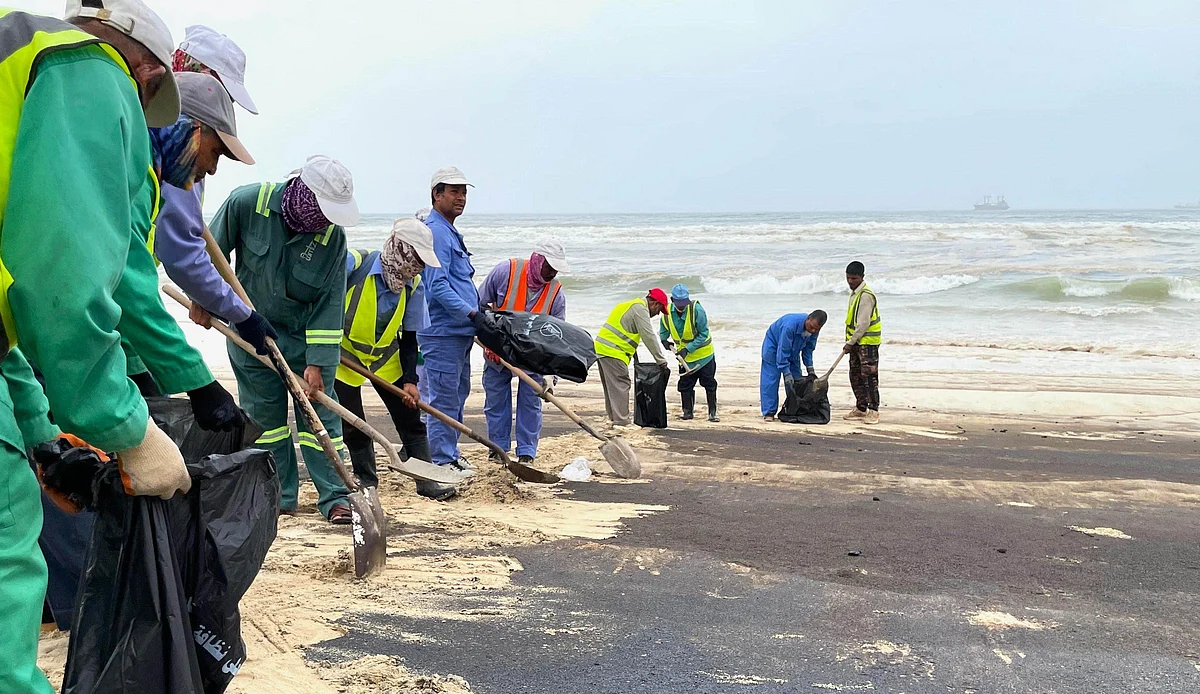
Oman Returns 135 Tonnes Of Oil-Polluted Sand To Beach After Cleaning It


Around 135 tonnes of contaminated sand have been cleaned and returned to Awqad Beach in Salalah, as authorities continue efforts to restore part of Dhofar's coastline affected by oil pollution in 2025.
Recommended For YouThe sand was part of around 190 tonnes of contaminated material removed from the area during the clean-up operation.
Instead of permanently disposing of it, authorities sent the sand for treatment before returning it to the same beach once tests showed it was free from oil derivatives.
Stay up to date with the latest news. Follow KT on WhatsApp Channels. How was the sand cleaned?
The treatment process took around three months and was capable of processing about five tonnes of sand every hour. The technology uses oxidisers and catalysts that react with oil and other organic pollutants in the sand.
During treatment, the pollutants are broken down into simpler substances, including water, oxygen and sodium carbonate.
Officials said the process does not require toxic solvents and avoids burning the contaminated material.
After laboratory testing confirmed the treated sand was free from oil derivatives, around 135 tonnes were transported back to Awqad Beach.
Why return the sand to the beach?Rather than replacing the contaminated sand with new material, the project aimed to restore the original sand and return it to the coastline.
Oman's Environment Authority said the treated sand was used to rehabilitate an affected stretch of beach covering around two kilometres.
Returning the original material also helps preserve the natural characteristics of the beach and supports efforts to reduce coastal erosion and restore the surrounding environment.
What happened to the coastline?Oil pollution affected parts of Dhofar's coast in 2025, including areas between Khor Salalah and Awqad Beach, as well as parts of Raysut Beach.
Authorities surveyed the affected coastline and carried out clean-up operations before contaminated sand and other material were removed for treatment.
The response involved several government and environmental bodies, including the Environment Authority and Dhofar Municipality.
Is this the first project of its kind in Oman?Officials described the operation as the first experience of its kind in Oman and Dhofar involving the removal, treatment and return of oil-contaminated beach sand.
The project was carried out using specialised technology designed to treat contaminated soil and sand.
Instead of ending with tonnes of polluted sand being discarded, the operation brought much of it back to where it came from. After months of treatment, 135 tonnes of sand are now back on Awqad Beach.
ALSO READ- Oil spill hits Oman shores: Bad weather complicates salvage efforts, official says Oman continues to monitor fish, catches and shores after oil spill Oman warns against eating, buying 12 toxic pufferfish species

Legal Disclaimer:
MENAFN provides the
information “as is” without warranty of any kind. We do not accept any
responsibility or liability for the accuracy, content, images, videos,
licenses, completeness, legality, or reliability of the information
contained in this article. If you have any complaints or copyright issues
related to this article, kindly contact the provider above.
Comments
No comment