


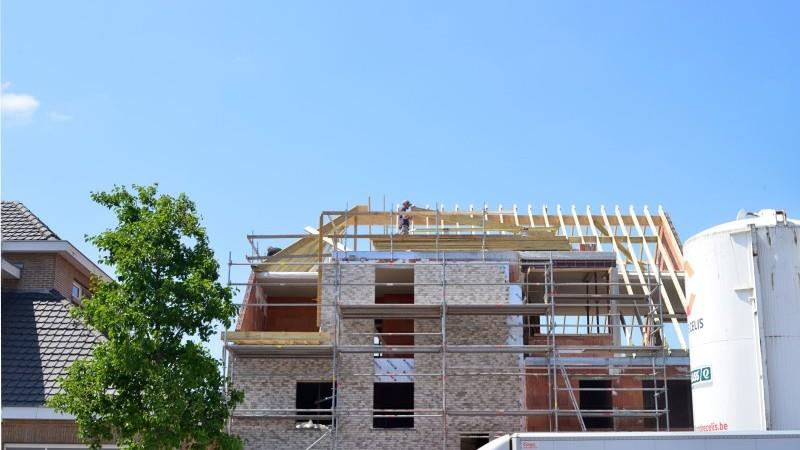
Belgian Building Permit Recovery Continues, But Challenges Lie Ahead


The first half of 2026 brought a welcome improvement in building activity, with the number of building permits rising by 8% compared with the same period a year earlier. The recovery was mainly driven by new construction permits, which increased by 12% year-on-year, while renovation permits also posted a more modest gain of 5%. However, the picture is mixed across market segments. In the renovation market, growth was confined to residential projects, where permits increased by 6% compared to the previous year. Non-residential renovation activity, by comparison, resumed its downward trend since April and is currently 2% lower than a year ago. In the new construction segment, both residential and non-residential permits recorded growth, although the strongest momentum came from the residential market, where permits increased by 14% year-on-year.
Focusing on the residential market, housing permits rose significantly during the summer. In July, the number of housing permits jumped by 51% compared with the previous month, lifting annual growth to 11%. Both apartments and houses contributed to this increase, with permits rising by 61% and 40% month-on-month, respectively. As a result, apartment permits were 8% higher than a year earlier, while house permits increased by 14%. Another encouraging development is the growing share of apartment permits. Since March, more permits have been issued for apartments than houses, which is in line with demographic changes and the increasing demand for smaller dwellings.
Higher energy prices risk derailing this recoveryHigher energy prices feed through to the construction sector, as building materials are highly energy-intensive to produce. According to the Belgian government's construction material price index, building material prices were already up 8% in July 2026 compared with a year earlier. Some categories recorded even stronger increases: prices for precious and nonferrous metals, for instance, rose by as much as 36%.
Rising material costs risk pushing up the price of new homes at a time when demand remains the main constraint reported by construction firms. Higher construction costs add to worsening financing conditions. Since the escalation of the conflict in the Middle East, both long-term interest rates and mortgage rates have increased significantly, reducing housing affordability. This is already becoming visible in the mortgage market. In the first eight months of 2026, the number of new mortgages fell by around 10% compared with the same period a year earlier. While construction firms reported an improvement in order books between March and June, this trend has reversed since July. Firms are once again reporting weakening order books, highlighting the fragile nature of the recovery in residential construction.
Lower energy prices may provide some relief for interest rates, but a return to the ultra-low-rate environment of the past is unlikely. With financing costs expected to remain structurally higher, housing demand is unlikely to receive a strong boost anytime soon. In addition, the Flemish government is planning to raise registration duties on the sole family home from 2% to 3%, reversing a reduction introduced less than two years ago. Beyond its direct financial impact, the measure adds to policy uncertainty in the housing market, making it more difficult for households to anticipate the costs of a home purchase and potentially dampening demand further in a housing market that was already expected to lose some momentum in the coming years.

Legal Disclaimer:
MENAFN provides the
information “as is” without warranty of any kind. We do not accept
any responsibility or liability for the accuracy, content, images,
videos, licenses, completeness, legality, or reliability of the information
contained in this article. If you have any complaints or copyright
issues related to this article, kindly contact the provider above.


Comments
No comment