

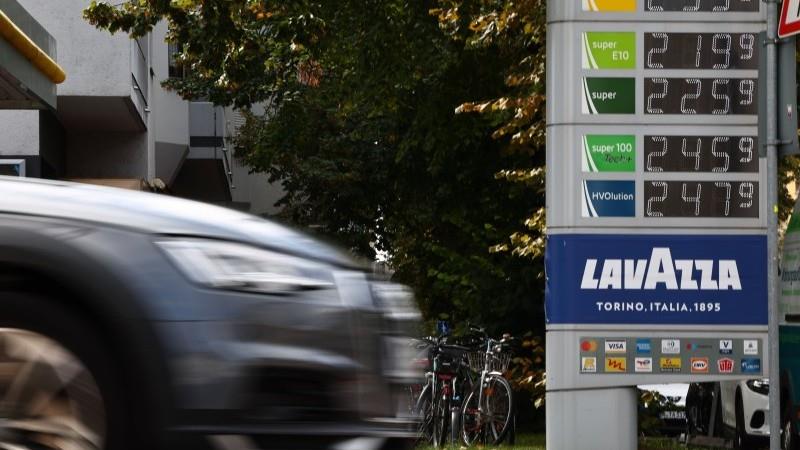
Rising Fuel Prices Push German Inflation Towards Three-Year High


German headline inflation is almost at a three-year high, coming in at 3.3% year-on-year in September, from 2.9% YoY in August. In December 2023, headline inflation stood at 3.8% YoY. The European inflation measure, more relevant to the European Central Bank, also came in at 3.3% YoY.
While at face value these inflation numbers are a clear concern for the European Central Bank, the fact that core inflation remained unchanged at 2.4% YoY and services inflation even drifted lower to 2.7% YoY from 2.8% YoY in August shows that inflation currently remains an energy price phenomenon. As long as core inflation remains subdued, some ECB members might question the need for further hikes.
Inflation still mainly an energy storyLooking at the available components at the regional state level, the September surge in inflation remains mainly the result of higher energy prices. There were very few signs of knock-on or indirect effects of higher energy prices on the rest of the economy. The only visible knock-on effects are currently in the transportation sector, which are probably also driven by the effects of low water levels in main rivers. For the rest, prices for leisure activities, household goods and healthcare actually dropped in September, providing more evidence of weakening demand rather than broadening inflationary pressures.
Inflation to remain between 3% and 4%Looking ahead, the path of headline inflation remains highly affected by the war in the Middle East and oil prices. In our base case scenario, we are still assuming that the war will continue and relief will only come after the US mid-term elections. Against this backdrop, headline inflation will remain above 3% at least until early 2027. Low gas storage levels are likely to lead to higher gas prices over the coming weeks, translating into higher retail prices at the start of next year. In fact, at the end of September, storage levels at less than 60% are historically low for this time of the year and also clearly below the level seen during the energy crisis in 2022. Together with some knock-on effects from higher energy prices on transportation costs, as well as the inflationary impact of the drought on food prices and other industrial products, it could now take until the end of 2027 before headline inflation drops below 2% again.
As worrisome as this might sound, the current inflation picture remains structurally different from the inflation wave in 2022. Selling price expectations in services remain below pre-war levels and only recently crawled up again in manufacturing. At the same time, consumers' willingness and also financial ability to pay higher prices are much lower than in 2022. As a result, it will be hard for companies to pass through higher production costs. Instead, margin squeezing will be the only game in town.
The ECB's dilemma is worseningFor the ECB, today's German inflation data is actually worsening its ongoing dilemma: how to react to a supply-side shock driven by surging energy prices that has so far produced only limited knock-on effects across the broader economy, set against still-fresh memories of the 2022 inflation surge and delayed central bank responses. And all of this is accompanied by resilience within the eurozone economy that almost seems too good to be true.
Even if the central bank doesn't like the term, an expected ECB hike in December would still fall into the category of an“insurance rate hike”; the damage of executing it would be lower than not acting. However, the more insurance rate hikes the ECB opts for, the higher the risk that it creates an unwarranted accident in the economy or financial markets.
In fact, as long as there is only a very limited spreading of the energy price shock to the rest of the economy, there is very little reason for the ECB to continue hiking next year. Every additional rate hike increases the risk of an unwarranted slowdown of the economy. If we are right and oil prices come down towards the end of this year and knock-on effects from higher energy prices remain limited, we don't see additional rate hikes in 2027. If we are wrong, the story could clearly change.

Legal Disclaimer:
MENAFN provides the
information “as is” without warranty of any kind. We do not accept any
responsibility or liability for the accuracy, content, images, videos,
licenses, completeness, legality, or reliability of the information
contained in this article. If you have any complaints or copyright issues
related to this article, kindly contact the provider above.
Comments
No comment