


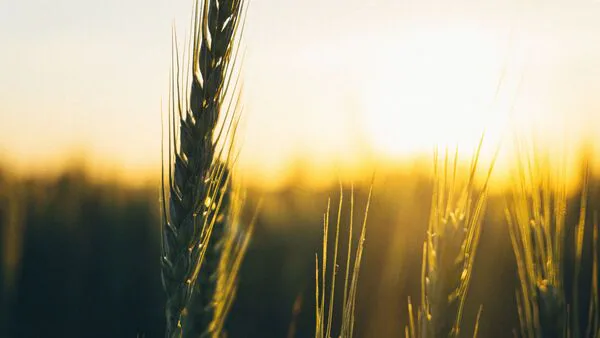
Centre Raises MSP For Wheat For 'More Than Double' Production Cost Price Now Stands At ₹2,610 Per Quintal


The Cabinet Committee on Economic Affairs cleared this proposal on Wednesday. Prime Minister Narendra Modi chaired this important meeting. Six rabi crops received MSP increases this time. These include wheat, gram, masur and mustard, PTI reported.
Information and Broadcasting Minister Ashwini Vaishnaw shared these details with reporters.
Also Read | Russia-Ukraine war disrupts wheat supply: Who is running short?“The production cost of wheat is ₹1,264 per quintal, but MSP has been kept at more than double, at ₹2,610 per quintal for 2027-28," Vaishnaw said.
Barley's MSP also increased from ₹2,150 to ₹2,286. Among pulses, gram's MSP rose by ₹83. New gram MSP now stands at ₹5,958. Masur's MSP increased more significantly, by ₹390. New masur MSP reached ₹7,390 per quintal.
For oilseeds, mustard's MSP rose by ₹413. New mustard MSP became ₹6,613 per quintal. Safflower saw the steepest increase overall. Its MSP rose by ₹675 to ₹7,215.
The total farmer payout for the 2027-28 procurement is estimated to be high. This covers 324 lakh tonnes and costs ₹90,962 crore.
Vaishnaw explained the reasoning behind the marginal increase in wheat. The government ensures a margin of at least 50% over production costs.
Also Read | India's semiconductor boom: how to separate the wheat from the chaffWheat's actual margin stands much higher, at 106%. Mustard follows closely with 96% margin for farmers. Lentil sees 92% margin, gram gets 59% margin. Barley receives 58% margin, safflower gets 50% margin.
According to the ministry, this MSP hike ensures remunerative prices. It will also incentivise crop diversification among farmers nationwide. The government has been promoting the cultivation of pulses and oilseeds lately. A higher MSP than cereals encourages this shift.
Food inflationOn food inflation concerns, Vaishnaw explained CACP's balanced approach. It carefully considers farmers' and consumers' interests together. Sustained agricultural growth also factors into this decision.
Vaishnaw criticised previous governments while praising current policies. He said similar decisions earlier seemed to favour specific interests. Now, these decisions are viewed as universal benefits instead.
Also Read | Wheat falls amid profit-taking, Black Sea war headlinesHe noted that agricultural growth had historically been challenging since Independence. Earlier, 3-3.5% growth was considered a big achievement. The past 12 years show consistent growth above 4%, though. This directly benefits farmers' well-being and food security nationwide.
"This is a big change. Its impact is directly on farmers' wellbeing, food security and self-sufficiency. We never thought there could be such good growth in the farm sector," he said, adding that the government was committed to providing at least a 50% margin through MSP,” he said.
The MSP for wheat in the 2026-27 rabi marketing year (April-March) was ₹2,585 per quintal.

Legal Disclaimer:
MENAFN provides the
information “as is” without warranty of any kind. We do not accept
any responsibility or liability for the accuracy, content, images,
videos, licenses, completeness, legality, or reliability of the information
contained in this article. If you have any complaints or copyright
issues related to this article, kindly contact the provider above.


Comments
No comment