

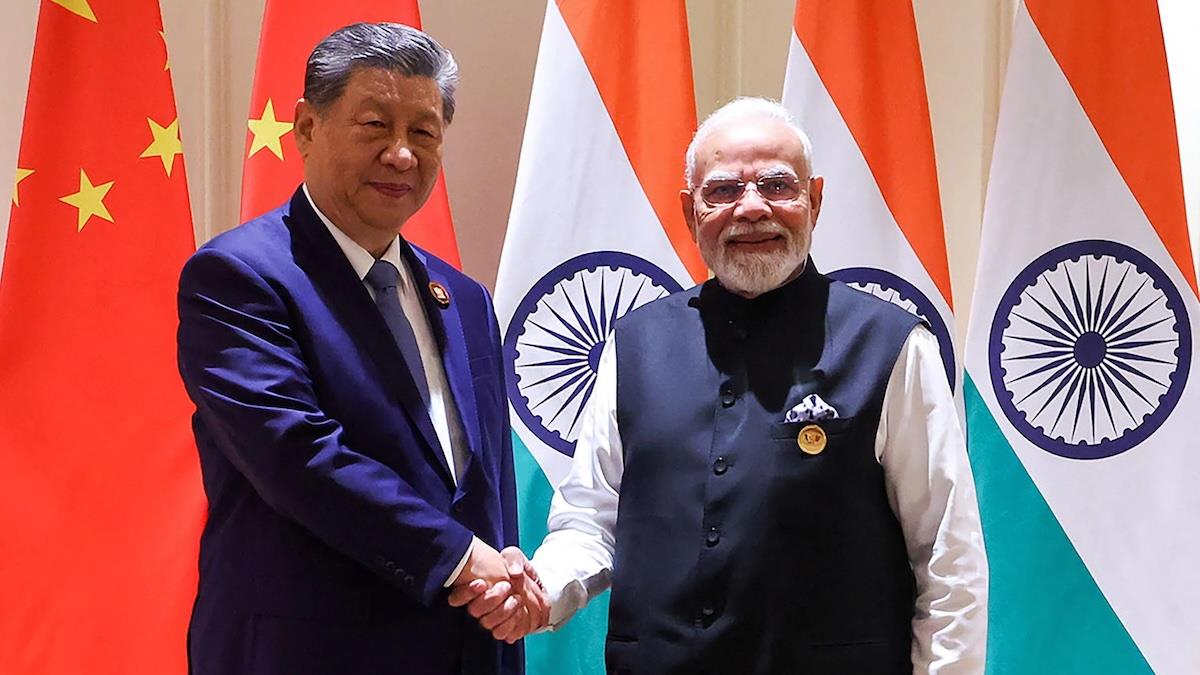
In BRICS Open-Source AI, China And India Will Make A Good Team


His proposal envisaged cooperation in developing and applying large language models, conducting AI training and seminars and constructing a more open AI ecosystem. He also called for a broader international framework for AI governance.
Although India has not yet publicly endorsed the specific China-led initiative, there is considerable conceptual convergence between China's proposal and India's own emphasis on making AI more accessible, inclusive and oriented toward global development.
The New Delhi Declaration adopted at the 18th BRICS Summit emphasized international cooperation to improve accessibility to AI resources while ensuring safety, security, inclusiveness and reliability, particularly for the Global South.
Democratizing access to artificial intelligenceAI development is currently characterized by a high degree of technological and financial concentration. The most advanced computing infrastructure, foundation models, semiconductor capabilities, cloud systems and research ecosystems remain concentrated in a relatively small number of countries and companies. This creates a structural asymmetry between technological leaders and developing economies.
Open-source, or more broadly open, AI ecosystems can potentially reduce some of these barriers. Countries that cannot independently invest billions of dollars in frontier AI infrastructure could nevertheless develop applications, adapt models to local languages and circumstances, train researchers and build domestic technological capabilities. Such an approach could also facilitate the diffusion of knowledge and reduce some of the institutional and financial barriers that currently constrain participation in frontier AI development.
This is particularly relevant for the Global South. India has already placed considerable emphasis on the principle of“AI for All”, with its 2026 AI Impact Summit advocating collaborative, trusted, resilient and inclusive AI development. The New Delhi Declaration emerging from the summit emphasized broadening access, democratizing AI resources, developing human capital and using AI for economic growth and social good. The declaration was ultimately endorsed by 92 countries and international organizations.
China's proposal at the recent BRICS Summit can similarly be understood as an effort to construct a wider technological ecosystem in which developing countries have greater access to AI capabilities. Xi's proposal specifically includes cooperation on large language models, specialized training and seminars, and the creation of an open AI ecosystem.
Why China and India cooperation in open AI mattersIndia and China possess very different political systems, economic structures and approaches to technology governance. Nevertheless, they share an important characteristic: both are major developing economies with large populations, substantial technological capabilities and significant ambitions in artificial intelligence.
India possesses an enormous pool of software engineers, scientists, entrepreneurs and digital consumers. Its experience with digital public infrastructure, payments, identity systems and large-scale digital platforms provides an important foundation for AI applications. India's AI Impact Summit also placed particular emphasis on democratizing access to AI resources and ensuring that AI contributes to economic growth and social development.

Legal Disclaimer:
MENAFN provides the
information “as is” without warranty of any kind. We do not accept any
responsibility or liability for the accuracy, content, images, videos,
licenses, completeness, legality, or reliability of the information
contained in this article. If you have any complaints or copyright issues
related to this article, kindly contact the provider above.
Comments
No comment