

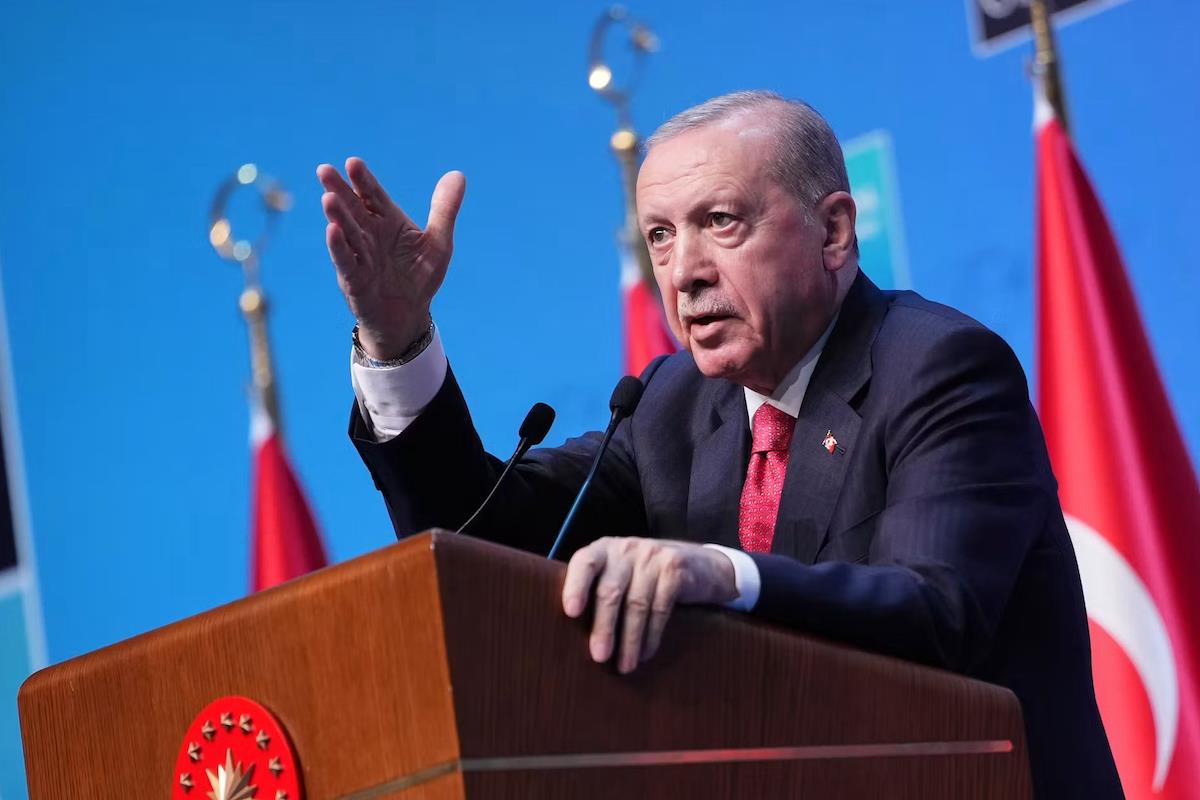
Erdogan Playing East And West, Winning Room To Maneuver


The apparent contradiction was striking. Turkey has belonged to NATO since 1952 and remains a European Union candidate. In contrast, the China- and Russia-led Shanghai Cooperation Organisation, which has included Iran since 2023, projects an alternative, non-western vision of international order.
This revives a familiar question: is Turkey pivoting from West to East?
The question assumes a world divided into coherent blocs. In reality, partially overlapping and competing international orders co-exist, each with its own institutions, rules and visions of global authority. Turkey is simply asserting its autonomy by moving across their boundaries.
A world of overlapping ordersThe post-Cold War vision of a single global order centred on western institutions is increasingly difficult to sustain. NATO co-exists with emerging power coalitions and regional or issue-specific partnerships.
These orders overlap but are not easily reconciled. Their rules and political visions often conflict, allowing emerging and existing middle powers to participate in several of them without fully accepting the authority of any.
While remaining embedded in NATO and economically connected to Europe, Turkey has cultivated deeper ties with Russia and China. A dialogue partner in the Shanghai Cooperation Organisation since 2012, Turkey has also sought a larger role across the Middle East, Africa, the Caucasus and Central Asia.

Legal Disclaimer:
MENAFN provides the
information “as is” without warranty of any kind. We do not accept any
responsibility or liability for the accuracy, content, images, videos,
licenses, completeness, legality, or reliability of the information
contained in this article. If you have any complaints or copyright issues
related to this article, kindly contact the provider above.
Comments
No comment