

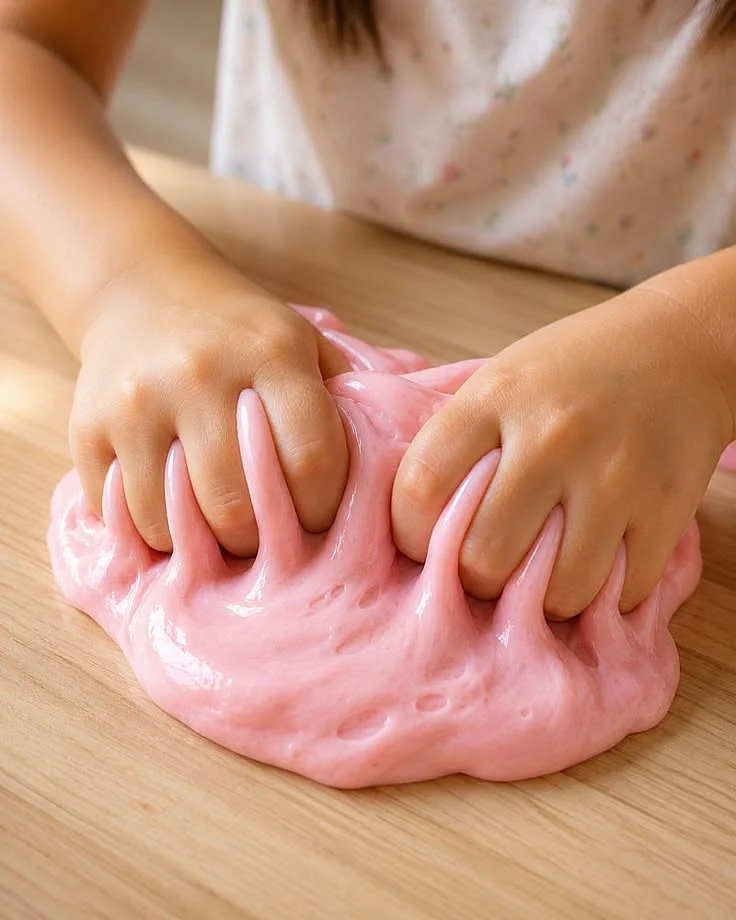
UAE Parents Warned: 'Squishy' Toys And Slime From Unknown Sources May Pose Safety Risks


The Child Safety Organisation, affiliated with the Sharjah Family and Community Council, has advised families to check where toys come from, whether they are suitable for a child's age and whether clear safety and product information is provided before making a purchase.
Recommended For YouThe warning comes as squishies and slime continue to feature prominently in videos watched by children online, where toys are sometimes heated, cut, punctured, mixed or otherwise used in ways for which they were never designed.
Stay up to date with the latest news. Follow KT on WhatsApp Channels.
The US Consumer Product Safety Commission (CPSC) has separately warned about fake and counterfeit squishy toys, including products that may contain water beads, hazardous chemicals or small parts. In August, it also reiterated warnings over social media videos encouraging children to microwave squishy toys.
From viral videos to real-world risksThe Child Safety Organisation said children may be tempted to copy experiments or challenges they see online without understanding the potential consequences.
Heating a squishy toy can be particularly dangerous. According to the CPSC, toys can become dangerously hot when left in direct sunlight, inside a hot vehicle or near a heater, while microwaving them can cause them to burst and release hot material capable of causing serious burns.
For families, this means a conversation about toy safety increasingly needs to extend beyond the product itself to what children are watching and how they are being encouraged to use it.
Hanadi Saleh Al Yafei, Director General of the Child Safety Organisation, said children are naturally drawn to the fun associated with toys they see online or with friends.
“When a child asks for a toy they have seen with friends or on social media, their attention is naturally focused on the fun and the experience. The family's role is to check that it is appropriate for the child's age, identify its source, and read the safety information and product composition. These details can help identify hazards before the toy reaches the child.”
She said the online environment had added another layer of concern because children may copy what they see rather than follow the intended use of a product.
“The digital world has introduced a new dimension that requires families' attention, because a child may use a toy in the way they saw in a widely shared video rather than in the way it was designed to be used. It is therefore important to explain that some challenges are created solely to attract views, offer no scientific value, and do not take safety standards into account.”
What parents should check before buying
Some squishy toys contain gels, liquids, powders, sand or water beads. If the outer casing tears, children can come into contact with the contents, while ingestion of water beads can cause choking or intestinal blockage because the beads can expand inside the body.
The CPSC has issued several warnings this year involving squishy toys containing water beads. In September, it warned against a squishy bun product because the beads inside could expand beyond permitted limits, creating ingestion, choking and intestinal obstruction risks.
The US agency has also recalled other squishy bun products in September over similar water-bead risks.
The warning is particularly relevant for parents buying toys through online marketplaces or unfamiliar sellers, where packaging may not provide enough information about the manufacturer, importer, recommended age or safety warnings.
The Child Safety Organisation said an unusually low price, combined with poor packaging or missing manufacturer details, should prompt parents to look more closely at the product.
Parents should check the recommended age and warnings, verify manufacturer or supplier details and inspect the toy before giving it to a child. Toys with cracks, holes, leaks, strong chemical smells, unusual stickiness or damage should not be used.
The same caution applies to slime. Children handle the material directly and may bring it close to their eyes or mouth, making its contents particularly important.
Families should be cautious with homemade slime recipes circulating online and should not allow children to mix cleaning products, household chemicals or unknown substances. Only materials intended for the activity should be used, with adult supervision.
The CPSC has also highlighted the dangers associated with water beads more broadly. Its current safety guidance says swallowed water beads can continue expanding inside the body and cause intestinal blockages and potentially life-threatening injuries.
Al Yafei said the safest choice does not necessarily depend on how expensive or popular a toy is.
“The safest toy is not necessarily the most expensive or the most popular. What matters is that it is appropriate for the child's age, comes from a trusted source, carries clear safety information on its packaging, and is used correctly with a level of supervision suited to the child's age.”
A few minutes can make a difference
For UAE families, the message is therefore less about taking away toys children enjoy and more about adding a few checks before they reach the playroom-particularly when a product has been discovered through social media or purchased from an unfamiliar source.
Regular inspection also matters. Parents are advised to discard squishy toys once they become damaged and keep them away from microwaves, hot cars, direct sunlight, heaters and other heat sources.
The Child Safety Organisation said play remains an important space for children to explore curiosity, imagination and their senses-but safety needs to begin before the toy is opened.
ALSO READ- Families in Dubai urged to put children's safety first as new school year begins 'What are screens replacing?' UAE doctors urge parents to rethink kids' time online Dubai Police warn parents of gaming links that may connect children with strangers

Legal Disclaimer:
MENAFN provides the
information “as is” without warranty of any kind. We do not accept any
responsibility or liability for the accuracy, content, images, videos,
licenses, completeness, legality, or reliability of the information
contained in this article. If you have any complaints or copyright issues
related to this article, kindly contact the provider above.
Comments
No comment