

Hazara Community In Munich Marks Genocide Remembrance Day, Calls For Justice And Solidarity


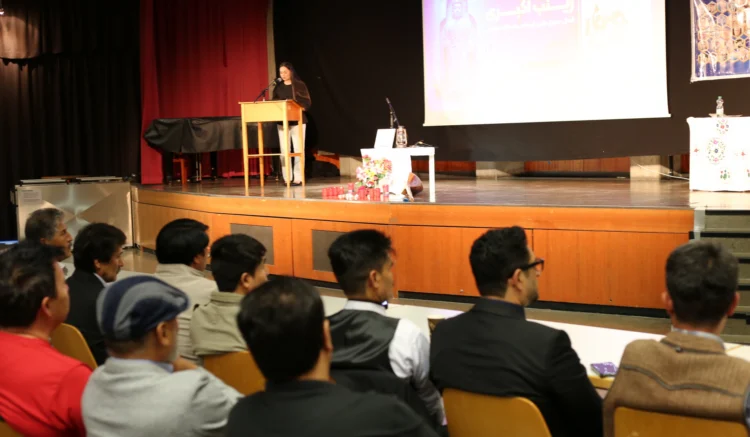
The event, organized by the Hazara Cultural Center in Munich, honored victims of historical violence against Hazaras while urging continued advocacy for accountability and human rights. Organizers said the gathering aimed to preserve the memory of victims, strengthen community solidarity and draw international attention to the need for justice for atrocities committed against Hazaras in Afghanistan.
Speakers said acknowledging the persecution of Hazaras is essential for achieving lasting peace and reconciliation in Afghanistan. They argued that confronting historical injustices and recognizing victims' suffering are necessary steps toward building an inclusive future for all Afghans.
Mobariz Rashidi, one of the keynote speakers, said sustainable solidarity requires an honest reckoning with the country's past and equal respect for the rights and dignity of all ethnic and social groups in Afghanistan.
The commemoration also featured the presentation of a research project examining the identity, social integration and political participation of the Hazara diaspora in Germany. The study concluded that Hazara identity among migrants is shaped by multiple factors, including ethnicity, religion, culture, migration experiences, education and broader social conditions, rather than being fixed or one-dimensional.
As part of the program, participants watched the documentary Recess, directed by Sami Ataii, which revisits the August 15, 2018 suicide bombing at the Kaj Educational Center in western Kabul. The attack, claimed by ISIS-K, killed dozens of students, most of them Hazara teenagers preparing for university entrance exams, and became one of the deadliest attacks targeting the Hazara community.
Human rights organizations, including the United Nations Assistance Mission in Afghanistan (UNAMA), Human Rights Watch and Amnesty International, have documented repeated attacks against Hazara civilians, schools, mosques and cultural centers over the past decade. Many of those attacks have been attributed to ISIS-K, while rights groups say Hazaras have faced decades of systematic persecution, discrimination and targeted violence in Afghanistan.
Calls to recognize violence against Hazaras as genocide have grown in recent years within diaspora communities and among some lawmakers and advocacy organizations. While several parliaments and public institutions have debated or acknowledged the issue, there is no universal international legal determination recognizing a genocide against Hazaras.
Participants in Munich also warned that restrictions imposed on Hazaras and other vulnerable communities since the Taliban's return to power have deepened concerns over ethnic rights, women's rights and civic freedoms in Afghanistan. Speakers urged the international community to continue supporting accountability efforts and protecting vulnerable Afghan communities.
The ceremony concluded with the reading of a resolution issued by the Hazara Cultural Center in Munich, followed by live music and poetry performances dedicated to the victims and survivors of violence.

Legal Disclaimer:
MENAFN provides the
information “as is” without warranty of any kind. We do not accept any
responsibility or liability for the accuracy, content, images, videos,
licenses, completeness, legality, or reliability of the information
contained in this article. If you have any complaints or copyright issues
related to this article, kindly contact the provider above.
Comments
No comment