

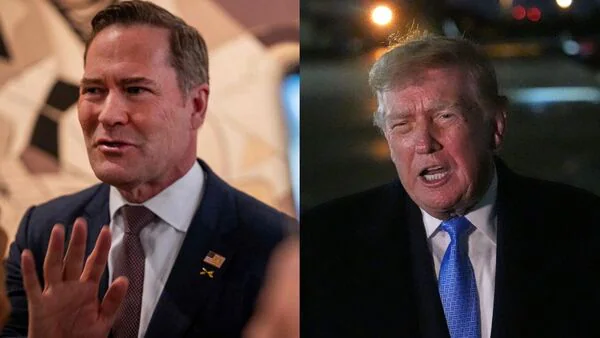
'They Were Asking For Everything Up Front:' US Ambassador To UN Mike Waltz Explains Why Trump Rejected Iran's Proposal


Waltz made these remarks to CNN, saying,“They were asking for everything up front. They were asking for relief from billions and billions of sanctions that are going into place as Operation Economic Fury, but also... snapback sanctions from the United Nations that have been in place for many years.”
The US ambassador further noted that the UN sanctions on Iran had been in place because Tehran“has violated, over and over again, a number of issues related to its nuclear program.” Trump has reiterated several times that the primary goal of the war against the Islamic Republic is to ensure that Iran never has a nuclear weapon.
Also Read | US-Iran war news LIVE: Oil prices gain as Hormuz impasse continues Trump rejects Iran's ceasefire; expects pre-midterm strikesOn 26 September (Saturday), Trump rejected Iran's proposal, claiming that the latter was losing“very badly.” Before departing the White House, he told reporters,“They made a proposal, but I rejected it,” and added,“They want to make a deal where they open the strait immediately because they're losing so badly.”
The formal rejection came a day after The Wall Street Journal, citing US officials, reported that the seven-day ceasefire proposal had been rejected, with the US President expecting renewed bombing after the midterm elections conclude on 3 November.
On Sunday, in an interview with Axios, Trump explained that the conditions Tehran had set for the reopening of the Strait of Hormuz were something Washington might have agreed to a year ago, adding that the Islamic Republic had overplayed its hand. Despite rejecting the proposal, he expressed confidence that negotiations between the two sides would resume this week.
Later, in an interview with Fox News, the US President expressed confidence that the US would win the conflict with Iran“very soon.” However, he also acknowledged that fresh military strikes were“possible” ahead of the midterms. He said,“I think what's going to happen is we're going to win this war very soon, and as soon as we win it, the oil will go down, way down to what it was before the war.”
Also Read | US-Iran war: Trump rejects Tehran's ceasefire proposal to reopen HormuzElaborating further, Trump reiterated the core focus of US policy, saying,“And the key is, Iran will not have a nuclear weapon.”
Iran refuses to soften demands, backs diplomacyAfter Trump rejected the ceasefire proposal, Iran made it clear that it would not change the conditions set for reopening the Strait of Hormuz. However, Iranian officials have voiced support for negotiations and diplomacy. Over the weekend, Iran's IRIB quoted Foreign Minister Abbas Araghchi as saying,“The US president has made some good remarks as well as many contradictory ones, which unfortunately we hear from him frequently.” He added that only a“negotiated solution” could help end the impasse over the global energy bottleneck.
In an interview with NBC News, Araghchi said that while there was always room for negotiations,“we have no reason to come back to diplomacy and engage with this administration once again.”
The focus will now shift to Iran and whether negotiations will resume as Trump expects, despite his rejection of the proposal.

Legal Disclaimer:
MENAFN provides the
information “as is” without warranty of any kind. We do not accept any
responsibility or liability for the accuracy, content, images, videos,
licenses, completeness, legality, or reliability of the information
contained in this article. If you have any complaints or copyright issues
related to this article, kindly contact the provider above.
Comments
No comment