

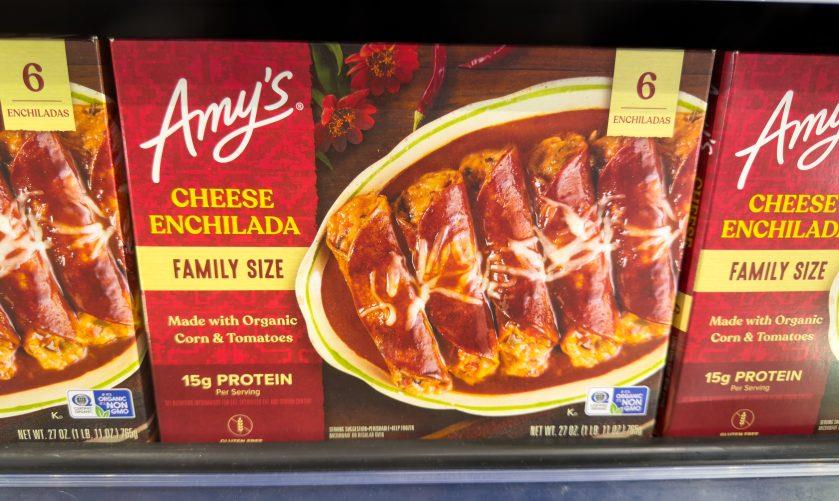
Family-Size Packages Often Cost More Per Ounce-The Shelf Tag Number That Proves It


Buying the biggest package at the grocery store usually feels like the smart way to save money. More food should mean a lower cost per serving, especially when a product is labeled family-size or value-size. But that assumption does not always hold up when you compare the numbers on the shelf. Grocery stores use unit pricing to show how much a product costs by ounce, pound, quart, or another standard measurement. Checking that smaller number can reveal when the supposedly better deal is actually costing you more.
The Unit Price Is the Number Shoppers Often MissMost grocery shelf tags show more than just the price printed on the package. Look closely, and you will often find a smaller number that shows the item's unit price. Depending on the product, that number may be listed as a price per ounce, pound, quart, or another measurement. The unit price makes it possible to compare different package sizes without doing the math yourself. When two packages have different weights, this is usually the quickest way to determine which one provides more food for your money.
Bigger Packages Can Have a Higher Unit PriceThere is no rule saying a larger package must have the lowest price per ounce. A family-size package may cost more overall while also carrying a higher unit price than a smaller package. This can happen because retailers and manufacturers set prices based on promotions, packaging, demand, and other factors. A smaller package might also be temporarily discounted while the larger version remains at its regular price. That means shoppers who automatically grab the biggest container can sometimes miss the cheaper option sitting right beside it.
The Shelf Tag Can Make the Difference ObviousSuppose a regular box of cereal costs $4.49 for 14 ounces, while a family-size box costs $6.99 for 18 ounces. The larger box costs more at checkout, but it also gives you more cereal. However, the unit prices tell you whether those extra ounces are actually costing less. The smaller box works out to about 32 cents per ounce, while the larger box is about 39 cents per ounce. In that example, buying two smaller boxes could provide more food for the money if you actually need the additional quantity.
Sale Prices Can Change Which Size WinsPromotions can completely change the math between package sizes. A family-size bag may normally have the lower unit price, but a temporary sale on the smaller package can make it the better value for that week. Digital coupons can also affect the final price, particularly when a store applies the discount to one size but not another. That is why it is important to compare the final price after discounts rather than relying only on the regular shelf price. A quick look at the unit price after the promotion can tell you whether the deal is actually worth taking.
Cereal and Snacks Are Easy Places to Find Price GapsCereal, chips, crackers, cookies, and other packaged snacks are particularly useful categories for checking unit prices. These products frequently come in several sizes, and the difference between a standard package and a larger package can be substantial. Promotions can make the smaller package surprisingly competitive with the family-size version. Snacks are also products where shoppers may buy based on brand familiarity rather than comparing the actual amount of food. Checking the price per ounce can make those differences much easier to spot.
Meat Requires a Slightly Different ComparisonFor meat, shoppers will often see the price listed per pound instead of per ounce. That makes the comparison especially useful when different packages contain different weights. A larger tray of chicken breasts, for example, is not automatically a better deal because it contains more pounds. Look at the price per pound and compare it with other packages of the same product. If one package is discounted or marked down, it may provide a lower cost per pound even when it contains less meat.
Family-Size Does Not Always Mean Family ValueWords such as family-size, jumbo, value, and club pack can make a product sound like an automatic bargain. Those labels describe the amount of product or the intended shopper, but they do not guarantee the lowest unit price. The Federal Trade Commission recommends comparing unit prices as one way consumers can make better purchasing decisions. That makes the small number on the shelf tag more useful than the marketing language printed on the package. If the unit price is higher, the larger package may simply be giving you more product at a higher rate.
Bigger Packages Can Still Make SenseA higher unit price does not automatically mean you should never buy the larger package. Buying a bigger container may still be convenient if your household uses the product quickly and you want fewer shopping trips. It can also make sense when the larger package is the only size available or when a coupon brings its final price below the smaller option. Storage matters, too, because buying more food than you can use can turn a theoretical savings into wasted money. The goal is to compare the numbers while also considering how much you will realistically use.
Watch the Measurement Before Comparing PricesOne easy mistake is comparing unit prices that use different measurements. A product might show its price per ounce, while another uses price per pound or another standard unit. Since one pound equals 16 ounces, shoppers can convert the measurements when necessary, but most supermarket shelf tags are designed to make similar products easier to compare. It is also important to compare similar products, since a lower unit price does not necessarily mean the products are identical in quality or ingredients. Unit pricing is a tool for comparison, not the only factor that should determine your purchase.
The Cheapest Price at Checkout Is Not Always the Best DealThe total price tells you how much money leaves your bank account today, but it does not always tell you which product gives you the most food for that money. Unit pricing adds another piece of information by showing the cost of the quantity inside the package. This becomes especially useful when comparing family-size packages, sale items, store brands, and different package sizes. Taking a few seconds to check that number can prevent you from paying extra simply because a package looks like a better value. Once you get into the habit, the unit price becomes one of the easiest grocery-shopping tools to use.
Before your next grocery trip, compare the unit price on at least two different package sizes before choosing the larger one. That small number on the shelf tag could show that the package you almost skipped is actually the better deal.
What To Read NextIs the Family-Size Package Actually Cheaper? Stop Trusting the Words on the Box
Are“Family-Sized” Packs Really Cheaper Per Ounce?
What Should a Family of 4 Actually Spend on Groceries in 2026?
8 Tips for Feeding a Large Family on a Budget
10“Family Pack” Foods That Are a Bad Deal Almost Every Time
Legal Disclaimer:
MENAFN provides the
information “as is” without warranty of any kind. We do not accept any
responsibility or liability for the accuracy, content, images, videos,
licenses, completeness, legality, or reliability of the information
contained in this article. If you have any complaints or copyright issues
related to this article, kindly contact the provider above.
Comments
No comment