

Daylight Saving Time 2026: Why Americans Will Get An Extra Hour On November 1 After Halloween


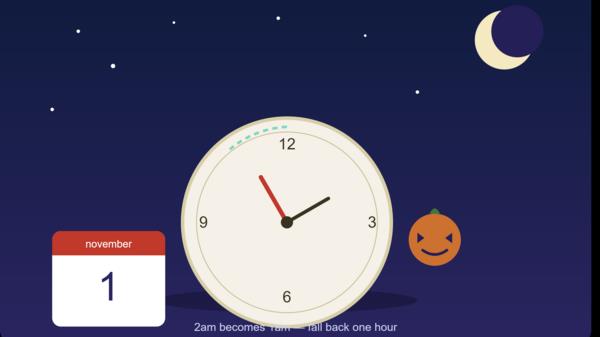
According to Timeanddate, the change will take place at 2 AM local daylight time, when clocks will move back to 1 AM standard time across most of the United States. The shift marks the return to standard time for the winter months.
The timing also means the clock change will come immediately after Halloween. For people staying out late for parties, events or trick-or-treating on 31 October, the additional hour could offer a little more time to sleep the following morning.
Quick answers to key questions
.5 QUESTIONS1When does daylight saving time end in 2026?⌵Daylight saving time in 2026 will end on Sunday, November 1, when clocks will 'fall back' by one hour at 2 AM local daylight time.
2Why do Americans get an extra hour on November 1 after Halloween?⌵Americans get an extra hour on November 1 because the end of daylight saving time allows clocks to revert from 2 AM back to 1 AM, giving people an additional hour overnight.
3How does the clock change during daylight saving time transition?⌵During the transition to standard time, clocks are set back one hour in November, resulting in an earlier sunset and an extra hour of sleep for those partying on Halloween.
4Should I manually adjust my traditional clock for daylight saving time?⌵Yes, traditional clocks need to be reset manually, whereas phones and other connected devices typically adjust automatically.
5What is the history behind daylight saving time in the United States?⌵Daylight saving time was introduced in the U.S. through the Standard Time Act of 1918 and has undergone several revisions, with the current schedule established in 2005.
The change happens twice a year in places that observe daylight saving time. In March, clocks move forward by one hour, while in November they move backwards, bringing an earlier sunset and an additional hour overnight.
Also Read | Deeptech startups seek easier route to government contractsThe practice has a history stretching back more than a century. Timeanddate notes that New Zealand scientist George Vernon Hudson proposed a seasonal clock change in 1895, while British builder William Willett independently campaigned for a similar system in the early 1900s.
What about Canada?Canada was the first place to implement daylight saving time, when residents of Port Arthur, Ontario, now part of Thunder Bay, moved their clocks forward by one hour on 1 July 1908.
Germany later became the first country to introduce the system nationwide in 1916, during the First World War, with the aim of reducing the use of artificial lighting and conserving fuel.
The United States introduced daylight saving time through the Standard Time Act of 1918, although the system changed several times over the following decades. In 1966, Congress passed the Uniform Time Act, creating a more consistent national framework for daylight saving time. The US Department of Transportation continues to oversee its uniform observance.
Also Read | US-Iran war: Mojtaba Khamenei 'pulled from rubble' after strikes - new claimThe current US schedule was later extended. Under changes made in 2005, daylight saving time begins in March and ends in November, with the longer period taking effect in 2007.
So, on 1 November, most Americans will gain an hour rather than lose one. Phones and other connected devices generally adjust automatically, but traditional clocks will need to be reset manually.
For anyone awake at 2 AM, the hour between 1 AM and 2 AM will effectively happen twice.

Legal Disclaimer:
MENAFN provides the
information “as is” without warranty of any kind. We do not accept any
responsibility or liability for the accuracy, content, images, videos,
licenses, completeness, legality, or reliability of the information
contained in this article. If you have any complaints or copyright issues
related to this article, kindly contact the provider above.
Comments
No comment