


Are The Americans Returning To Myanmar? They Never Really Left


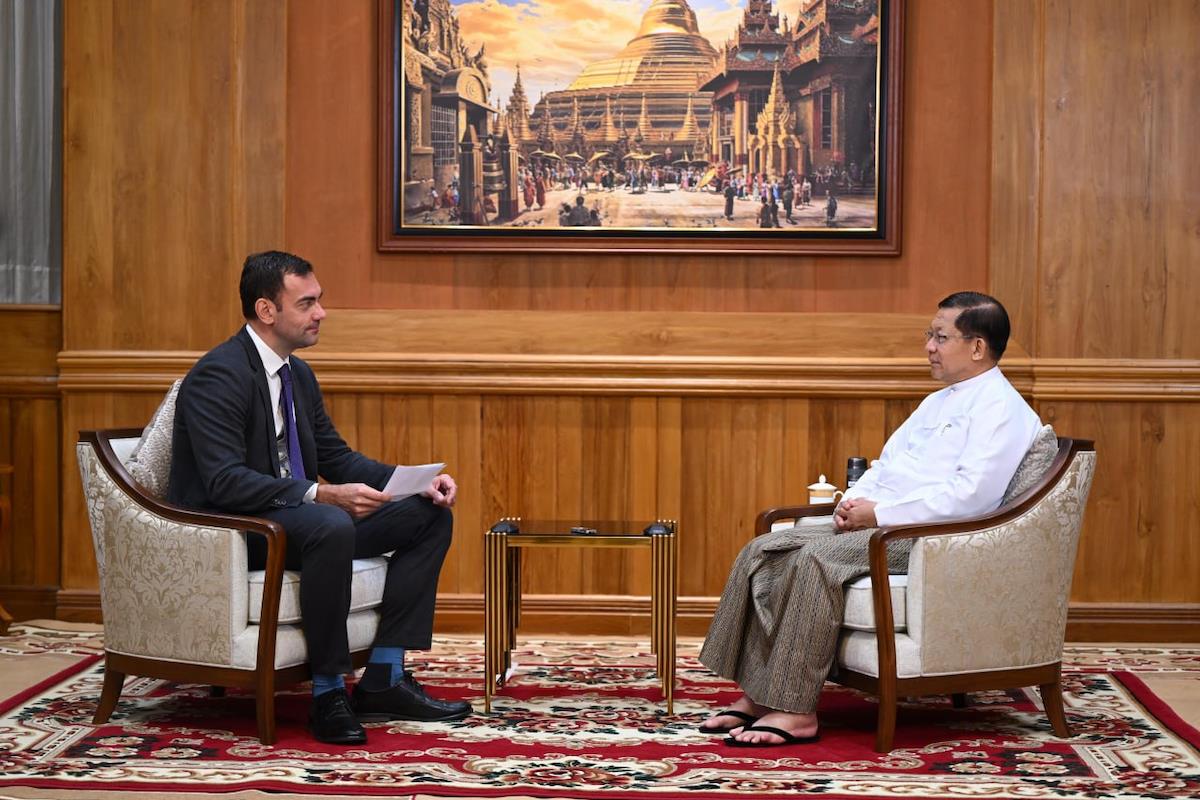
In the same week, Time magazine's Charlie Campbell sat down with Senior General Min Aung Hlaing in Naypyitaw. The coup leader, now calling himself president after December and January's sham elections, said he had treated Aung San Suu Kyi “extremely leniently” and urged the United States and other Western countries to rethink sanctions.
It was his first face-to-face interview with a major Western outlet since the 2021 coup. To be fair to Time, the interview was no puff piece. It described the military dictatorship in plain, critical terms.
But the interview's occurrence arguably mattered more than its content: a democracy-toppling soldier still struggling for legitimacy at home and abroad had appeared as“president” in one of America's best-known news publications.
Time's exclusive did not happen in a vacuum. Since July 2025, the junta has retained the Washington lobbying firm DCI Group on a US$3 million-a-year contract to boost the beleaguered regime's profile.
This year, Foreign Agents Registration Act filings showed Roger Stone, a longtime Trump confidant, receiving $50,000 a month through that arrangement to help“rebuild” relations with Washington. It's unclear how those lobbying funds have been used to coax and generate media coverage favorable to the generals in US news outlets.
But the release of an American citizen and Min Aung Hlaing's interview are pieces of a wider Naypyitaw campaign to reopen closed doors in Washington.
Pressure without disengagementSince the coup, Washington has taken meaningful measures to punish Myanmar's military for toppling democracy. The BURMA Act passed with bipartisan support, and sanctions and assistance programs helping the anti-coup opposition expanded.
Yet the resistance still has not received some of the non-lethal technology it has repeatedly sought, including advanced early-warning systems against airstrikes and broader protective equipment.
Diplomatically, Washington lowered its in-country representation below ambassador level. Commercially, however, the relationship never disappeared. Some American brands remain visible, while trade continues even though government-to-government engagement under the Trade and Investment Framework Agreement is suspended. In 2025, US-Myanmar trade in goods and services still totaled $1.1 billion despite the sanctions.

Legal Disclaimer:
MENAFN provides the
information “as is” without warranty of any kind. We do not accept any
responsibility or liability for the accuracy, content, images, videos,
licenses, completeness, legality, or reliability of the information
contained in this article. If you have any complaints or copyright issues
related to this article, kindly contact the provider above.


Comments
No comment